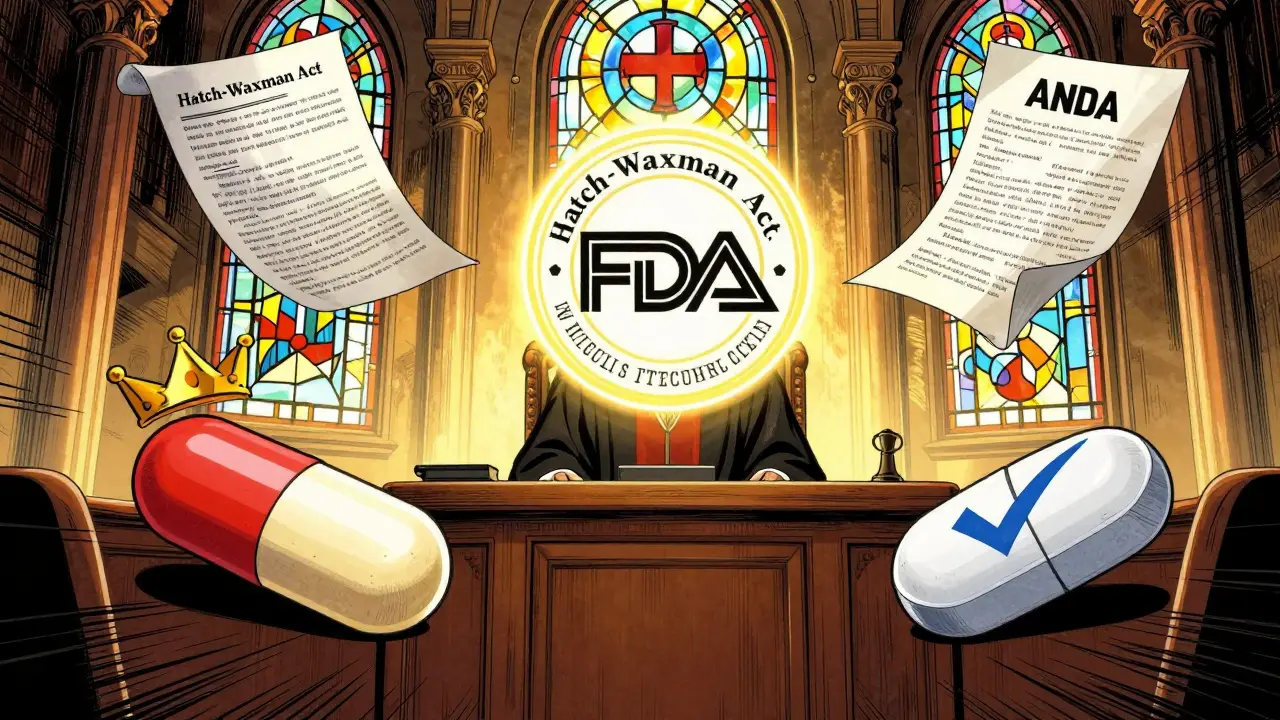
When you pick up a prescription for a generic drug, you’re not just saving money-you’re benefiting from one of the most carefully regulated systems in modern medicine. The FDA authorization of generics isn’t a shortcut. It’s a science-backed, legally defined process that ensures a $3 pill works just as well as its $30 brand-name counterpart. This system didn’t happen by accident. It was built on a landmark law passed in 1984, and today, it’s what keeps millions of Americans able to afford their medications.
How the FDA Approves Generic Drugs: The Hatch-Waxman Act
The legal foundation for generic drug approval in the U.S. comes from the Drug Price Competition and Patent Term Restoration Act of 1984-better known as the Hatch-Waxman Act. Before this law, companies wanting to make a copy of a brand-name drug had to run the same expensive clinical trials as the original manufacturer. That meant generics were rare, expensive, and slow to arrive. Hatch-Waxman changed everything. It created the Abbreviated New Drug Application, or ANDA, pathway under Section 505(j) of the Federal Food, Drug, and Cosmetic Act. The word “abbreviated” doesn’t mean less rigorous. It means smarter. Generic manufacturers no longer need to prove the drug is safe and effective from scratch. Instead, they can rely on the FDA’s existing findings for the brand-name drug, called the Reference Listed Drug (RLD). This cut development time and cost dramatically. The Office of Generic Drugs (OGD), part of the FDA’s Center for Drug Evaluation and Research (CDER), runs this process. In 2023 alone, the FDA approved 90 new generic drugs. That’s not a small number-it’s the result of a system designed to balance speed with safety.What Makes a Generic Drug “The Same”?
A generic drug isn’t just a lookalike pill. It has to be a therapeutic twin. The FDA requires five key things:- Same active ingredient-the chemical that does the work. No exceptions.
- Same strength-if the brand is 20 mg, the generic must be exactly 20 mg.
- Same dosage form-tablet, capsule, injection, patch. Nothing changed.
- Same route of administration-oral, intravenous, topical. How you take it matters.
- Same labeling-uses, warnings, instructions. Must match the brand.
The ANDA Submission: What’s Required
Submitting an ANDA isn’t filling out a form. It’s building a scientific case. The application must include:- Chemistry, Manufacturing, and Controls (CMC)-details on how the drug is made, purified, and tested at every step.
- Facility information-every site where the drug is made, packaged, or tested must pass FDA inspection.
- Proposed labeling-identical to the brand’s, down to the font size.
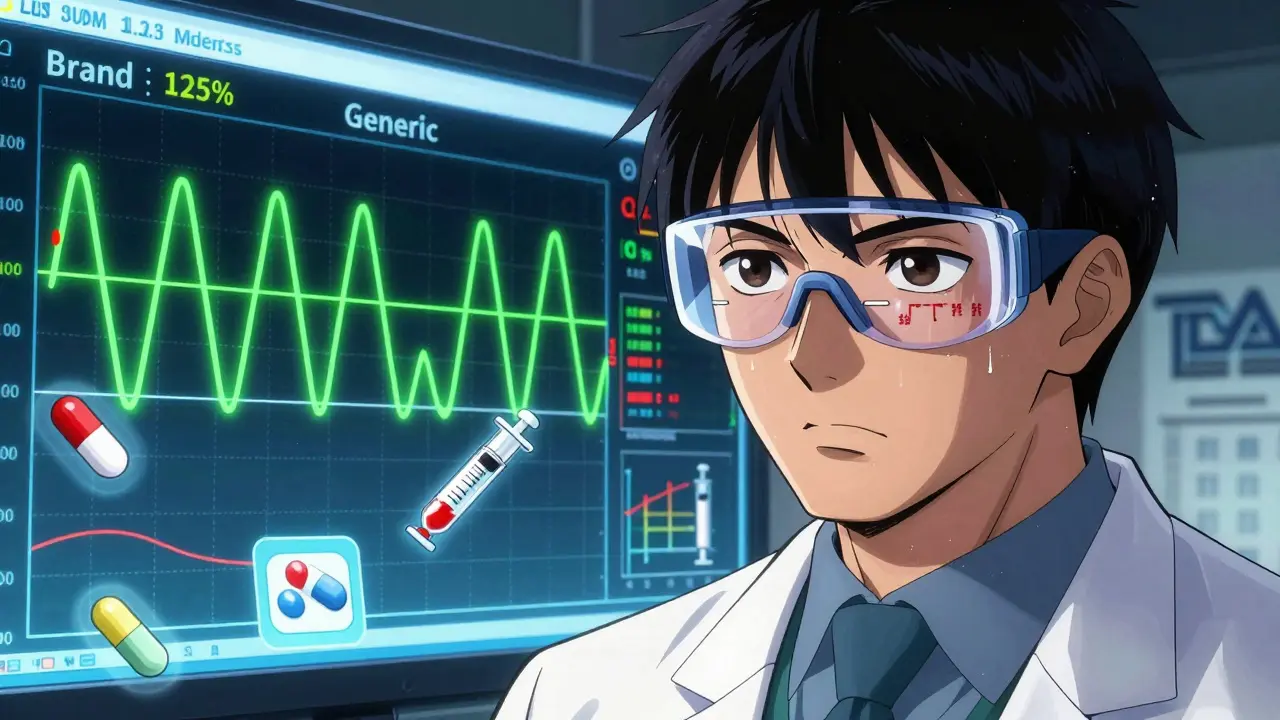
- Bioequivalence data-clinical study results from human trials.
- Patent certifications-this is where things get legal.
Review Timeline and GDUFA
The FDA doesn’t review ANDAs in a vacuum. Since 2012, the Generic Drug User Fee Amendments (GDUFA) have set clear timelines and funding rules. The FDA collects fees from generic manufacturers to hire more reviewers and improve the process. Under GDUFA III (current through 2027), the FDA commits to:- Review standard ANDAs within 10 months
- Review priority ANDAs (like first generics or drugs in shortage) within 8 months
Why Generics Cost 80-85% Less
Brand-name drugs cost billions to develop. The FDA estimates the average cost to bring a new drug to market is about $2.6 billion. That includes failed candidates, clinical trials, marketing, and legal battles. Generic manufacturers don’t pay that. Their typical development cost? Between $1 million and $5 million. That’s why a generic version of a drug that costs $150 can drop to $30-or even $5-once competition kicks in. The savings aren’t theoretical. In 2023, generics saved the U.S. healthcare system over $370 billion. That’s money that goes back into hospitals, insurance, and patients’ pockets.Complex Generics: Where the System Struggles
Not all drugs are easy to copy. Inhalers, topical creams, injectable suspensions, and extended-release tablets are “complex generics.” They don’t just need the same active ingredient-they need the same delivery system. A cream’s texture, an inhaler’s aerosol particle size, a pill’s slow-release coating-these all affect how the drug works. The FDA admits this is a challenge. That’s why they launched the Complex Generic Drug Product Development Resources initiative. These products often require more data than standard bioequivalence studies. Sometimes, they need clinical endpoint studies-meaning real patient outcomes, not just blood levels. The result? Fewer companies are willing to make them. And when they do, approval takes longer. That’s why you might still pay more for a generic inhaler than you do for a generic pill.Market Impact and Key Players
Ninety percent of all prescriptions filled in the U.S. are for generic drugs. That’s not just a statistic-it’s a transformation of healthcare access. People who couldn’t afford insulin, heart medication, or antidepressants can now take them because generics exist. Major players include Teva, Sandoz, Viatris (formed from Mylan and Upjohn), and Amneal. But smaller companies are stepping up too, especially in complex generics. The FDA’s Orange Book lists every approved drug with its patents, exclusivity periods, and therapeutic equivalence ratings. It’s the roadmap for generic manufacturers trying to enter the market.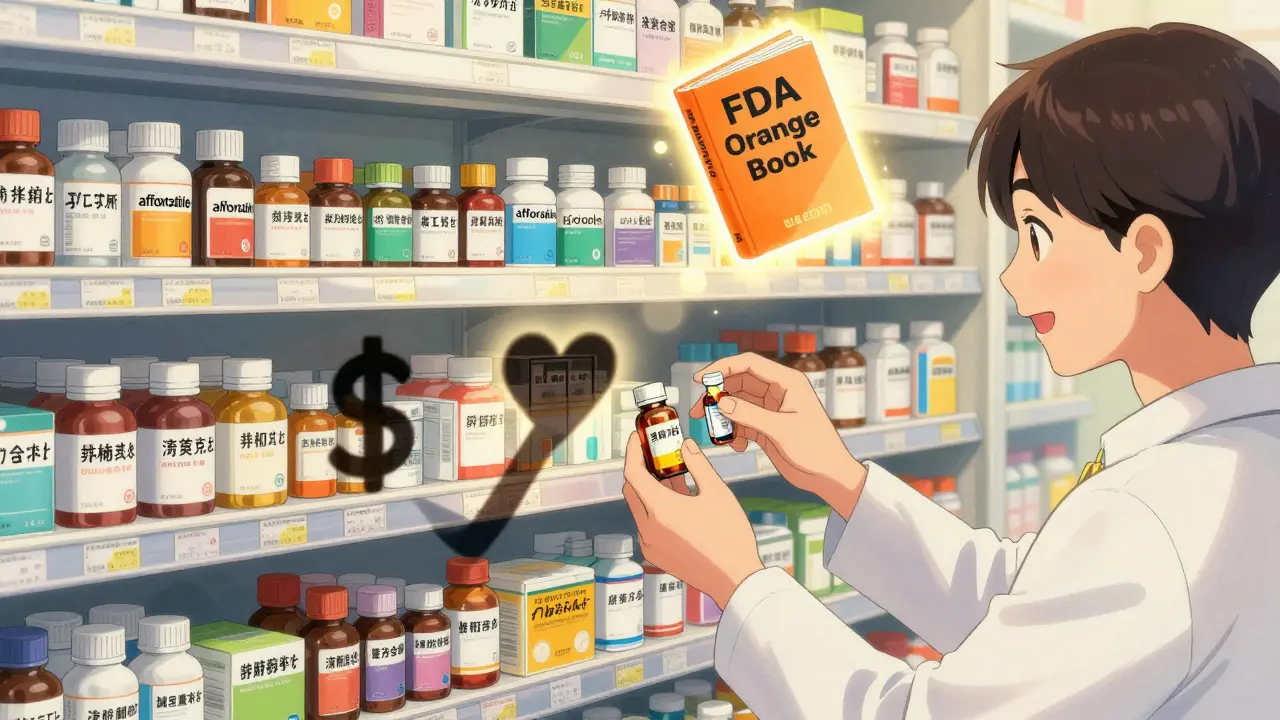
Recent Developments and the Future
On October 3, 2025, the FDA announced a new pilot program to speed up ANDA reviews for companies that manufacture their drugs in the U.S. The goal? Strengthen the domestic supply chain. This isn’t just about cost-it’s about security. After the pandemic exposed global supply risks, the U.S. wants more drug production at home. The future of generics also includes biosimilars-copies of biologic drugs like Humira or Enbrel. But those operate under a different law (BPCIA) and are a separate pathway. For now, small-molecule generics remain the backbone of affordable medicine.What Happens After Approval?
Approval doesn’t mean the FDA walks away. The agency inspects manufacturing sites regularly. If a facility fails an inspection, the generic can be pulled from the market-even if it’s already on pharmacy shelves. The FDA also monitors adverse events. If a generic starts causing unexpected side effects, they investigate. And here’s the thing: generics aren’t just cheaper. They’re often more widely available. When one company makes a generic, others can too. That competition drives prices down further. A drug that starts at $50 might drop to $3 within a year of generic entry.Why This Matters for You
If you’re on a long-term medication, understanding how generics work can save you hundreds-or thousands-of dollars a year. Your doctor might suggest a brand. But you can ask: “Is there a generic?” More often than not, there is. And it’s just as safe. The FDA doesn’t approve generics to cut corners. They approve them to cut costs-without cutting quality. That’s the real win.Are generic drugs as safe as brand-name drugs?
Yes. The FDA requires that generic drugs meet the same strict standards for identity, strength, purity, and quality as brand-name drugs. They must be bioequivalent, meaning they work the same way in your body. The FDA inspects manufacturing facilities for both brand and generic drugs using the same criteria. There is no difference in safety.
Why do generic drugs look different from brand-name drugs?
By law, generic drugs can’t look identical to brand-name drugs because of trademark rules. That’s why the shape, color, or flavor might be different. But the active ingredient, dosage, and effectiveness are the same. The differences are only in inactive ingredients like dyes or fillers, which don’t affect how the drug works.
How long does it take for a generic to be approved?
Under current FDA guidelines, standard ANDA applications are reviewed within 10 months. Priority applications-like first generics or drugs in shortage-are reviewed in 8 months. However, if the brand-name company files a patent lawsuit, approval can be delayed up to 30 months, even if the generic is scientifically approved.
Can a generic drug be pulled from the market after approval?
Yes. The FDA can recall or suspend approval if a manufacturing site fails inspection, if quality issues arise, or if new safety data emerges. This has happened with several generics over the years, including some from overseas facilities that didn’t meet U.S. standards. The FDA monitors approved generics just like brand-name drugs.
Are all generic drugs made overseas?
No. While a large portion of generic drug ingredients are made overseas, many generics are manufactured and packaged in the U.S. The FDA inspects all facilities-whether in the U.S., India, China, or elsewhere-using the same standards. Since 2025, the FDA has prioritized faster reviews for companies that make their drugs in the U.S. to strengthen domestic supply chains.

14 Comments
Alisa Silvia BilaDecember 18, 2025 AT 11:57
Just picked up my generic blood pressure med this week. Paid $4. Same as last month. My doctor said it was the same stuff. I believed him. Turns out, he was right.
Marsha JentzschDecember 19, 2025 AT 08:05
Wait-so you’re telling me the FDA just… lets random companies copy pills?! And they’re allowed to be made in India?! And we’re supposed to trust that?! My cousin’s friend’s neighbor got sick from a generic-she said it tasted weird-and now she’s on dialysis!! I’m not taking any chances!!
Henry MarcusDecember 19, 2025 AT 22:49
They call it ‘bioequivalence’-but let’s be real. They’re testing on 24 healthy volunteers who probably get paid in Starbucks gift cards. Meanwhile, the real patients? The ones with liver damage? The ones with metabolic disorders? They’re just guinea pigs in a corporate bingo game. And don’t get me started on the Chinese dye factories that supply the capsules. That’s not medicine-that’s a paint job with a prescription label.
And why does the FDA always approve generics the day after a brand-name patent expires? Coincidence? Or is there a backroom deal with Big Pharma to keep the cycle spinning? You think they want you to save money? Nah. They want you hooked on the illusion of savings while they quietly raise prices on the next 12 drugs.
They’ll tell you it’s ‘the same.’ But have you ever seen the manufacturing logs? No. Because they’re sealed. Under ‘trade secrets.’ And guess who owns those secrets? The same people who made the brand-name drug in the first place. Same factory. Same machines. Same workers. Just a different label. That’s not competition-that’s a shell game.
I’ve got a cousin who takes insulin. Generic version. He says his blood sugar spikes at night now. The brand didn’t do that. He’s been told it’s ‘his body adjusting.’ But I’ve seen the FDA’s inspection reports. One plant in Hyderabad failed three times. Still got approved. Why? Because they’re under GDUFA deadlines. Speed over safety. That’s the new American dream.
And don’t even get me started on the ‘first generic’ loophole. The company that files the Paragraph IV certification gets six months of exclusivity. That’s not competition. That’s a monopoly with a discount sticker. The FDA calls it ‘incentivizing innovation.’ I call it corporate welfare with a pill bottle.
They say generics saved $370 billion? Sure. But how much did they cost in ER visits? In lawsuits? In lost productivity because people stopped taking meds after the ‘generic switch’? No one tracks that. Because the numbers don’t fit the narrative. The system isn’t broken. It’s engineered. And we’re all just the dosage.
William LiuDecember 20, 2025 AT 02:53
This is one of those stories that should make you feel hopeful. The system works. It’s not perfect, but it’s designed to put life-saving medicine in reach of regular people. I’ve seen friends choose between rent and insulin. Now? They take their meds. That’s not just policy. That’s humanity.
Danielle StewartDecember 21, 2025 AT 06:14
As someone who works in clinical pharmacy, I can confirm: generics are held to the same exacting standards as brand-name drugs. The bioequivalence requirements are not suggestions-they’re legally binding thresholds. The FDA’s Office of Generic Drugs has over 1,000 scientists reviewing applications. Every batch. Every facility. Every lot number. The system is robust. And yes, it saves billions. But more importantly-it saves lives.
benchidelle riveraDecember 21, 2025 AT 21:32
Let me be clear: the FDA’s generic approval process is one of the most rigorously regulated pharmaceutical systems in the world. The notion that a $3 pill is somehow inferior to a $30 pill is not just inaccurate-it is dangerously misleading. The data is publicly available. The bioequivalence studies are peer-reviewed. The manufacturing sites are inspected with the same frequency and intensity as brand-name facilities. To suggest otherwise is not skepticism-it is willful ignorance. And it has real consequences for patients who avoid generics out of fear. That fear is manufactured-not scientific.
Tim GoodfellowDecember 22, 2025 AT 23:55
Man, I never realized how brilliant this system is. It’s like the FDA took the best parts of capitalism-competition, innovation, profit-and wrapped them in science and public health. And the best part? It’s not magic. It’s math. It’s pharmacokinetics. It’s statistics. It’s a bunch of nerds in lab coats crunching numbers so your grandma can afford her heart pills. I’m genuinely impressed.
mark shortusDecember 24, 2025 AT 23:40
Okay. So. I just read this whole thing. And I’m not gonna lie. I cried. Not because I’m weak. But because I’ve been on generic levothyroxine for 12 years. And I thought I was just lucky. Turns out-I’m part of a revolution. A quiet, science-backed, FDA-approved revolution. And I didn’t even know it. Thank you. From the bottom of my thyroid.
Elaine DouglassDecember 25, 2025 AT 16:32
my mom takes a generic for her cholesterol and she says it works just fine. i used to worry about it but now i dont. the price difference is crazy. like, $100 vs $5. why would you not take it?
Takeysha TurnquestDecember 26, 2025 AT 00:00
Generics are the quiet rebellion against the altar of branding. We’ve been conditioned to equate price with value. But medicine doesn’t care about your logo. It cares about molecules. And the FDA? It’s the only institution that still believes in truth over marketing. That’s why this matters. Not because it saves money. But because it restores dignity.
Laura HamillDecember 27, 2025 AT 22:18
They say generics are safe. But what about the ones from China? I saw a video on TikTok where a guy opened a pill and it was full of sawdust. The FDA doesn’t inspect every batch. They just trust the paperwork. And who signs that paperwork? People who work for the same companies that pay the FDA’s fees. It’s a pyramid scheme with aspirin.
And don’t even get me started on the ‘pilot program’ for U.S.-made generics. That’s just a PR stunt. They’re still importing 80% of the active ingredients. The whole thing’s a lie. We’re being played. And you’re all too dumb to see it.
Alana KoertsDecember 29, 2025 AT 12:16
Wow. So much fluff. All this talk about bioequivalence and ANDAs. But where’s the data on real-world outcomes? Who tracked the 5% of patients who had adverse reactions after switching? Who followed up? No one. Because it’s cheaper to ignore it than to study it. This is corporate propaganda dressed as public health.
Nicole RutherfordDecember 30, 2025 AT 14:25
You people are ridiculous. Of course generics are safe. I’ve been prescribing them for 20 years. The ones that don’t work? The ones that cause issues? Those are the outliers. The bad batches. The ones from unlicensed suppliers. Not the FDA-approved ones. Stop listening to YouTube doctors and start listening to real science.
Mark AbleDecember 31, 2025 AT 02:18
Wait wait wait. So if I’m reading this right, the FDA approves generics based on a single study with 24 people? And then millions of people take it? What if those 24 people were all athletes? Or had weird metabolisms? What if the drug behaves differently in elderly people? Or people with diabetes? You’re telling me one study covers everyone? That’s not science. That’s a gamble.
And the patent lawsuits? That’s just a delay tactic. The brand companies just sue to keep generics off the market. It’s not about patents. It’s about profit. And the FDA just sits there and waits. They’re not protecting patients. They’re protecting the system.