
When you see someone vaping on the street, it’s easy to think they’re just breathing out flavored steam-harmless, maybe even cool. But the truth is, what’s inside that vapor isn’t just water and taste. It’s a mix of chemicals that can quietly damage your lungs, even if you’ve never smoked a cigarette. By 2025, the science is clear: vaping isn’t harmless. It doesn’t carry the same risks as smoking tobacco, but it’s not safe either. And for people who thought they were making a smart switch, the lung damage might already be starting.
What’s Actually in Vaping Aerosol?
E-cigarettes heat a liquid-usually made of propylene glycol, vegetable glycerin, nicotine, and flavorings-to create an inhalable mist. On paper, that sounds simple. But when you heat those chemicals, they break down into new, often toxic substances. A University of North Carolina study found that the more ingredients in an e-liquid, the more toxic the vapor becomes. Even the base liquids, which are considered safe to eat, are harmful when inhaled.
The aerosol contains known lung irritants like acrolein and formaldehyde-chemicals also found in car exhaust and cigarette smoke. Nickel, lead, and tin from the device’s heating coils can end up in your lungs. Flavorings like diacetyl, once used in microwave popcorn and linked to a rare lung disease called bronchiolitis obliterans (or "popcorn lung"), have been banned in many countries. But that doesn’t mean they’re gone. Some cheap or unregulated products still contain them.
And here’s the thing: secondhand vapor isn’t harmless either. The U.S. Surgeon General confirmed in 2016 that e-cigarette emissions release nicotine, ultrafine particles, and toxic chemicals into the air. You don’t have to vape to be affected. If you’re around someone who vapes regularly, you’re breathing in the same chemicals-just at lower levels.
The Immediate Damage: Inflammation and Irritation
Your lungs aren’t built to handle synthetic chemicals in aerosol form. When you vape, those particles stick to the lining of your airways. That triggers inflammation. It’s not dramatic at first. You might not notice it. But over time, this low-grade irritation builds up.
People who vape regularly report persistent coughing, wheezing, and shortness of breath-even if they’re young and otherwise healthy. A study published by the American Thoracic Society showed that e-cigarette vapor suppresses key immune cells in the lungs. These cells are supposed to fight off infections like pneumonia and bronchitis. When they’re weakened, your body can’t defend itself as well. That’s why vapers are more likely to get respiratory infections, even if they’ve never smoked.
One of the biggest red flags came in 2019 with the EVALI outbreak. Over 2,800 people in the U.S. were hospitalized. Nearly 70 died. The cause? Vitamin E acetate, an additive used in some THC vaping oils. It wasn’t nicotine. It wasn’t the device. It was a cutting agent that turned into a sticky, toxic substance when heated. The outbreak shocked public health officials because it proved how quickly unregulated substances in vaping products could cause life-threatening lung injury. Even after the ban on vitamin E acetate, the pattern remains: vaping introduces unknown chemicals into your lungs with no safety testing.
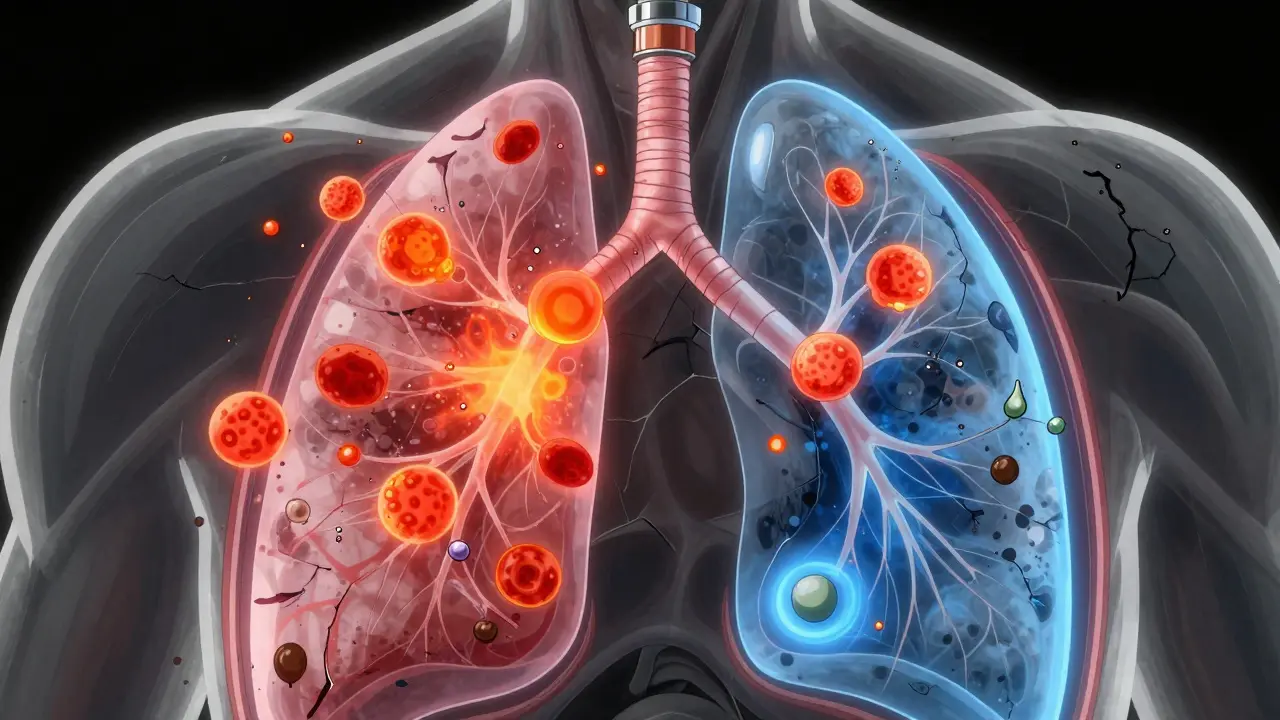
Long-Term Risks: COPD, Asthma, and Beyond
The most worrying evidence now points to long-term lung disease. A large analysis from the NIH found that people who vape have a 48% higher risk of developing COPD (chronic obstructive pulmonary disease) compared to non-users. That’s not a small number. COPD includes emphysema and chronic bronchitis-conditions that slowly destroy lung function. Smoking tobacco carries a much higher risk, but vaping isn’t close to being safe.
People who’ve never smoked but vape regularly are still at higher risk for asthma flare-ups and worsening symptoms. The National Academies of Sciences, Engineering, and Medicine reviewed over 800 studies in 2018 and concluded that youth who vape are more likely to develop coughing, wheezing, and asthma exacerbations. The damage isn’t just for teens. Adults who vape daily show signs of reduced lung function over time, even without other risk factors.
And here’s something most people don’t realize: the lungs don’t heal the same way after vaping as they do after quitting smoking. With cigarettes, the body can slowly repair some of the damage if you stop. With vaping, the long-term effects are still unknown. Some inflammation may fade. But structural changes to lung tissue-like scarring or altered cell function-could be permanent. No one knows yet, because vaping hasn’t been around long enough for decades-long studies. But early signs aren’t encouraging.
Is Vaping Better Than Smoking?
Yes, in one narrow way: vaping exposes you to fewer cancer-causing chemicals than smoking tobacco. It doesn’t contain tar. It doesn’t produce the same level of carbon monoxide. For an adult smoker who can’t quit nicotine, switching to vaping might reduce harm.
But that’s not the same as saying vaping is safe. The American Lung Association and the CDC both say vaping is less harmful than smoking-but they also stress it’s not safe. And here’s the problem: most people who start vaping aren’t former smokers. They’re teenagers, young adults, or people who never smoked at all. In the UK, vaping among non-smokers has doubled since 2020. That’s not harm reduction. That’s a new public health problem.
Dr. NeSmith, a respiratory specialist, puts it plainly: "No matter how you inhale nicotine-through smoke or vapor-you’re putting your lungs under stress." Nicotine itself isn’t the main villain here. It’s the delivery method. Every puff sends chemicals into your lungs that weren’t meant to be there. Even if you’re not addicted, your body is reacting.
What Should You Do If You Vape?
If you vape and you’re trying to quit smoking, congratulations on making a change. But don’t stop there. Vaping isn’t the finish line-it’s a detour. The safest choice is to quit nicotine entirely. There are proven methods: counseling, nicotine patches, prescription medications like varenicline. They work better than vaping for long-term quitting.
If you vape but don’t smoke, ask yourself: why? Is it for flavor? Stress relief? Social pressure? There are safer ways to handle anxiety or boredom. Exercise, mindfulness, even chewing gum can help. Vaping isn’t a lifestyle choice-it’s a chemical exposure.
If you’re already experiencing symptoms-coughing, chest tightness, trouble breathing during simple tasks like climbing stairs-it’s time to see a lung specialist. These symptoms aren’t "just a cold." They could be early signs of lung damage. Don’t wait for something worse to happen. Get checked.
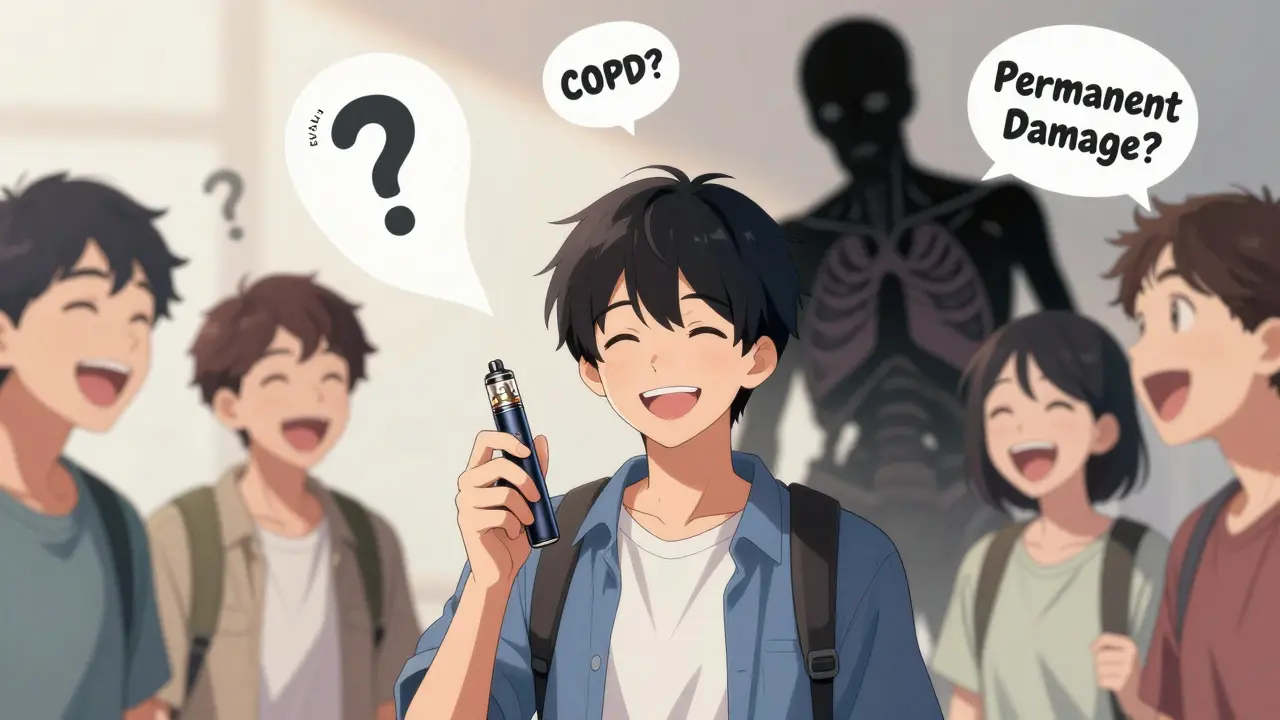
And if you’re a parent, teacher, or caregiver: talk to young people about vaping. The marketing makes it look fun, harmless, even cool. But the science tells a different story. The lungs of a 16-year-old are still developing. Exposing them to vaping chemicals now could affect their breathing for life.
What’s Next?
The vaping industry is growing. New products, new flavors, new claims of safety. But the science is catching up. Regulatory agencies are starting to act. The UK has banned certain flavorings. The FDA is cracking down on unapproved products. But enforcement is slow. The real solution? More research, better regulation, and honest public messaging.
For now, the message is simple: vaping isn’t a risk-free alternative. It’s a different kind of risk. And your lungs can’t tell the difference between "less harmful" and "safe." They only know what they’re being exposed to. If you’re vaping, your lungs are working harder than they should. And every puff adds up.
Can vaping cause permanent lung damage?
Yes, evidence suggests vaping can cause lasting damage. Inflammation from vaping chemicals can lead to scarring in the airways, reduced lung function, and increased risk of chronic diseases like COPD. While some early inflammation may improve after quitting, structural changes to lung tissue could be permanent. Long-term studies are still ongoing, but current data shows clear harm.
Is vaping safer than smoking?
Compared to smoking tobacco, vaping exposes users to fewer cancer-causing chemicals like tar and carbon monoxide. That makes it less harmful for adult smokers who switch completely. But vaping is not safe. It still introduces toxic chemicals into the lungs, weakens immune defenses, and increases the risk of respiratory diseases. For non-smokers, especially youth, vaping introduces new health risks with no benefit.
What is EVALI, and should I be worried about it?
EVALI stands for E-cigarette or Vaping Use-Associated Lung Injury. It was a serious outbreak in 2019 that hospitalized over 2,800 people in the U.S. and killed nearly 70. Most cases were linked to THC vaping products containing vitamin E acetate. While that additive is now banned in regulated markets, the outbreak proved that unregulated substances in vaping liquids can cause sudden, life-threatening lung damage. Even if you only use nicotine vapes, the risk of unknown contaminants remains.
Does vaping affect non-users nearby?
Yes. Secondhand vaping emissions contain nicotine, ultrafine particles, and toxic chemicals like formaldehyde and acrolein. While the concentration is lower than cigarette smoke, repeated exposure-especially in enclosed spaces-can irritate the lungs of bystanders, particularly children, elderly people, or those with asthma or other lung conditions.
How long does it take for lungs to recover after quitting vaping?
Recovery varies. Many people notice improved breathing and less coughing within weeks to months after quitting. Inflammation often decreases, and lung function can improve. But some damage, especially from long-term or heavy use, may not fully reverse. Studies suggest that lung cells exposed to vaping chemicals can undergo lasting changes. The sooner you quit, the better your chances of recovery.
Are flavored vapes more dangerous than unflavored ones?
Yes. Flavors add extra chemicals to the vape liquid, many of which are toxic when inhaled. Diacetyl (linked to "popcorn lung"), cinnamaldehyde, and vanillin are common flavoring agents that irritate airways. Even "natural" flavors aren’t safe to inhale. Studies show that the more flavorings in a vape liquid, the greater the cellular toxicity. Unflavored nicotine vapes still carry risks, but flavored ones add another layer of harm.
Can vaping cause asthma?
Vaping doesn’t cause asthma in people who’ve never had it, but it can trigger new symptoms and worsen existing asthma. Studies show vapers are more likely to experience wheezing, chest tightness, and asthma attacks. The chemicals in vape aerosol irritate the airways and increase inflammation, making the lungs more sensitive to triggers like pollen or cold air. For people with asthma, vaping is strongly discouraged.
Is it possible to vape without nicotine and still harm your lungs?
Absolutely. Even nicotine-free vapes contain propylene glycol, vegetable glycerin, and flavorings-all of which can irritate the lungs when heated and inhaled. Studies show that these base liquids are toxic to lung cells. The absence of nicotine doesn’t make vaping safe. The damage comes from the aerosol itself, not just the nicotine.
If you vape, your lungs are paying a price-even if you can’t feel it yet. The best way to protect them isn’t to switch brands or flavors. It’s to stop.

8 Comments
Sazzy DeFebruary 1, 2026 AT 00:58
Been vaping for 3 years now and honestly didn't think much of it until my cough wouldn't go away. Just stopped last month. Breathing feels easier already. Not saying it's perfect but my body noticed.
Still taking it slow.
Shubham DixitFebruary 1, 2026 AT 21:04
Look, I get it. Western media loves to scare people about everything. In India, we’ve been smoking bidi for generations and nobody’s panicking. Now you tell me a little flavored vapor is going to destroy lungs? Please. The real issue is corporate control over health narratives. Big Pharma doesn’t want you quitting nicotine with a vape-they want you on patches and pills. They’re the ones pushing fear. If you’re not smoking tobacco, you’re already ahead. Stop letting fearmongers dictate your choices.
And no, I’m not a smoker. I never smoked. I vape for relaxation. My lungs are fine. I’ve had checkups.
KATHRYN JOHNSONFebruary 3, 2026 AT 15:53
The data is unequivocal. Vaping introduces known pulmonary toxins into the alveolar space, induces oxidative stress, and suppresses macrophage function. The claim that it is ‘less harmful’ than combustible tobacco is a dangerous semantic loophole. It is not safe. It is not benign. It is a novel public health threat with irreversible consequences for adolescent lung development. Period.
Amy InsalacoFebruary 3, 2026 AT 23:30
Let’s deconstruct the epistemological fallacy embedded in this article. The conflation of ‘less harmful’ with ‘safe’ is a classic rhetorical maneuver designed to manufacture moral panic. The very notion that ‘lungs can’t tell the difference’ assumes a homogenized biological substrate, ignoring the adaptive plasticity of pulmonary epithelium. Moreover, the EVALI outbreak was tied to illicit THC cartridges containing vitamin E acetate-an adulterant banned in regulated markets. To generalize that risk to all nicotine vaping is as logically unsound as blaming all automobiles for the 1970s smog crisis. The science is nascent, the policy is reactionary, and the narrative is weaponized.
Also, propylene glycol is GRAS by the FDA for ingestion. Inhalation is different? Sure. But so is eating a steak versus licking a hot pan. Context matters. The absence of tar doesn’t mean absence of risk-but it also doesn’t mean equivalence.
Marc BainsFebruary 4, 2026 AT 01:37
My brother quit smoking after 18 years and switched to vaping. He went from coughing up black phlegm to running 5Ks in six months. That’s real. But now he’s trying to quit vaping too-because he realized he didn’t need nicotine at all.
It’s not about the device. It’s about the habit. And yeah, if you’re young and never smoked? Don’t start. But if you’re an adult who swapped cigarettes for vapor? You’re already winning. Just don’t stop there. Keep moving forward.
owori patrickFebruary 4, 2026 AT 10:29
Back home in Nigeria, we don’t have vaping shops everywhere like in the US. But my cousin tried it last year after seeing ads online. He said it felt like breathing smoke with candy taste. He stopped after two weeks. Said his throat felt weird.
Maybe it’s not for everyone. But also, why are we so quick to judge? People are trying to find peace in a noisy world. Vaping isn’t the problem. The pressure to be perfect is.
Carolyn WhiteheadFebruary 5, 2026 AT 13:23
I used to vape every day to deal with anxiety. Then I started doing yoga and realized I didn’t need it. The vapor was just a crutch. I miss the flavors sometimes but not the habit. Your body remembers what you put in it, even if your mind forgets.
It’s okay to quit. You don’t have to be perfect. Just start.
Claire WiltshireFebruary 5, 2026 AT 13:32
Thank you for sharing this comprehensive overview. As a respiratory nurse, I’ve seen patients in their 20s with early-stage bronchiolitis obliterans linked to vaping. The damage is silent, progressive, and often irreversible. The FDA’s ban on diacetyl and the removal of vitamin E acetate are positive steps-but they don’t address the core issue: nicotine addiction masked as wellness. If you’re vaping to reduce harm, please use evidence-based cessation tools. Counseling + NRT has a 60% success rate. Vaping? 20%. Your lungs deserve better.
And to the teens reading this: your brain is still wiring itself. Don’t let marketing tell you what’s cool. You’re worth more than a puff.