Every year, more than 1.5 million people in the U.S. end up in the emergency room because of medication mistakes. Many of these aren’t accidents-they’re preventable. The biggest reason? Patients don’t know the right questions to ask. You don’t need to be a doctor to keep yourself safe. You just need to know a few key terms-and how to use them.
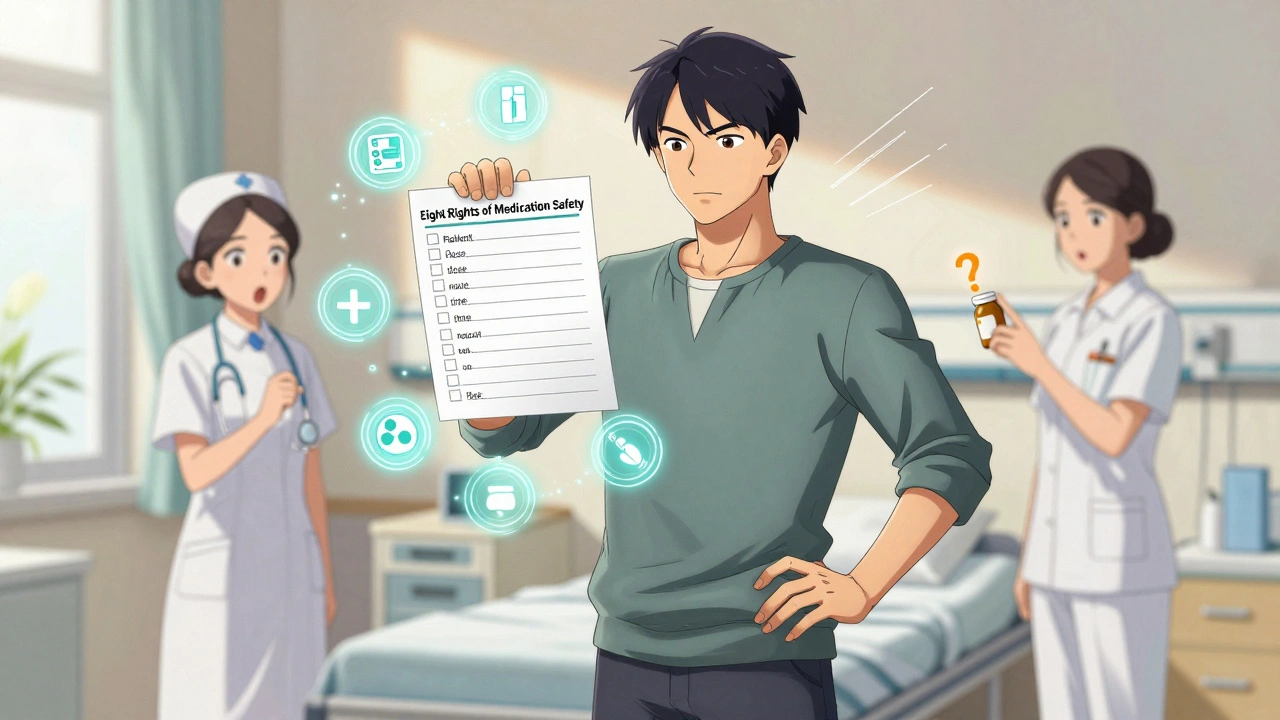
Know the Eight Rights of Medication Safety
The foundation of medication safety isn’t a fancy app or a high-tech pill dispenser. It’s a simple checklist called the Eight Rights. These aren’t just for nurses. They’re for you. If you can ask about each one, you cut your risk of harm in half.- Right patient - Make sure they check your name and date of birth before giving you anything. Don’t let them skip this. Even if you’re the only person in the room, they still need to confirm it’s you.
- Right medication - Ask for both the brand name and the generic name. If your pill looks different this time, ask why. Similar-sounding names like Hydralazine and Hydroxyzine have caused serious errors.
- Right dose - Know how much you’re supposed to take. If it’s a liquid, ask how many milliliters. Don’t guess. A teaspoon isn’t always 5 mL. Use the measuring cup that comes with it.
- Right route - Is this pill meant to be swallowed, injected, or applied to your skin? Giving an IV drug by mouth can kill you. If you’re unsure, ask: “How is this supposed to go in?”
- Right time - Are you supposed to take this with food? Every 8 hours? Before bed? Write it down or set a reminder. People who track their times are 31% less likely to make a dosing mistake.
- Right reason - This is the most powerful one. Ask: “Why am I taking this?” If your doctor says “for blood pressure” but you were diagnosed with anxiety, something’s off. Patients who ask this question reduce inappropriate prescriptions by 28%.
- Right documentation - Did they write it down? Ask to see the chart or the prescription slip. If they say “we already entered it,” ask them to show you.
- Right response - What should you feel? What side effects are normal? What’s a warning sign? If you get dizzy after starting a new pill, don’t ignore it. Track it. Tell your provider.
Understand Adverse Drug Events (ADEs)
An adverse drug event isn’t just a side effect. It’s any harm caused by a medicine-whether it’s a mistake, an allergic reaction, or even taking too much. The CDC says ADEs are one of the biggest preventable dangers in healthcare. And they’re rising.Some reactions are mild: a rash, upset stomach. Others are deadly: internal bleeding from blood thinners, low blood sugar from insulin, breathing problems from opioids. You can’t avoid all of them, but you can spot the red flags early.
If you start feeling worse after taking a new drug-especially within the first week-don’t wait. Call your pharmacist. They’re trained to recognize these patterns. And if you’re told “it’s normal,” ask: “Is this normal for most people, or just for me?”
Watch Out for High-Alert Medications
Not all drugs are created equal. Some are called high-alert medications because even a small mistake can cause serious injury or death. These include:- Insulin
- Blood thinners like warfarin or apixaban
- IV opioids like morphine or fentanyl
- Chemotherapy drugs
- Concentrated electrolytes (like potassium chloride)
According to ISMP, these drugs cause 67% of fatal medication errors. That doesn’t mean you shouldn’t take them. It means you need to be extra careful.
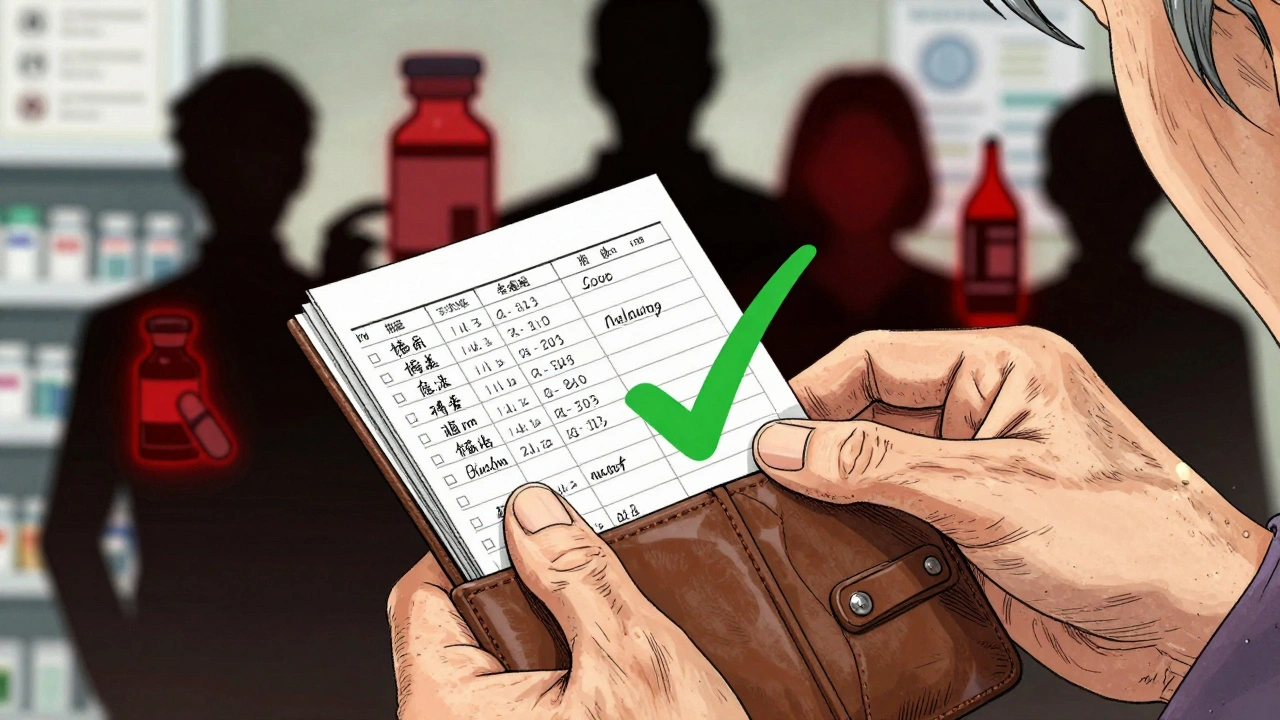
If you’re prescribed one of these, ask: “Why is this considered high-risk?” and “What should I watch for?” Keep a list of these meds in your wallet. Show it to every provider-even the dentist. If you’re unsure, ask for a second opinion.
Recognize a Close Call
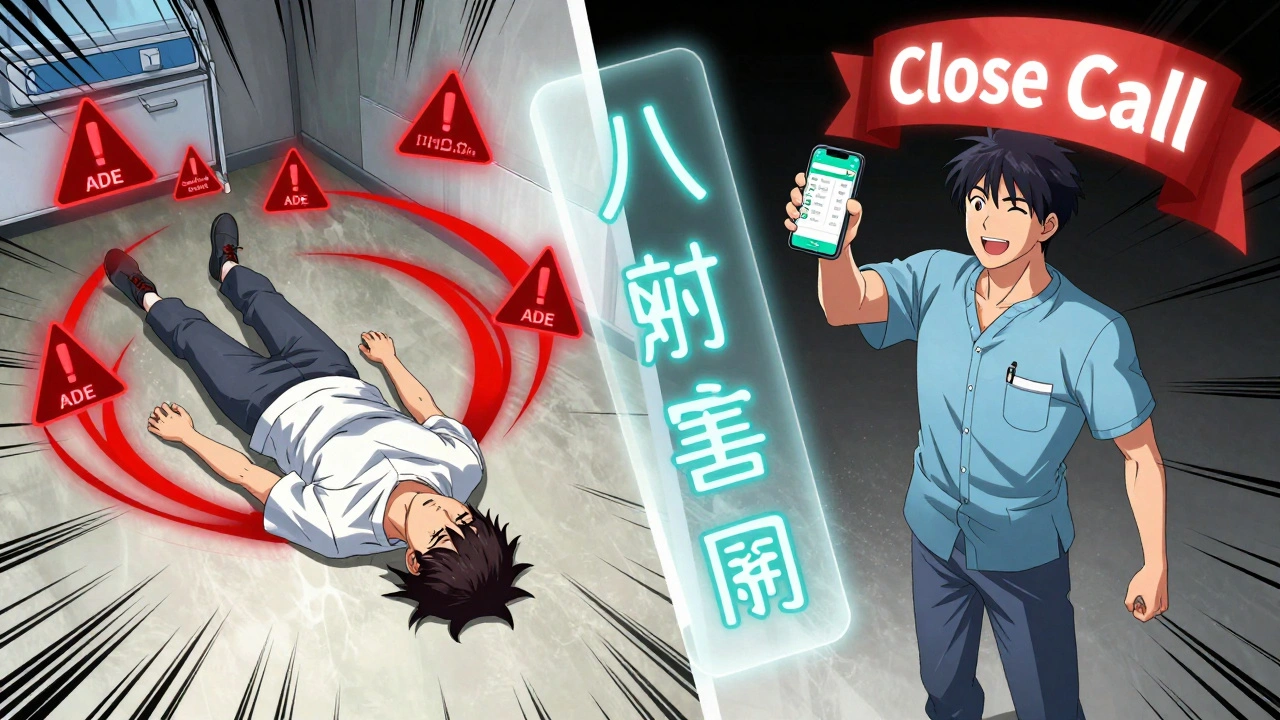
A close call is when something almost went wrong-but didn’t. Maybe the nurse caught the wrong dose before giving it. Maybe you noticed your pill bottle had a different label than last time. That’s not luck. That’s your safety net working.Don’t ignore close calls. Report them. Tell your pharmacist. Write it down. These moments are gold. They show where systems are failing-and where you can help fix them.
One patient in Birmingham noticed her blood pressure pill had changed color. She asked why. Turns out, the pharmacy had accidentally filled her prescription with a different drug. She didn’t take it. She saved herself from a dangerous interaction.
Know What a Sentinel Event Is
A sentence event sounds scary-and it should. It’s a serious, unexpected event that leads to death or major injury. The Joint Commission says a medication error causing death is a sentinel event. That means the hospital has to investigate it fully, report it, and change how they do things.You don’t need to know the jargon. But you do need to know this: if someone dies because of a mistake with your medicine, it’s not just a tragedy. It’s a system failure. And if you speak up, you help stop it from happening to someone else.
Use Tools to Stay Safe
You don’t have to remember all this on your own. Use tools:- Apps like Medisafe (used by over 8 million people) send reminders and check the Eight Rights before each dose.
- Keep a paper list of all your meds, including doses and why you take them. Update it every time your doctor changes something.
- Use your phone’s voice assistant: “Hey Siri, remind me to take my metformin at 8 a.m.”
- Ask for a medication reconciliation every time you leave the hospital or see a new doctor. They’re required to do it now.
One woman in her 70s in Birmingham started using a simple spreadsheet. She listed each drug, the time, the reason, and a column for side effects. She brought it to every appointment. Her doctor said it was the clearest list he’d ever seen. He changed two meds because of it.
Why This Matters Now
In 2024, the CDC and FDA set a goal: by 2030, 90% of patients should know at least five of these safety terms. Right now, only 43% do. That’s a gap-and it’s dangerous.Why now? Because we’re taking more meds than ever. Older adults often take five or more. Chronic conditions mean lifelong use. New drugs come out fast. And mistakes are easy to make.
But here’s the good news: when patients ask the right questions, hospitals and pharmacies respond. They slow down. They double-check. They listen.
One study showed patients who asked about the “right reason” for their meds were 37% less likely to get the wrong drug. That’s not magic. That’s power.
What to Do Today
You don’t need to wait for your next appointment. Start now:- Look at your medicine cabinet. Pick one pill. Ask: “What’s the generic name? Why am I taking it? What’s the dose?”
- Write down the answers.
- Next time you see a provider, say: “I’ve been learning about medication safety. Can we go over my list using the Eight Rights?”
- Download a free medication tracker app. Set up reminders.
- Tell one friend or family member about these terms. You might save their life too.
Medication safety isn’t about trusting your doctor. It’s about working with them. You’re not a passive recipient of care. You’re a partner. And the more you know, the safer you are.

13 Comments
Kathy HaverlyDecember 7, 2025 AT 23:46
This is the most condescending garbage I've read all week. You think patients are dumb enough to need a checklist like this? Wake up. The system is rigged. Doctors don't want you asking questions. They want you silent and compliant. This isn't safety-it's corporate propaganda wrapped in a bow.Graham AbbasDecember 8, 2025 AT 08:29
There's something deeply human here, isn't there? We've outsourced our own survival to institutions, then act shocked when they fail us. The Eight Rights aren't just a checklist-they're a reclamation of agency. A quiet rebellion against the dehumanization of modern medicine. I wept reading this. Not because it's perfect, but because it's necessary.Elliot BarrettDecember 8, 2025 AT 14:23
Ugh. Another article telling people to ask more questions. Meanwhile, I waited 3 hours in an ER just to get a prescription for a UTI. No one asked me anything. No one cared. This feels like preaching to the choir while the building burns.Tejas BubaneDecember 9, 2025 AT 14:00
The Eight Rights are basic. If you're taking more than three meds and can't recite them by heart, you're a liability. Pharmacists aren't paid to babysit. Hospitals aren't daycare centers. This isn't rocket science-it's basic hygiene. Stop treating patients like children and start holding them accountable.Lisa WhiteselDecember 11, 2025 AT 06:15
People die because they dont ask why. Thats it. No magic. No tech. Just basic responsibility. If you cant handle that dont blame the systemLarry LiebermanDecember 11, 2025 AT 11:10
This is 🔥 I just downloaded Medisafe and set reminders for my metformin and lisinopril. Also told my mom about the right reason thing-she’s been on that statin for 12 years and doesn’t even know why. 🙌🙏Richard EiteDecember 12, 2025 AT 01:50
America is weak. We turn everything into a parenting class. Take your pills. Don't be a baby. Stop asking so many questions. If you can't read a label you shouldn't be allowed to drive let alone manage your own meds. This article is a joke wrapped in a safety blanketKatherine ChanDecember 12, 2025 AT 04:43
You know what? This is the kind of stuff that changes lives. I used to be terrified of my own prescriptions. Now I carry my list in my purse and I say 'can we go over the eight rights?' at every visit. My doctor actually smiles now. It feels good to be heardRonald EzamaruDecember 14, 2025 AT 00:42
I'm a retired nurse from Chicago. I've seen too many patients get crushed by the system. But I've also seen the power of one simple question: 'Why am I taking this?' It changes everything. One woman asked that about her blood thinner and found out it was prescribed for a condition she never had. She lived because she asked. You're not just a patient-you're the last line of defense.Ruth WitteDecember 14, 2025 AT 19:40
OMG I just shared this with my whole family!! My grandma is on 12 meds and never asks anything. Now I'm printing out the Eight Rights and taping them to her fridge 🥹 We got this!! 💪❤️Gilbert LacasandileDecember 15, 2025 AT 09:18
I think this is really helpful. I'm not great with meds myself, but I've started writing things down. It's kind of soothing, actually. Like keeping a diary for my body.Lola BchoudiDecember 15, 2025 AT 09:58
The Eight Rights framework is foundational to pharmacovigilance and patient-centered care delivery. When patients internalize these domains as behavioral heuristics, they significantly reduce the incidence of preventable ADEs-particularly those tied to polypharmacy and miscommunication at care transitions. This is not just education-it's systems-level intervention at the micro level.Morgan TaitDecember 15, 2025 AT 14:09
You know who really doesn't want you asking questions? The pharmaceutical lobby. They paid off the FDA. They own the pill manufacturers. They profit from confusion. That’s why they push these 'simple checklists'-to make you feel safe while the real problem keeps growing. They don't want you knowing about drug interactions. They want you taking five meds that all cancel each other out. And they’re laughing all the way to the bank.