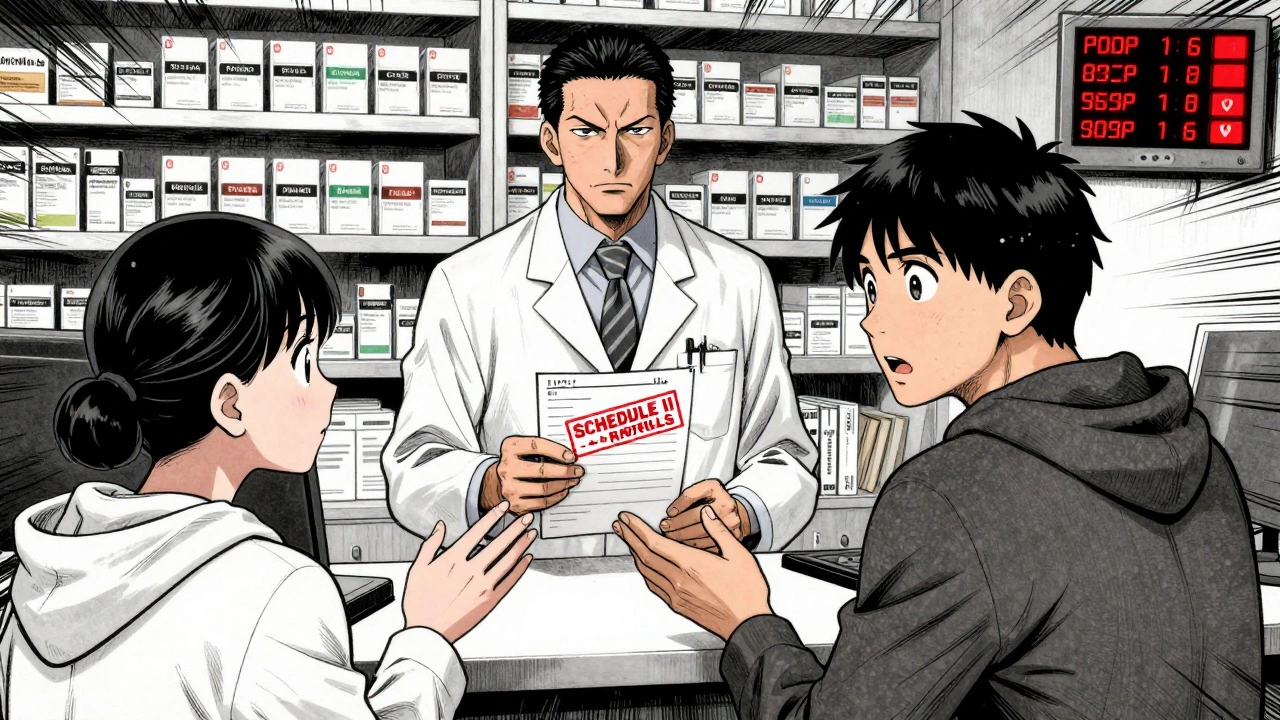
Why Early Refills and Duplicate Therapy Are Dangerous
Imagine a patient gets a 30-day supply of oxycodone on the 1st of the month. By the 10th, they’re back at the pharmacy claiming they lost it. Same week, they get a second prescription for the same drug from a different doctor. This isn’t rare. It’s a pattern. And it’s deadly.
Early refills and duplicate therapy aren’t just administrative headaches-they’re serious medication safety risks. The CDC links these errors to overdose deaths, especially with opioids and benzodiazepines. The DEA says Schedule II controlled substances like oxycodone, fentanyl, or Adderall cannot be refilled under any circumstances. Yet, patients still walk in asking for them. Some say their insurance lets them get it five days early. Others insist their doctor wrote it, so it’s fine. But pharmacists can’t assume that’s true.
Duplicate therapy is just as dangerous. A patient might be on two different antidepressants from two different prescribers. Or they’re taking both tramadol and oxycodone for pain, not realizing both are opioids. Without checking their full history, pharmacists might fill both-putting the patient at risk for respiratory depression, serotonin syndrome, or addiction.
One study found that nearly 24% of refill requests fail because of missing lab tests or overdue appointments. Another 18% require direct provider intervention because no protocol exists. That’s almost half of all refill requests needing extra work because systems aren’t built to catch these mistakes before they happen.
How to Build a Solid Refill Protocol
Stop treating refills like emergencies. Treat them like scheduled appointments.
High-risk medications-like controlled substances, anticoagulants, or insulin-need strict rules. Low-risk meds-like nasal steroids or some blood pressure pills-can be handled automatically. The key is separating them.
Start by creating three simple refill categories:
- Low-risk meds: These can be refilled without a provider visit if the patient was seen in the last 3-6 months. Examples: fluticasone spray, metformin, lisinopril.
- 3-Month Meds: Medications that require regular monitoring but are stable. These get a 90-day supply if the patient had a check-up in the last 90 days. Examples: warfarin, levothyroxine, some diabetes drugs.
- Controlled substances: No refills allowed. Every fill is a new prescription. If a patient asks for one before 28 days, you need to verify with the prescriber-and document why.
Some pharmacies allow controlled substances to be filled two days early-no more. That’s it. No exceptions unless there’s a documented emergency: hospital discharge, travel, or a natural disaster. Even then, you need a note from the prescriber.
Don’t guess. Use your EHR to flag medications by risk level. Set up automated alerts that say: “This is a Schedule II drug. No refills allowed.” Or: “Patient last seen 120 days ago. Requires visit before refill.”
Use Technology to Stop Duplicate Therapy
Patients don’t always tell you they saw another doctor. They might forget. Or they’re trying to hide something. That’s why you need access to more than your own pharmacy’s records.
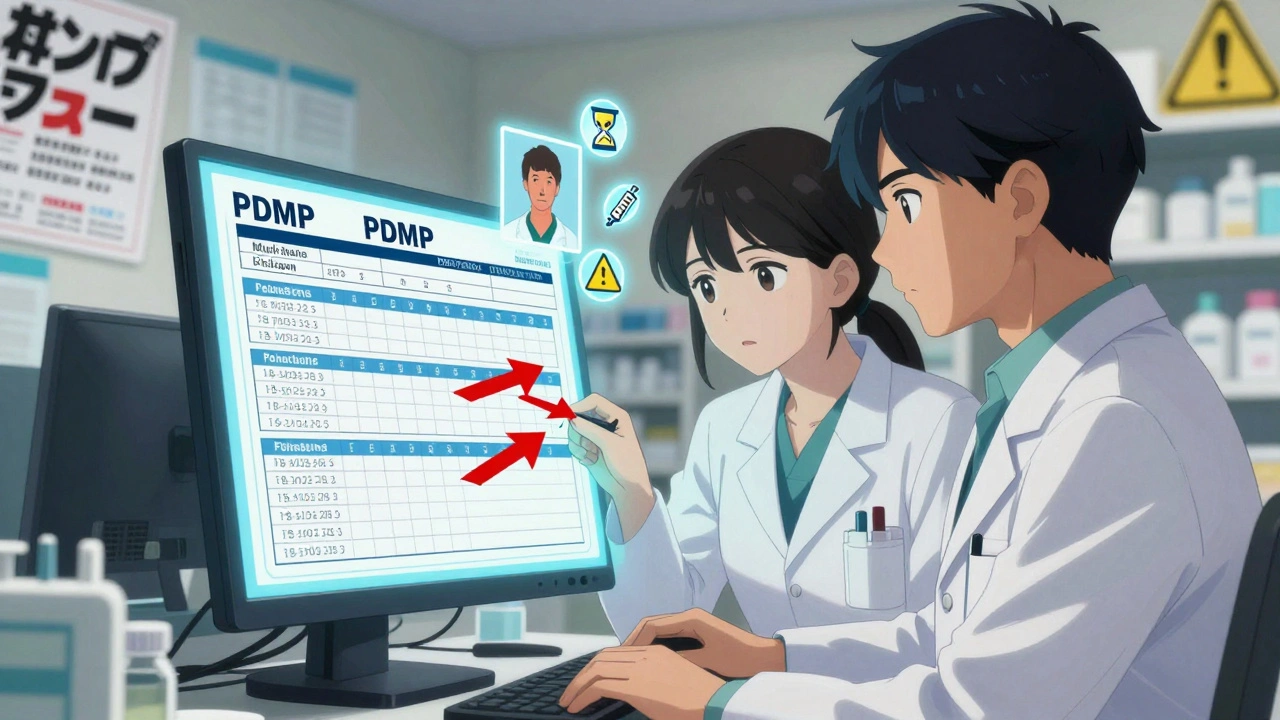
Register for your state’s Prescription Drug Monitoring Program (PDMP). In the UK, that’s the NHS Prescription Service database. In the US, it’s state-run systems like NABP’s PMP InterConnect. These tools show you every controlled substance a patient has filled across all pharmacies in the last 6-12 months.
Don’t just check the PDMP once. Make it part of your workflow. Every time a controlled substance is dispensed, pull the report. Look for:
- Multiple prescribers in the same month
- Multiple pharmacies filling the same drug
- Early refills happening month after month
- Overlapping prescriptions for similar drugs (e.g., two different opioids)
If you see red flags, don’t fill it. Call the prescriber. Ask: “I see this patient has a similar medication from Dr. Smith last week. Can we coordinate care?”
Some EHRs now integrate PDMP data directly into the prescription screen. If yours doesn’t, push for it. It’s not optional anymore-it’s standard of care.
Train Your Team to Ask the Right Questions
Pharmacists aren’t the only ones who need training. Technicians, front desk staff, and nurses all handle refill requests. They’re the first line of defense.
Teach them to say: “I need to check your medication history before I can process this.” Not: “Why are you here again?”
Use scripts that sound helpful, not accusatory:
- “To make sure you’re getting the safest treatment, I need to review all your current prescriptions.”
- “Your last refill was on the 5th. We can’t process another until the 28th unless your doctor says it’s needed.”
- “I see you’ve filled this at two different pharmacies this month. Can we talk about why?”
Staff should also be trained to recognize common patient excuses:
- “My insurance lets me get it five days early.” → Reality: Insurance allows five days early for convenience, not habit. Habitual early refills are flagged.
- “The doctor wrote it, so I’m entitled.” → Reality: Even if written, it’s illegal to fill a Schedule II refill. The prescriber must issue a new script.
- “I’ll pay cash.” → Reality: Cash doesn’t override DEA rules. Controlled substances still can’t be refilled.
Empower your team to say no-and back it up with policy. No one should feel pressured to fill a request that violates safety rules.
Work With Prescribers, Not Against Them
Pharmacists and prescribers are on the same side: keeping patients safe. But too often, they’re working in silos.
Set up monthly check-ins with local clinics. Share your top 3 early refill red flags. Ask them: “Are you aware your patient is filling oxycodone at two pharmacies?”
Use your EHR to add notes like: “Patient received early refill on 11/15. No clinical justification documented.” That way, the next prescriber sees it.
Some practices now sign prescriptions in advance for predictable refills. For example, if a patient gets a monthly albuterol inhaler, the doctor writes a 90-day supply with “Do not fill until 30 days after last fill” printed on it. That stops patients from calling in for refills every 20 days.
And if a patient is flagged for misuse? Don’t just refuse the refill. Say: “I’m concerned about your safety. I’d like to refer you to a specialist who can help manage your pain without risking overdose.”
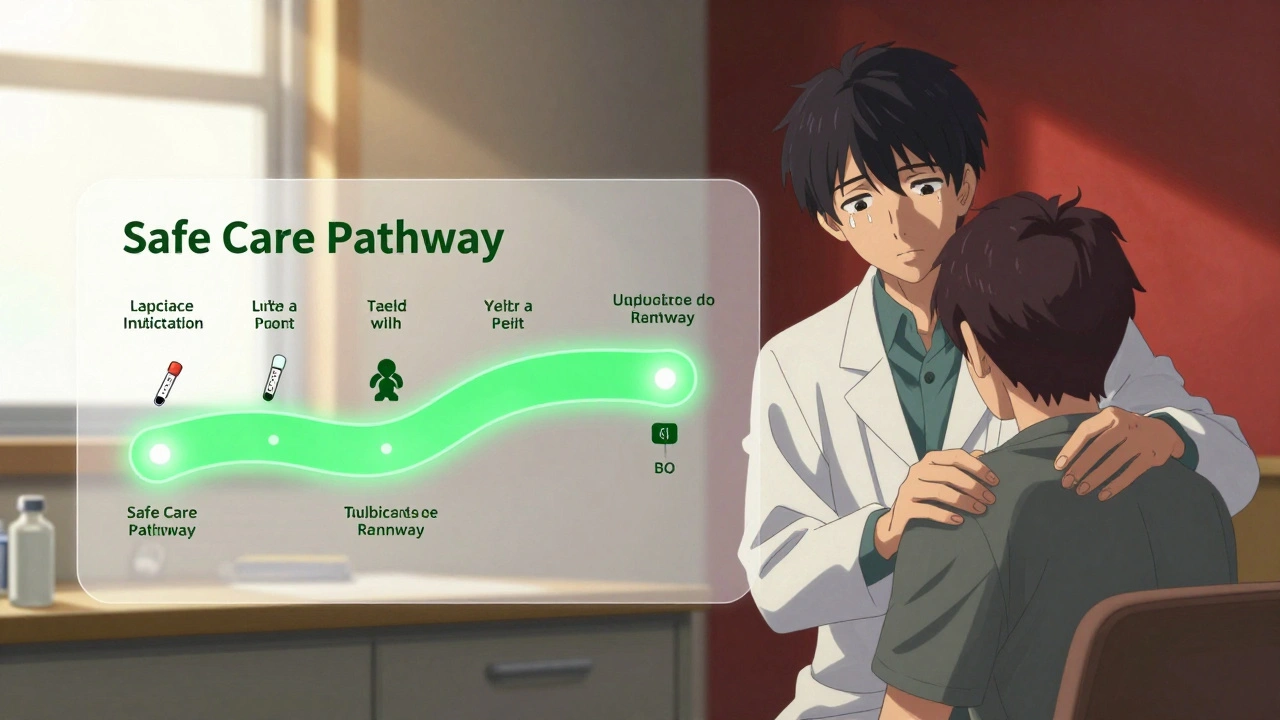
What to Do When You Catch a Problem
What happens when you stop a duplicate therapy or deny an early refill?
Document everything. Date, time, patient name, medication, reason for refusal, who you contacted, and what they said. If the patient gets angry, stay calm. Say: “I’m not refusing care-I’m making sure you’re not put at risk.”
If you suspect drug diversion or addiction, report it to your state’s PDMP and, if necessary, to the DEA. You’re not being a snitch. You’re following the law.
Some pharmacies use a “Safety Review” form for high-risk refills. It includes:
- Patient’s recent vital signs
- Lab results (e.g., liver enzymes for opioids)
- History of prior refills
- Prescriber contact confirmation
Make this form part of your standard procedure. It protects the patient. It protects you. And it protects the pharmacy from liability.
Final Thought: It’s Not About Control. It’s About Care.
Preventing early refills and duplicate therapy isn’t about being strict. It’s about being smart. It’s about knowing that one extra check, one extra question, one extra minute spent reviewing records can prevent an overdose, an ER visit, or even a death.
Patients who are genuinely in need will understand. Those who are gaming the system? They’ll find another pharmacy. But you’ll know you did your job.
Build your protocols. Train your team. Use your tech. Talk to your prescribers. And never assume. Because when it comes to medication safety, assumptions kill.

8 Comments
Josh BilskemperDecember 4, 2025 AT 08:36
If you're not using PDMP before every controlled substance fill, you're not just negligent-you're contributing to the epidemic. No excuses. Your EHR should scream at you. If it doesn't, upgrade or get out.And stop calling it 'early refill'-it's a violation. Period.
Storz VonderheideDecember 5, 2025 AT 11:30
I've seen this play out in rural clinics where pharmacists are the only ones holding the line. The real win? When you say 'I need to check your meds' instead of 'no'-it changes the whole tone. Patients respect that. And honestly? Most just want to feel heard. We don't have to be the bad guy to be the safe guy.Also-yes, train the front desk. They're the first filter. Teach them scripts. Role-play the hard ones. It works.
dan kozDecember 6, 2025 AT 11:19
In Nigeria, we don't have PDMP but we have something better-community. Everyone knows everyone's business. If a man is collecting oxycodone from three different pharmacies, the market women tell the pharmacist before he even walks in. Technology is nice, but human awareness? That's the original algorithm.Kevin EstradaDecember 6, 2025 AT 13:58
OMG I JUST HAD A PATIENT YESTERDAY WHO SAID 'I'LL PAY CASH' LIKE THAT CHANGES THE LAW?? I LAUGHED SO HARD I CRIED. THEN SHE STARTED CRYING AND SAID HER DOG DIED AND SHE NEEDED TO SLEEP. I DIDN'T FILL IT. BUT I GAVE HER A HUG AND A TISSUE. #PharmacistLife #NotASnitchJustASaviorKatey KorzenietzDecember 7, 2025 AT 14:26
I swear if one more patient says 'my insurance lets me' I'm gonna scream. Insurance doesn't override federal law. That's not a loophole-it's a delusion. And if you're still not using automated EHR flags, you're literally gambling with lives. Wake up.Ethan McIvorDecember 8, 2025 AT 13:42
It’s funny how we treat medication like it’s a vending machine. But it’s not. It’s a tool that can heal or harm-depending on who’s holding it. I think the real question isn’t how to stop early refills… it’s how do we stop the pain that drives people to them?Maybe the answer isn’t more rules. Maybe it’s more listening. 🤔
Erik van HeesDecember 10, 2025 AT 07:19
You think this is new? I've been doing this since 2008. Back then, we had paper PDMP printouts. Now you’ve got real-time alerts. If you're still manually checking scripts, you're behind. And yes, I've called the DEA on three patients. No regrets. One of them is now in rehab. That’s a win.Cristy MagdalenaDecember 10, 2025 AT 16:43
I was yelled at for 20 minutes today because I didn't refill a 30-day oxycodone script on day 22. The patient said I 'don't care.' I didn't say a word. Just handed them the safety review form and said, 'Let me know when you're ready to talk about your pain management plan.'They left. But they came back two days later. Apologized. Asked for help.
So maybe... we're not the enemy. Just the mirror.