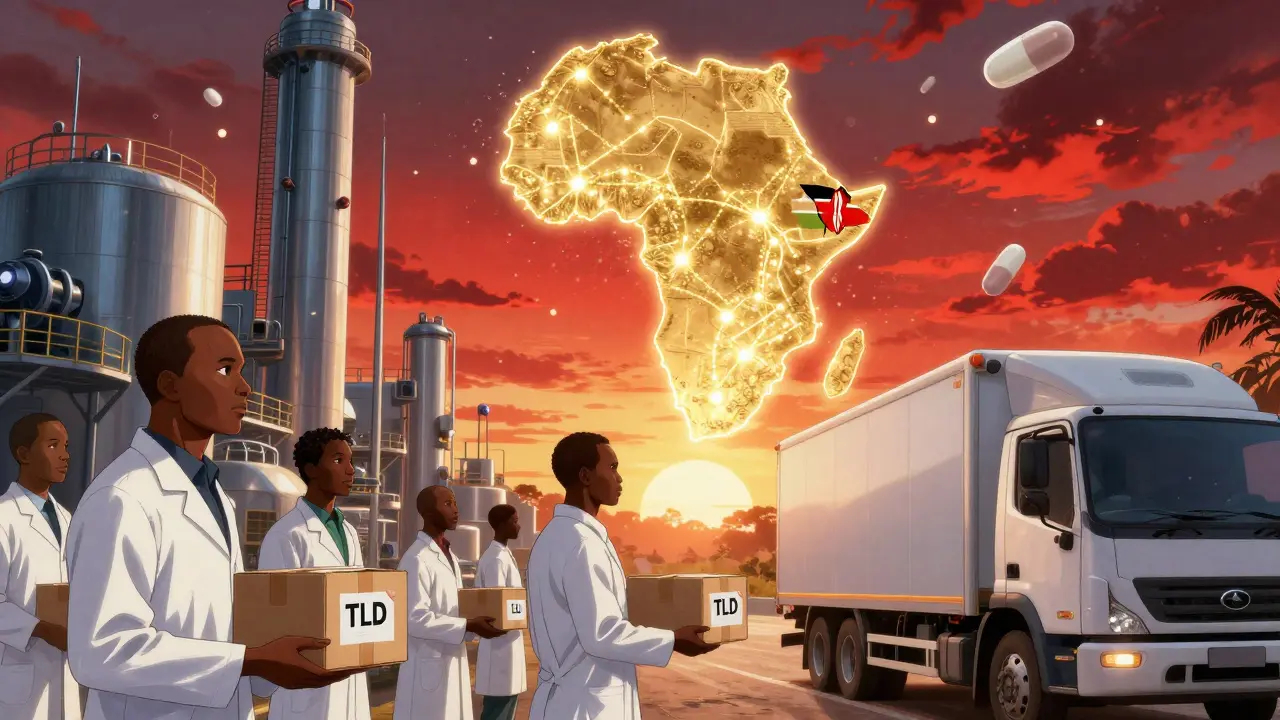
For decades, Africa relied on medicines made halfway across the world. When someone in rural Mozambique needed HIV treatment, the pills often came from India, shipped across oceans, delayed by customs, and priced by distant corporations. That’s changing. On May 6, 2025, something historic happened: the Global Fund bought its first ever HIV treatment made in Africa. The medicine? TLD - a single pill combining tenofovir, lamivudine, and dolutegravir. It was produced by Universal Corporation Ltd in Kenya, the first African company to get WHO prequalification for this first-line HIV drug. And it was sent straight to Mozambique, enough to treat over 72,000 people a year.
Why Local Production Matters More Than Ever
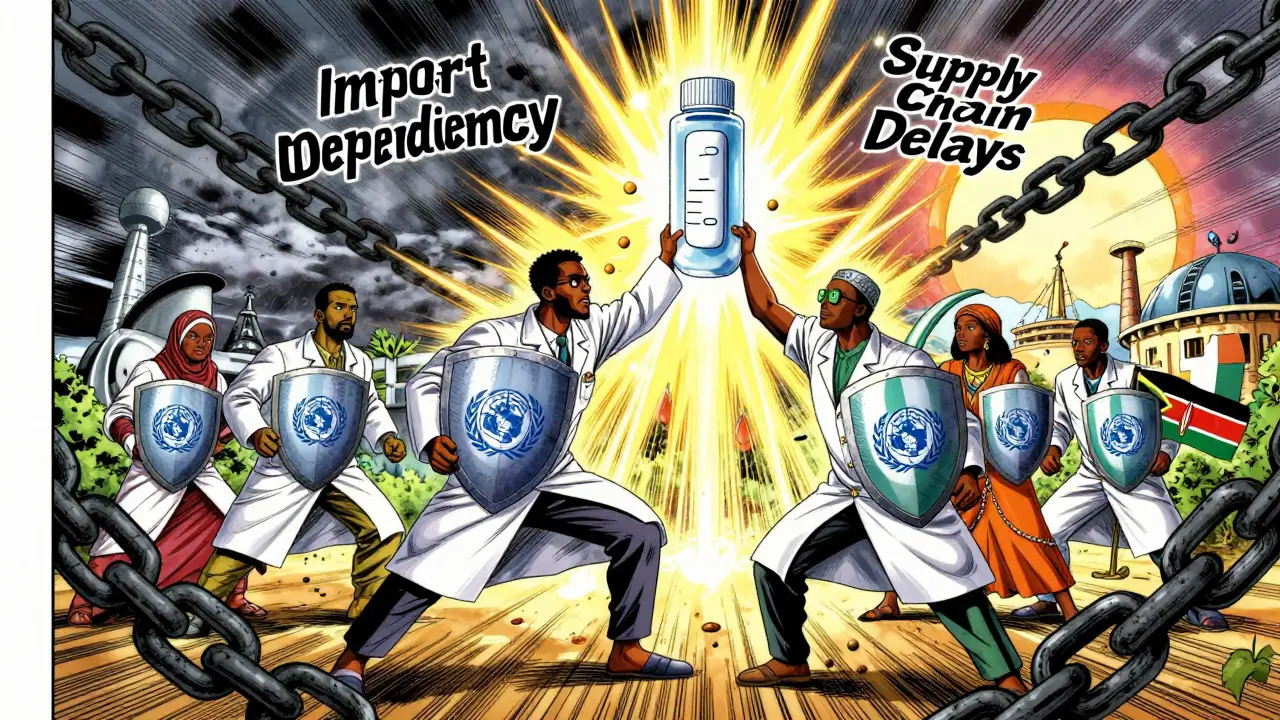
Sub-Saharan Africa carries 65% of the world’s HIV cases. Yet, until recently, it imported nearly 80% of its medicines. That dependency created real risks. During the pandemic, when global supply chains broke down, many African countries faced drug shortages. Hospitals ran low. People missed doses. Viral loads rose. The result? More transmissions, more deaths.
Local manufacturing changes that. When a drug is made in Kenya, Nigeria, or South Africa, it doesn’t need to cross oceans. It doesn’t get stuck in ports. It doesn’t face currency fluctuations or export bans. It’s faster. Cheaper. More reliable.
Before 2023, the only African manufacturers making WHO-prequalified antiretrovirals were producing older, less effective drugs. TLD changed everything. Dolutegravir-based regimens are now the gold standard. They work better. They’re harder for the virus to resist. They cause fewer side effects than older options like efavirenz. And now, for the first time, Africans are making them - for Africans.
The Role of the Global Fund and WHO
This isn’t just about factories. It’s about markets. The Global Fund didn’t just buy TLD - it created a new buying pattern. Before, donors relied on Indian generics, which had slashed prices from $10,000 per patient per year in 2000 to under $100 by 2015. That was a win. But it didn’t build African capacity. It just outsourced the problem.
Now, the Global Fund is using its purchasing power to shape the market. By committing to buy African-made ARVs, it gives manufacturers confidence to invest. They know there’s demand. They can plan. They can hire. They can build labs. That’s called market-shaping - and it’s working.
WHO’s prequalification is the gatekeeper. It’s not a stamp of approval - it’s a full audit. Manufacturers must prove their pills are safe, effective, and made under strict quality control. Same standards as the FDA or EMA. No shortcuts. Universal Corporation Ltd passed. So did others now in the pipeline. This isn’t charity. It’s quality assurance.
Beyond Pills: Diagnostics and Long-Acting Treatments
HIV treatment isn’t just about pills. It’s about knowing who has it. Testing matters as much as treatment.
In Nigeria, Codix Bio is now producing rapid HIV diagnostic tests under a license from SD Biosensor, thanks to WHO’s Health Technology Access Programme. These tests used to be imported. Now, they’re made in Lagos. Faster delivery. Lower cost. More testing sites.
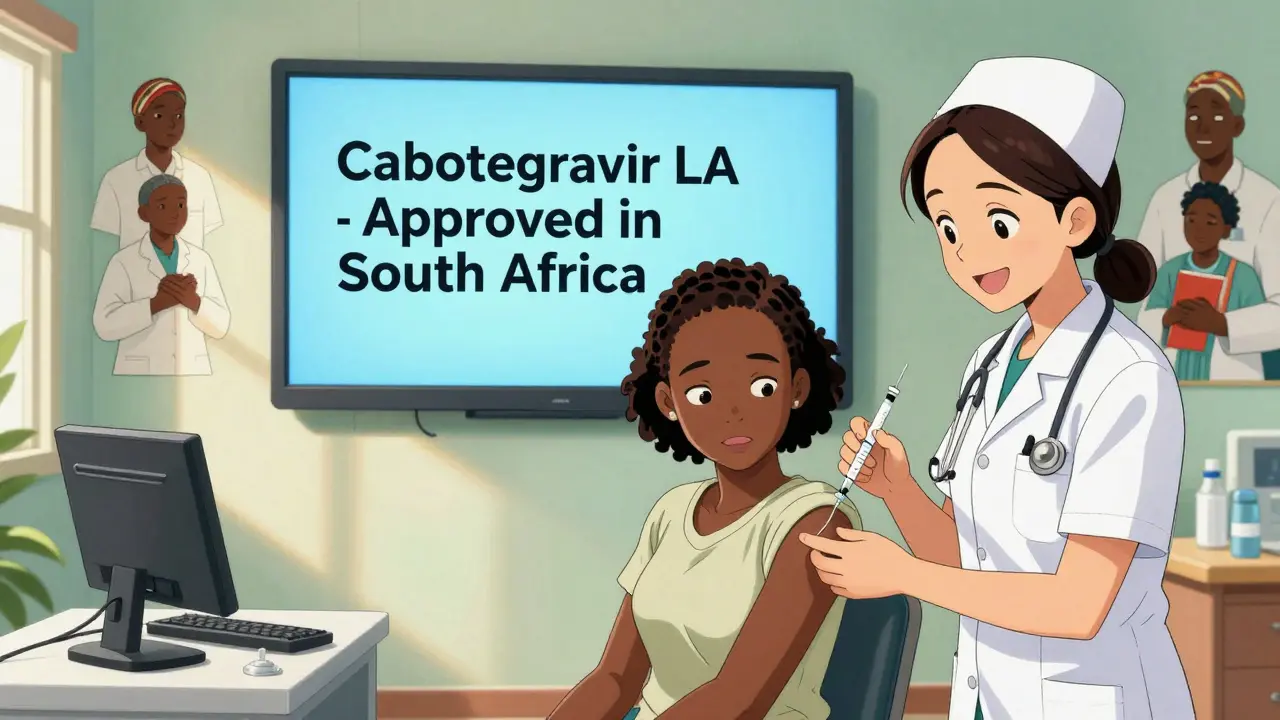
And then there’s the future: long-acting injectables. In October 2025, South Africa became the first African country to approve a twice-yearly HIV injection - cabotegravir long-acting. No daily pills. Just two shots a year. For people who struggle with adherence, this is life-changing.
Gilead Sciences has already licensed six African manufacturers to produce generic versions. Experts say prices could drop 80-90% below brand cost. That’s not speculation. It’s already happening with other generics. When multiple companies make the same drug, prices fall. Competition works.
Even more promising: Gilead is giving away lenacapavir, a new long-acting PrEP drug, at no profit until generics arrive. They’re working with PEPFAR and the Global Fund to get it into 18 high-burden countries by the end of 2025. That’s unprecedented.
The Numbers Don’t Lie
In 2010, 1.3 million people died from AIDS-related causes globally. In 2022, that number dropped to 630,000. Why? Because more people got on treatment. In Eastern and Southern Africa, 93% of people with HIV know their status. 83% are on treatment. 78% have the virus suppressed. That’s progress.
But in Western and Central Africa, the numbers lag: 81% know their status, 76% are on treatment, and only 70% are suppressed. Why? Access. Infrastructure. Supply chains. Local production helps close that gap.
Africa needs about 15 million person-years of first-line ARVs every year. Right now, African manufacturers are producing a fraction of that. But new plants are coming online by Q4 2025. With funding from Unitaid, the Gates Foundation, and CIFF, capacity will grow fast.
The Bigger Picture: Health Sovereignty
This isn’t just about HIV. It’s about health sovereignty. When a country can make its own medicines, it controls its own health future. No more waiting for foreign aid. No more being last in line during a crisis.
The African Union’s Pharmaceutical Manufacturing Plan for Africa aims to raise local production from 2-3% of the continent’s needs to 40% by 2040. That’s ambitious. But possible - if governments keep investing in regulators, training, and infrastructure.
It’s not just about making pills. It’s about building labs, training chemists, certifying quality control teams, and creating jobs. The African Competition Forum calls it a shift from “external funding dependence” to “self-sustainability.” That’s the goal.
And it’s not just drugs. It’s research. Too often, HIV treatments were developed for Western populations. Now, African scientists are pushing to “Africanize” research - designing drugs and regimens that fit local strains, patient lifestyles, and health systems.
Challenges Still Remain
Progress is real. But it’s not complete.
Regulatory systems vary wildly across countries. Some have strong agencies. Others still struggle with delays and paperwork. Harmonizing standards across the continent is slow but critical.
Supply chains need more than just manufacturing. They need cold storage, transport, and trained pharmacists. Many clinics still lack electricity or refrigeration. That’s being addressed - but not fast enough.
And while TLD is now available, second-line and third-line drugs still mostly come from abroad. The next challenge is scaling those too.
Integration is another hurdle. HIV programs often run separately from maternal health, TB care, or diabetes services. That’s inefficient. The best outcomes happen when care is bundled - one visit, multiple services. That’s the next frontier.
What’s Next?
The Global Fund’s Grant Cycle 7 (GC7) will soon announce which countries qualify for this new African-made ARV procurement. More countries will get access. More manufacturers will enter the market.
By 2030, African-made ARVs could supply 20-30% of the continent’s needs. That’s not enough to replace all imports - but it’s enough to break the cycle of dependency. Enough to make supply chains resilient. Enough to save lives when the next crisis hits.
The story of HIV in Africa is no longer just about aid. It’s about innovation. Leadership. Ownership. The pills now come from Nairobi, not New Delhi. The tests come from Lagos, not London. The injections come from Johannesburg, not San Francisco.
This is what health equity looks like - not in theory, but in practice. Made in Africa. For Africa.
What is TLD and why is it important for HIV treatment in Africa?
TLD is a fixed-dose combination antiretroviral pill containing tenofovir, lamivudine, and dolutegravir. It’s now the global standard for first-line HIV treatment because it’s more effective, has a higher barrier to drug resistance, and causes fewer side effects than older regimens like efavirenz. For Africa, TLD is critical because it’s the first first-line HIV drug manufactured locally and WHO-prequalified by an African company - Universal Corporation Ltd in Kenya. This means African countries can now access the best treatment without relying on imports.
How did African manufacturers get approved to make HIV drugs?
To be approved, manufacturers must pass WHO prequalification. This involves a rigorous review of their production facilities, quality control systems, and clinical data. The process is as strict as the FDA or EMA. Universal Corporation Ltd in Kenya was the first African company to achieve this for TLD in 2023. Others are now following, with support from WHO, the Global Fund, and technical partners like the Medicines Patent Pool.
Are African-made HIV drugs as safe and effective as imported ones?
Yes. WHO prequalification requires African-made drugs to meet the same quality, safety, and efficacy standards as those from the U.S., Europe, or India. Independent studies have confirmed that African-produced TLD performs identically to imported versions in clinical use. The difference isn’t in quality - it’s in access, cost, and supply reliability.
What role do organizations like the Global Fund and Unitaid play?
The Global Fund buys African-made ARVs, creating guaranteed demand so manufacturers can invest. Unitaid, the Gates Foundation, and CIFF provide funding to help build factories, train workers, and improve regulatory systems. Together, they’re not just giving money - they’re reshaping markets to favor local production. This is called market-shaping: using procurement to drive systemic change.
What’s next for HIV treatment in Africa?
The next big step is scaling up long-acting injectables like cabotegravir and lenacapavir. Six African manufacturers are already licensed to make generic versions. Regulatory approvals are moving fast - South Africa approved the injection in record time. By 2026, these treatments could be widely available across the continent. The goal is to make HIV care simpler, more private, and easier to stick with - especially for young people and hard-to-reach communities.
Can African countries really produce enough drugs for everyone?
Not yet - but they’re getting close. Africa needs about 15 million person-years of first-line ARVs each year. Current local production covers only a small fraction. But new manufacturing plants are opening in Kenya, Nigeria, Rwanda, and South Africa by late 2025. With continued investment and policy support, African-made ARVs could supply 20-30% of the continent’s needs by 2030. That’s not full self-sufficiency, but it’s enough to reduce dependency and make supply chains far more resilient.

13 Comments
Kristin DaileyJanuary 17, 2026 AT 01:43
This is exactly why America needs to stop outsourcing everything. We let China make our pills, India make our tech, and now Africa makes our HIV drugs? Pathetic.
Pat DeanJanuary 18, 2026 AT 12:16
Let me guess-next they’ll be making fighter jets and iPhones too. Meanwhile, our own pharmaceutical industry is being gutted while we cheerlead foreign manufacturing like it’s some kind of moral victory. Wake up.
Emma #########January 18, 2026 AT 14:23
I just cried reading this. For so long, African communities have been treated like afterthoughts in global health. Now they’re leading the way-with quality, with dignity, with ownership. This is what justice looks like.
It’s not charity. It’s correction.
Andrew QuJanuary 19, 2026 AT 23:09
Really important stuff here. The WHO prequalification process is brutal-same standards as the FDA. That’s not marketing, that’s science. And when you combine that with guaranteed procurement from the Global Fund, you create real economic incentives for local industry.
This model could work for malaria meds, TB drugs, even vaccines. It’s not magic. It’s policy.
kenneth pilletJanuary 20, 2026 AT 09:43
tld is good but why still rely on global fund why not africa just fund itself
also cold chain is still a mess in rural areas
no point making pills if no one can store them
Danny GrayJanuary 21, 2026 AT 10:59
So we’re celebrating African-made pills while ignoring that the real innovation here is Western philanthropy writing checks to African factories. Who really owns this? The Kenyan workers? Or the Gates Foundation’s balance sheet?
This isn’t sovereignty. It’s rebranding dependency with a flag on the bottle.
Zoe BrooksJanuary 22, 2026 AT 10:21
THIS. IS. HUGE. 🙌
Imagine if every kid in rural Mozambique gets to take a pill made by someone’s cousin in Nairobi. No more waiting. No more begging. Just medicine. Simple. Human.
Stop calling it aid. Call it justice.
Stacey MarsengillJanuary 23, 2026 AT 00:50
Oh great. More African-made pharmaceuticals. Next thing you know, they’ll be exporting ‘authentic African painkillers’ to the West while we’re left with expired Tylenol in our CVS drawers. This isn’t progress-it’s a slow-motion cultural theft wrapped in humanitarian glitter.
Aysha SieraJanuary 24, 2026 AT 01:36
Who owns Universal Corporation Ltd really
you think the Kenyan government is behind this
or is it a front for the WHO and big pharma to control African medicine supply
they want you dependent on their standards
not your own
they’re not helping
they’re colonizing with lab coats
Robert DavisJanuary 24, 2026 AT 16:12
Let’s be real-this only works because the Global Fund is paying premium prices to make African factories look good. If you took away the donor money, this whole house of cards collapses. We’re not building self-reliance-we’re building a donor-dependent vanity project.
Eric GebekeJanuary 25, 2026 AT 19:21
They’re making pills but not fixing the real problem-Africans still don’t trust clinics. Why? Because the West taught them to. Now we’re giving them medicine but not the truth: that the system that abandoned them is the same one now patting itself on the back.
Nishant SonuleyJanuary 27, 2026 AT 19:02
Look, I get the excitement. But let’s not pretend this is some overnight revolution. The Kenyan factory? Great. But what about the 12-year-old girl in the Congo who walks 15km for a pill and finds the fridge broken? Or the nurse who’s never been trained to handle TLD? Manufacturing is step one. Delivery, education, trust-that’s the real marathon.
And yeah, the Global Fund’s money is the engine, but without local regulators, pharmacists, and community health workers? It’s just a warehouse with a flag.
So yes, celebrate the pill. But don’t forget the person holding it.
Robert CassidyJanuary 29, 2026 AT 16:11
They’re making TLD in Kenya? Cool. But when the next pandemic hits and the West shuts borders, who’s gonna get the raw materials? Who’s gonna control the supply chain? Africa didn’t invent chemistry. They didn’t invent the science behind dolutegravir. They’re assembling someone else’s breakthroughs. Call it what it is: assembly, not innovation.
Real sovereignty means inventing your own drugs-not just bottling them.