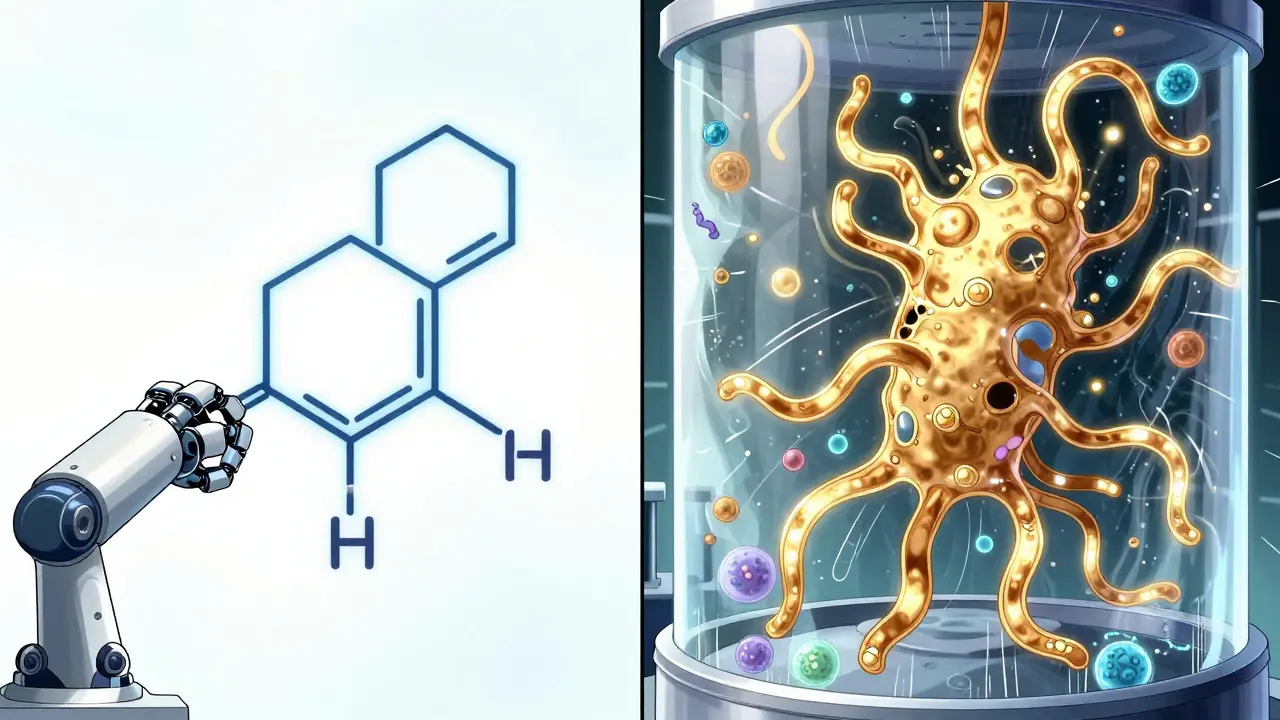
When you hear "generic drug," you probably picture a small pill that does the same thing as the brand-name version but costs way less. That’s true - and it’s simple. But what if the medicine isn’t a pill at all? What if it’s a complex protein made in a living cell? That’s where biosimilars come in. And here’s the thing: biosimilars are not generics. They look similar on paper, but they’re fundamentally different - and understanding that difference matters for your health, your wallet, and how your doctor chooses your treatment.
What exactly are generics?
Generics are the workhorses of affordable medicine. They’re small-molecule drugs made from chemical compounds. Think ibuprofen, metformin, or amoxicillin. Once the patent on a brand-name drug expires, other companies can make exact copies. The FDA requires them to be chemically identical in every way - same active ingredient, same strength, same dosage form, same way the body absorbs it. That’s called bioequivalence. A generic aspirin isn’t "like" brand-name aspirin. It is aspirin. The manufacturing process is straightforward: mix chemicals in a controlled lab, form tablets, package. That’s why generics cost 40% to 50% less than the original. Over 90% of prescriptions in the U.S. are filled with generics. They’re everywhere. They’re reliable. And they’ve been doing this for decades.What are biosimilars?
Biosimilars are different. They’re not copies. They’re "highly similar" versions of biologic drugs - large, complex proteins made from living cells. Think Humira (adalimumab), Enbrel (etanercept), or Herceptin (trastuzumab). These aren’t made in a beaker. They’re grown in cell cultures - like tiny biological factories. Even the original manufacturer can’t make two batches that are 100% identical. Tiny differences in sugar molecules, folding, or structure happen naturally. That’s okay, as long as it doesn’t change how the drug works. A biosimilar has to prove it’s "highly similar" to the original biologic with no clinically meaningful differences in safety, purity, or potency. That means hundreds of lab tests, animal studies, and sometimes clinical trials. It’s not about copying. It’s about matching.The molecular difference: small vs. large
The biggest gap between generics and biosimilars? Size. A generic drug like ibuprofen weighs about 206 daltons. That’s tiny. A biologic like infliximab? Around 148,000 daltons. That’s 700 times bigger. Imagine trying to copy a Swiss watch versus copying a whole factory. Generics are like copying a key - if the shape matches, it works. Biosimilars are like trying to rebuild the entire factory that made the key. You can’t just reverse-engineer it. You have to figure out your own way to grow the same protein. That’s why biosimilars cost $100-200 million to develop. Generics? $2-5 million.Regulatory paths: not the same journey
Generics follow the Hatch-Waxman Act of 1984. The process is streamlined: prove bioequivalence through blood tests. Show your drug gets into the bloodstream the same way as the brand. Done. Biosimilars? They follow the Biologics Price Competition and Innovation Act (BPCIA) of 2009. The FDA requires a full package: structural analysis, functional testing, animal studies, immunogenicity data, and sometimes human trials. Why? Because even small changes in a biologic can trigger an immune reaction. That’s not a risk with a simple chemical like aspirin. The FDA calls biosimilars "not generics" - and they’re serious about it.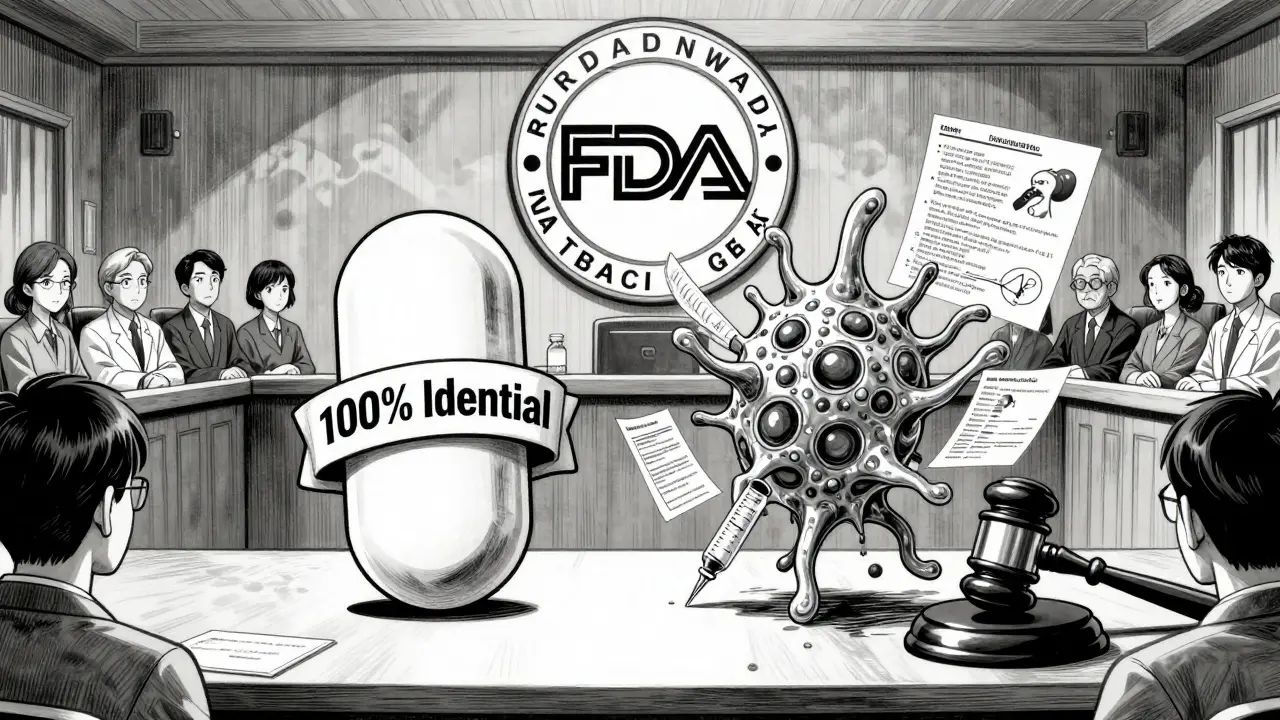
Substitution: can your pharmacist switch you?
Here’s where it gets personal. If you’re on a generic, your pharmacist can swap it for another brand without asking your doctor. That’s automatic substitution - legal in all 50 states. But with biosimilars? Only if they’re labeled "interchangeable." And as of 2023, only 7 out of 42 FDA-approved biosimilars have that status. That means most biosimilars require a new prescription if your doctor wants to switch you. Even if a biosimilar is approved, your insurance or hospital might not automatically replace the original. You might have to fight for it. That’s a big hurdle compared to generics, which are just swapped on the shelf.Cost savings: how much do you really save?
Generics save you 40-50%. Biosimilars? The savings are real, but smaller. The National Comprehensive Cancer Network says 15-20%. Some reports say up to 33%. That’s still a lot - especially for drugs that cost $20,000 a year. But here’s the catch: biosimilars are expensive to make. So the savings don’t always trickle down to patients the way they do with generics. Plus, hospitals often use a "buy-and-bill" system - they buy the drug, then bill insurance. If the original biologic has a higher rebate, the hospital might stick with it. That’s not a problem with generics. The price is low, and everyone wins.Why doctors hesitate
Many doctors are comfortable prescribing generics. They’ve used them for years. But biosimilars? A 2022 survey found 68% of rheumatologists needed more education before feeling confident switching patients. Why? Fear of immune reactions. Even if the science says it’s safe, switching a patient who’s stable on Humira to a biosimilar feels risky. The American College of Rheumatology says: "It’s okay to start with a biosimilar. Switching later? Proceed with caution." That’s not a problem with generics. If you’re on generic metformin, switching to another generic? No big deal. You won’t even notice.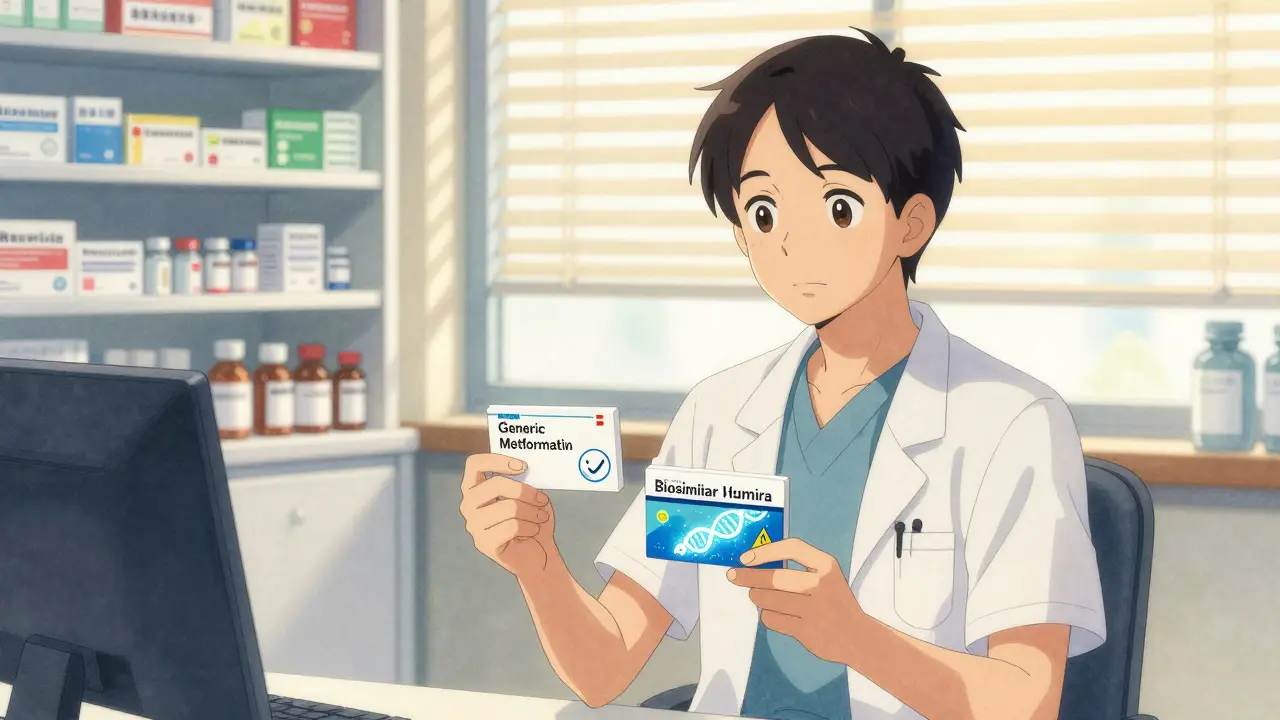
Market reality: generics rule, biosimilars are rising
Generics make up 90% of prescriptions in the U.S. - over 6 billion a year. But they only account for 20% of total drug spending because they’re so cheap. Biosimilars? Less than 3% of the biologics market. But that’s changing fast. The global biosimilars market is expected to hit $37 billion by 2028. Why? Because big patents are expiring. Humira, the top-selling drug in history, finally lost its exclusivity in 2023. Amjevita, the first interchangeable biosimilar for Humira, launched with a 35% discount. That’s a game-changer. But it’s still early. Europe is ahead - biosimilars make up 35% of the biologics market there. The U.S. is catching up, slowly.What’s next?
The Inflation Reduction Act of 2022 is helping. It’s closing Medicare Part D’s "donut hole," so patients pay less out of pocket for expensive biologics. That makes biosimilars more attractive. More interchangeable biosimilars are coming. The FDA is working on clearer guidance for complex biologics like antibody-drug conjugates. And manufacturers are learning how to make biosimilars cheaper and faster. But the core truth won’t change: biosimilars aren’t generics. They’re a new kind of medicine - powerful, complex, and still evolving.Bottom line
If you’re on a generic, you’re getting a perfect copy of a simple chemical. Safe, cheap, and easy. If you’re on a biologic, and your doctor suggests a biosimilar, you’re getting a highly similar version of a complex biological product. It’s not identical - but it’s proven safe and effective. The savings are real. The science is solid. The main difference? Generics are simple. Biosimilars are sophisticated. And both are changing how we pay for life-saving medicine.Are biosimilars as safe as the original biologic drugs?
Yes. The FDA requires biosimilars to show no clinically meaningful differences in safety, purity, or potency compared to the original biologic. This is backed by extensive testing - including structural analysis, animal studies, and sometimes clinical trials. Millions of doses have been administered worldwide with no new safety signals. But unlike generics, biosimilars require careful monitoring for immune reactions, especially during the first switch.
Can I be switched from a biologic to a biosimilar without my doctor’s approval?
Only if the biosimilar has been designated as "interchangeable" by the FDA. As of 2023, only 7 of the 42 approved biosimilars have this status. For all others, your doctor must write a new prescription. Even in states with automatic substitution laws, pharmacists can’t swap a non-interchangeable biosimilar for the original without authorization. Always check with your prescriber before any switch.
Why are biosimilars more expensive to develop than generics?
Biosimilars are made from living cells, not chemicals. Their structure is complex - like a 3D puzzle with thousands of moving parts. Manufacturers can’t reverse-engineer the original process. They must develop their own cell line, fermentation method, and purification system. This requires hundreds of analytical tests, animal studies, and clinical data. Generics just need to prove they absorb the same way in the body. The development cost for a biosimilar is $100-200 million. For a generic? $2-5 million.
Do biosimilars work the same for all conditions the original biologic treats?
Yes - but only if the FDA approves "extrapolation." This means if a biosimilar is proven effective for one condition (like rheumatoid arthritis), it can be approved for others (like Crohn’s disease) without separate trials, as long as the mechanism of action is the same. The FDA allows this based on scientific evidence, not guesswork. But it’s not automatic. Each case is reviewed carefully. Always confirm with your doctor which conditions your biosimilar is approved for.
Why aren’t there more interchangeable biosimilars?
The FDA requires additional studies to prove that switching back and forth between the reference product and the biosimilar has no increased risk of side effects or reduced effectiveness. That’s harder to prove than just showing similarity. It requires multiple switches in clinical trials, which is expensive and complex. Only a handful of biosimilars have met this high bar. More are expected as manufacturers gain experience and regulatory guidance improves.
For patients, the choice between biosimilars and generics isn’t always yours to make - it’s shaped by your condition, your doctor, your insurance, and your pharmacy. But knowing the difference helps you ask the right questions. You’re not just getting cheaper medicine. You’re getting a smarter, more sustainable system for expensive treatments. And that’s worth understanding.

10 Comments
Stephanie PaluchMarch 12, 2026 AT 07:27
Wow, this is such a clear breakdown 🙌 I’ve been on Humira for years and never realized how different biosimilars are from generics. It’s wild to think about how a drug made from living cells can’t just be copied like a pill. Thanks for explaining it like I’m not a doctor lol.
tynece robertsMarch 13, 2026 AT 02:32
so like… biosimilars are basically the health version of a remix? like you know the original song but its got a different beat and the vocals are kinda off but still bops? 🤔
Hugh BreenMarch 13, 2026 AT 04:23
THIS IS SO IMPORTANT. 🙏 We treat pills like they’re LEGO bricks and biologics like they’re quantum computers - and we act like switching one for the other is the same thing. It’s not. The fact that pharmacists can swap generics without a second thought but need a whole new script for biosimilars? That’s not bureaucracy - that’s science being respected. Kudos to the FDA for not cutting corners.
Byron BororMarch 14, 2026 AT 18:28
Why are we even letting foreign companies make these biosimilars? The U.S. invented these life-saving drugs. Now we’re outsourcing the copycat versions to India and China while our own manufacturers sit idle. This isn’t innovation - it’s surrender.
Lorna BrownMarch 16, 2026 AT 10:26
It’s fascinating how we’ve built entire regulatory systems around the assumption that complexity equals risk - and yet we treat simple chemicals like they’re flawless. The truth is, both systems have trade-offs. Generics are predictable but don’t account for biological variability. Biosimilars acknowledge that variability, but we’re still learning how to manage it. Maybe the real question isn’t ‘which is better’ - but ‘how do we trust both?’
Rex RegumMarch 18, 2026 AT 04:07
They say biosimilars aren’t generics. Fine. But then why do insurance companies treat them like they’re the same? They push them like they’re discount soda when they’re actually surgical-grade precision medicine. This isn’t healthcare - it’s corporate theater. And patients are the punchline.
Kelsey VonkMarch 19, 2026 AT 05:10
I’ve been thinking about this a lot since my doctor mentioned switching me to a biosimilar. I’m not scared of the science… I’m scared of being the guinea pig. What if I’m the one who gets the weird immune reaction? I get that it’s statistically safe - but statistics don’t live in my body. I wish there was more transparency about who’s been switched and how they’ve done.
Emma NicollsMarch 21, 2026 AT 00:30
so i just found out my pharmacy switched me to a biosimilar without telling me 😳 i didnt even know they could do that. now im kinda freaked out but also kinda impressed? like… if its safe enough to swap, why is it so confusing? 🤷♀️
Jimmy VMarch 21, 2026 AT 21:04
Let’s cut the fluff. Biosimilars cost $100M to make. Generics cost $5M. Insurance pays $20K for Humira. Biosimilar? $13K. Who’s pocketing the difference? Hospitals. Pharmacies. PBMs. Patients? Still paying $5K out of pocket. This isn’t about science - it’s about who gets to keep the money. Stop pretending biosimilars are a patient win. They’re a corporate one.
mir yasirMarch 23, 2026 AT 18:53
One must observe with intellectual rigor the ontological distinction between small-molecule pharmacology and macromolecular biologics. The conflation of biosimilars with generics is not merely an error of semantics - it is a fundamental misapprehension of pharmaceutical ontology. The regulatory architecture of the BPCIA exists precisely because biological systems are non-linear, emergent, and context-sensitive - qualities entirely absent in synthetic small molecules. To equate them is to reduce the sublime to the banal.