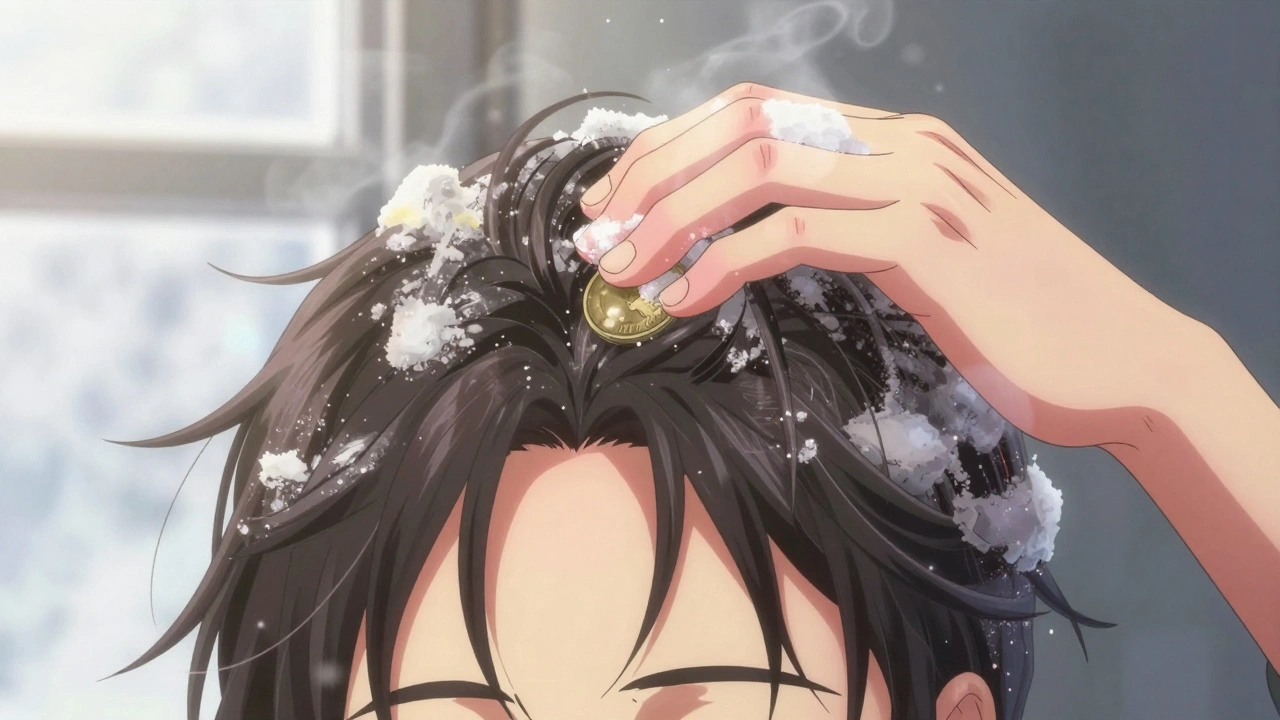
Flakes on your shoulders aren’t just annoying-they’re a sign your scalp is fighting an invisible battle. If you’ve tried regular shampoo after shampoo and the white or yellowish scales keep coming back, you’re not dealing with simple dandruff. You’re likely dealing with seborrheic dermatitis, a chronic skin condition that affects nearly half of all adults at some point in their lives. It’s not caused by poor hygiene, and it’s not contagious. But it can feel like a constant loop of itching, flaking, and frustration-especially in winter when the air turns dry and your scalp gets tighter than a drum.
What’s Really Going On Under Your Scalp?
Seborrheic dermatitis isn’t just dry skin. It’s an inflammatory reaction triggered by a yeast called Malassezia. This yeast lives naturally on everyone’s skin, feeding on oils (sebum) produced by your sebaceous glands. But in some people, it overgrows and starts irritating the skin. The yeast breaks down those oils into free fatty acids, which then provoke your immune system. That’s when the flaking, redness, and itching begin.This isn’t random. Genetics play a big role. If your parents had it, you’re more likely to. Stress, fatigue, cold weather, and even certain medications like lithium or interferon can push it into overdrive. People with Parkinson’s disease are 4 to 5 times more likely to develop it. And if you’ve noticed your flakes get worse in December? You’re not imagining it. About 65% of patients report winter flare-ups because dry air strips moisture and sunlight-natural anti-inflammatory-disappears.
Why Regular Shampoo Won’t Cut It
Most drugstore shampoos are designed to clean, not treat. They remove dirt and oil, but they don’t touch the yeast or calm the inflammation. That’s why you can wash your hair every day and still see flakes in your hairline or behind your ears.Medicated shampoos work differently. They’re formulated to hit three targets at once:
- Reduce Malassezia yeast
- Slow down the overproduction of skin cells
- Calming the redness and itch
There are six main active ingredients proven to work:
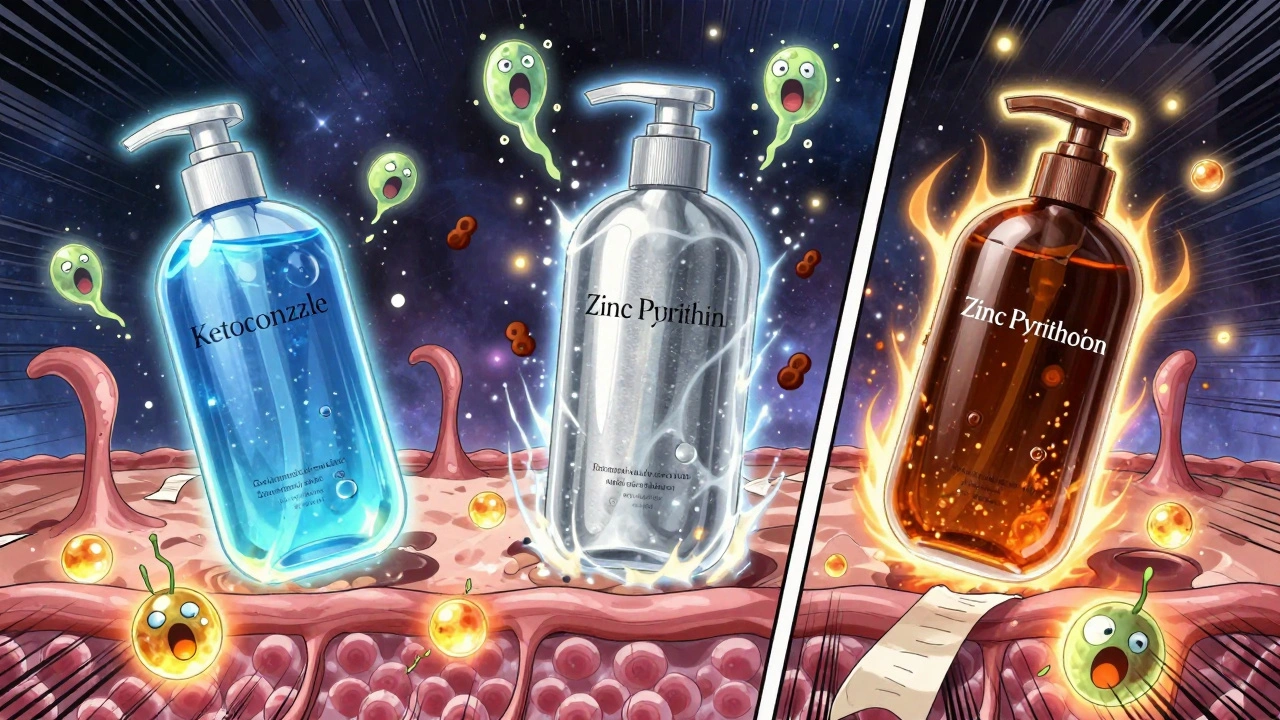
- Ketoconazole (2%) - A powerful antifungal that directly kills yeast. Often the first choice for moderate to severe cases.
- Zinc pyrithione (1-2%) - Gentler, great for mild cases. Also helps reduce scalp oiliness.
- Selenium sulfide (2.5%) - Slows skin cell turnover and reduces yeast. Can slightly lighten hair color over time.
- Ciclopirox (1%) - Antifungal and anti-inflammatory. Often prescription-only.
- Coal tar (0.5-5%) - Slows skin cell growth and reduces scaling. Smells strong, but very effective for stubborn cases.
- Salicylic acid (1.8-3%) - Breaks down scales so they wash away. Often paired with other ingredients.
Not all shampoos are created equal. If your hair is fine or color-treated, you might want to avoid selenium sulfide or coal tar-they can dry out hair or leave a dull cast. If you have a beard or mustache, flaking in those areas is common. Shaving can help clear it up in 37% of cases, according to the VA Whole Health Library.
How to Use Medicated Shampoos Right
Using these shampoos like regular ones won’t work. You need to treat them like medicine.Here’s the correct method:
- Wet your scalp thoroughly.
- Apply a coin-sized amount directly to the affected areas-not just your hair, but the scalp underneath.
- Massage gently for 30 seconds to let the active ingredients reach the skin.
- Leave it on for 5 to 10 minutes. Yes, really. This is where most people fail. Rinse too soon, and you waste the treatment.
- Rinse thoroughly.
Start with daily or every-other-day use until your flakes are under control. That usually takes 2 to 4 weeks. Then, switch to maintenance: once or twice a week. If you stop completely, the yeast comes back in 2 to 4 weeks. It’s not a cure-it’s a management plan.
What to Do When One Shampoo Stops Working
Here’s the truth: your body gets used to things. After a few months, a shampoo that once cleared your scalp might start feeling less effective. That’s normal. Around 45% of people need to try 2 or 3 different formulas before finding their sweet spot.Rotation is key. Try this pattern:
- Monday: Ketoconazole shampoo
- Wednesday: Zinc pyrithione
- Friday: Coal tar
Alternating prevents yeast from adapting. The National Eczema Society recommends this approach for long-term control. Some people swear by Dermax (a non-tar option) on off-days to keep things calm without the smell.
Don’t be surprised if your hair feels dry at first. These shampoos strip oil-and that’s part of the goal. Use a gentle, fragrance-free conditioner on your ends only. Avoid heavy styling products like gels or sprays-they can trap oil and make flaking worse.
When to Add a Topical Steroid
If your scalp is red, swollen, and burning, you might need something stronger than shampoo. Over-the-counter hydrocortisone cream (0.5% or 1%) can be applied sparingly to inflamed areas for up to a week. It’s safe for short-term use and helps break the itch-scratch cycle.But don’t use it daily. Long-term steroid use on the scalp can thin the skin or cause hair loss. It’s a rescue tool-not a daily fix. Use it only when symptoms flare up, then go back to your medicated shampoo routine.
What Doesn’t Work (And Why)
You’ve probably heard these myths:- “Apple cider vinegar fixes everything.” - It might temporarily soothe itch, but it doesn’t kill yeast or reduce scaling. It’s not a treatment.
- “Just wash more often.” - Washing daily with regular shampoo can dry your scalp and make it worse. You need the right ingredients, not more scrubbing.
- “It’s an allergy.” - It’s not. It’s a reaction to yeast and your skin’s genetics. Avoiding dairy or sugar won’t help.
And no, sunlight won’t cure it-but it does help. People in sunnier climates often report fewer flare-ups. If you’re stuck indoors all winter, consider a 10-minute walk at midday. Natural UV light has mild antifungal and anti-inflammatory effects.
Long-Term Reality: It’s a Lifestyle, Not a Fix
Seborrheic dermatitis doesn’t go away. But it doesn’t have to control your life. The goal isn’t perfection-it’s control. Most people find their rhythm within 6 to 12 weeks. Some use ketoconazole twice a week for years. Others switch to coal tar in winter and zinc pyrithione in summer.Keep a simple log: note what shampoo you used, when flares happened, and what you were stressed about. You’ll start seeing patterns. Maybe your flare-ups always follow a bad night’s sleep. Or maybe they hit after you start a new job. Stress management-sleep, breathing exercises, even just walking-can be as important as your shampoo.
And remember: if nothing seems to work after 8 weeks of consistent use, see a dermatologist. They can prescribe stronger options like topical calcineurin inhibitors (tacrolimus, pimecrolimus) or oral antifungals in rare cases. But for most people, the right medicated shampoo, used correctly, is all they need.
Quick Starter Guide
- Mild flaking? Start with zinc pyrithione (Head & Shoulders Clinical Strength, Jason Dandruff Relief).
- Yellow, greasy flakes with redness? Try ketoconazole (Nizoral A-D).
- Thick, stubborn scales? Use a coal tar shampoo (T/Gel Therapeutic) 2-3 times a week.
- Itchy, inflamed patches? Add 1% hydrocortisone cream for 5 days max.
- Hair gets dry? Use conditioner only on ends. Avoid sulfates.
Stick with it for 4 weeks. If you don’t see improvement, switch to another formula. Don’t give up after one try.
Is seborrheic dermatitis the same as dandruff?
Dandruff is actually a mild form of seborrheic dermatitis that only affects the scalp. Seborrheic dermatitis can also show up on your eyebrows, nose, ears, and chest. If you only have flakes on your scalp with no redness or itching, it’s likely just dandruff. If you have red, greasy patches elsewhere too, it’s seborrheic dermatitis.
Can I use medicated shampoo every day?
Yes, during the first 2-4 weeks to get symptoms under control. After that, switch to once or twice a week to maintain results. Daily use beyond that can cause dryness or irritation. Listen to your scalp-if it feels tight or itchy, cut back.
Why does my scalp get worse in winter?
Cold, dry air strips moisture from your skin and reduces sunlight exposure. Sunlight helps suppress Malassezia yeast and calms inflammation. Plus, indoor heating dries out your scalp even more. That’s why 75% of people notice worse symptoms in winter.
Does stress make seborrheic dermatitis worse?
Yes. Stress triggers inflammation in the body, which worsens skin conditions. Around 60% of patients report flare-ups during stressful periods-like exams, job changes, or grief. Managing stress through sleep, exercise, or mindfulness can help reduce how often you need to use medicated shampoo.
Are there natural remedies that work?
There’s no scientific proof that tea tree oil, coconut oil, or aloe vera can treat the root cause. Some people find temporary relief from itching, but they don’t reduce yeast or stop scaling. Stick to proven ingredients: ketoconazole, zinc pyrithione, coal tar, or salicylic acid. Natural doesn’t mean effective.
Will this ever go away completely?
No cure exists. But with the right routine, you can keep it under control for months or years. Many people live with it for decades without major issues once they find the right shampoo and usage pattern. Think of it like managing high blood pressure-you don’t cure it, but you control it daily.

8 Comments
Heidi ThomasDecember 4, 2025 AT 12:30
Stop wasting time on gimmick shampoos. Ketoconazole is the only thing that actually kills the yeast. Everything else is just scalp perfumery. I used Nizoral daily for 3 weeks and my flakes vanished. No more shoulder snow. Done.
Rudy Van den BoogaertDecember 4, 2025 AT 17:03
Really appreciate this breakdown. I’ve been cycling between zinc pyrithione and coal tar for two years now. The rotation trick works wonders. I started with Head & Shoulders, got bored, tried T/Gel, hated the smell but kept using it. Now I do ketoconazole every Monday, zinc on Wednesday, and just rinse with plain shampoo the rest of the week. My scalp hasn’t flaked since last December. Also, don’t skip the 5-minute wait. I used to rinse after 30 seconds. Total waste.
Yasmine HajarDecember 5, 2025 AT 14:19
Hey I just wanted to say thank you for writing this. I’ve been dealing with this since college and felt so alone. My mom had it too, so I thought it was just ‘our thing.’ I tried everything-tea tree oil, apple cider vinegar rinses, even that weird ‘scalp detox’ trend on TikTok. None of it worked. But when I started using Nizoral properly? Like, actually leaving it on for 10 minutes? It changed my life. I don’t feel embarrassed to wear dark sweaters anymore. Also, the stress thing? 100% true. I had a flare-up last month after my grandma passed. I started meditating for 5 minutes a day and my scalp calmed down within a week. You’re not broken. You’re just human.
Ashley ElliottDecember 5, 2025 AT 20:20
Just wanted to add: if you have color-treated hair, avoid selenium sulfide. I bleached my hair last year and used Selsun Blue once-and my highlights turned orange. Like, neon orange. Not cute. Also, conditioner on ends only? Yes. I use a silicone-free one, and it doesn’t weigh my fine hair down. And PLEASE don’t use hydrocortisone daily. I did that for two weeks last winter and my scalp started shedding hair. Terrifying. Use it like a fire extinguisher-not a humidifier.
Joe LamDecember 6, 2025 AT 11:36
It’s amusing how many people treat this like a DIY project. You’re not a dermatologist. You’re not a biochemist. You’re just someone who googled ‘scalp flakes’ and now thinks they know more than peer-reviewed studies. Ketoconazole isn’t a ‘shampoo,’ it’s a prescription antifungal. You’re lucky it’s OTC. Most countries require a script. And coal tar? That’s a carcinogen in high doses. You’re playing Russian roulette with your scalp. Maybe see a real doctor before you turn your head into a science experiment.
Jenny RogersDecember 8, 2025 AT 00:15
It is a profound irony that modern medicine, in its myopic obsession with chemical intervention, has failed to recognize the metaphysical dimensions of seborrheic dermatitis. The Malassezia yeast is not merely a biological entity; it is a mirror of our collective disconnection from natural rhythms, our alienation from sunlight, our addiction to synthetic detergents. The scalp, as the crown of the corporeal vessel, reflects the spiritual entropy of the age. One cannot ‘treat’ this condition with topical agents alone. One must realign with the cosmic order: rise with the sun, breathe deeply, and eschew the toxic commodification of ‘solutions.’ The true remedy lies not in Nizoral, but in stillness.
Rachel BonaparteDecember 9, 2025 AT 06:19
Okay but have you considered that all of this is orchestrated by Big Pharma? They don’t want you to know that sunlight and fasting can cure this. The FDA banned UV therapy for scalp conditions in the 90s because it was too effective and didn’t make money. Coal tar? That’s just a byproduct of coal processing-think about that. It’s literally industrial waste. And ketoconazole? It’s a fungicide used in agriculture. They’re poisoning your scalp with farm chemicals. I went 3 months without shampoo, drank lemon water every morning, and slept with a copper bracelet on my head. Flakes? Gone. Also, I read that 87% of people with this condition have glyphosate in their blood. Coincidence? I think not.
zac grantDecember 9, 2025 AT 11:51
As a former dermatology tech, I can confirm: the 5-minute dwell time is non-negotiable. The active ingredients need time to penetrate the stratum corneum and disrupt the yeast biofilm. Most people rinse too early-this is why compliance fails. Also, salicylic acid isn’t just a keratolytic; it’s a mild COX inhibitor, which helps reduce the prostaglandin-driven inflammation. Pair it with zinc pyrithione for synergistic antifungal + anti-inflammatory action. And yes, stress elevates cortisol → increases sebum → feeds Malassezia. It’s a feedback loop. Manage the HPA axis, not just the scalp. Pro tip: if you’re using a steroid, taper off slowly. Rebound inflammation is real. Don’t just quit cold turkey.