REMS Access Delay Calculator
Calculate Your REMS Wait Time
REMS programs add essential safety measures for high-risk medications, but can cause delays in getting your prescription. Enter your drug details to estimate your wait time.
Results
Estimated Wait Time
This estimate includes typical requirements for the selected drug.
What Causes These Delays?
REMS programs require:
- Patient registration and education
- Prescriber certification and training
- Frequent lab monitoring (e.g., weekly blood tests)
- Specialized dispensing locations
- Pregnancy testing and prevention programs
- Additional documentation for prescription approval
Pro Tip: For some drugs like isotretinoin (Accutane), you may need two negative pregnancy tests, two forms of birth control, and a 30-day waiting period between prescriptions.
When a drug can save your life-but also kill you if used wrong-how do you make sure it’s safe? That’s the problem the FDA solved with REMS programs. These aren’t just extra labels or warnings. They’re legally required safety systems built into the way certain high-risk medications are prescribed, dispensed, and monitored. If you’ve ever waited days to get a prescription filled because your pharmacy needed special clearance, or your doctor had to complete training before writing a script, you’ve run into a REMS program.
What Exactly Is a REMS Program?
REMS stands for Risk Evaluation and Mitigation Strategies. It’s a formal system created by the U.S. Food and Drug Administration in 2007 under the Food and Drug Administration Amendments Act (FDAAA). The goal? To allow life-saving drugs with serious risks to stay on the market-while making sure those risks don’t get out of control. Think of it this way: Most drugs come with a warning label. That’s standard. But for some medications, the label alone isn’t enough. Maybe the side effect is rare but deadly. Maybe it affects unborn babies. Maybe it requires blood tests every week. That’s where REMS steps in. It adds layers of control-beyond the label-to make sure the right people get the right drug, under the right conditions. The FDA doesn’t use REMS for every drug. Only about 5% of approved medications need one. But those 5% include some of the most critical treatments: cancer drugs, antipsychotics, immunosuppressants, and medications that can cause birth defects. As of October 2023, there were 78 active REMS programs covering around 150 drugs. That’s more than double the number from 2015.How REMS Works: The Three Key Elements
Not all REMS programs are the same. Each one is custom-built for the specific danger a drug poses. But they all include at least one of these three core components:- Medication Guides: These are printed handouts given to patients when they pick up their prescription. They explain the risks in plain language-no medical jargon. For example, the guide for isotretinoin (Accutane) clearly warns that pregnancy during treatment can cause severe birth defects.
- Communication Plans: These are directed at doctors and pharmacists. They include training materials, emails, webinars, and alerts to make sure providers understand the risks and how to manage them. For drugs like clozapine, which can wipe out white blood cells, doctors must be trained on when and how to order weekly blood tests.
- Elements to Assure Safe Use (ETASU): This is the strictest layer. It can mean:
- Only certified prescribers can write the script.
- Patients must enroll in a registry.
- Drugs can only be dispensed in certain settings-like a hospital or specialized clinic.
- Patients need lab results before getting the next dose.
Why REMS Programs Exist: Real Risks, Real Stories
The history of REMS goes back to drugs that caused disasters because their risks weren’t properly managed. Thalidomide, used in the 1950s and 60s for morning sickness, caused thousands of babies to be born with missing limbs. When it was revived decades later to treat leprosy and multiple myeloma, the FDA didn’t take chances. They created the S.T.E.P.S. program-the first REMS-which required strict pregnancy prevention, regular testing, and signed consent forms. That program is still active today. Isotretinoin (Accutane) is another example. It’s incredibly effective for severe acne-but it’s also a known teratogen. If a woman gets pregnant while taking it, the baby has a high chance of serious birth defects. The iPLEDGE REMS program requires two negative pregnancy tests, two forms of birth control, monthly counseling, and a 30-day waiting period between prescriptions. It’s frustrating for patients. But it works: birth defects from isotretinoin have dropped by over 95% since iPLEDGE started. Clozapine, used for treatment-resistant schizophrenia, can cause agranulocytosis-a dangerous drop in white blood cells. Without weekly blood tests, patients can die from infections. The clozapine REMS requires pharmacies to verify lab results before dispensing. It’s a bottleneck, but it saves lives.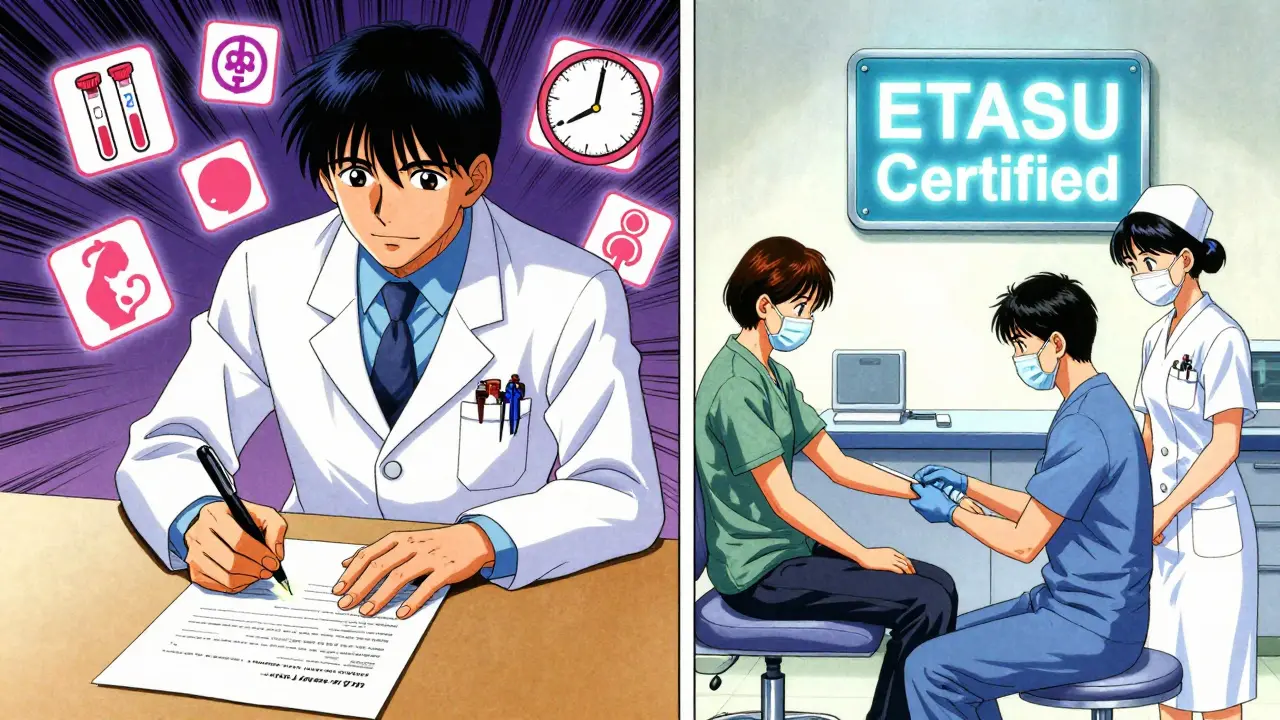
Who Runs REMS Programs? The Pharmaceutical Companies
Here’s something most people don’t realize: The FDA doesn’t run REMS programs. The drugmakers do. Pharmaceutical companies must design, pay for, and maintain each REMS. They build the websites, train the providers, manage the registries, and report data to the FDA. The FDA just approves the plan and checks in to make sure it’s working. That means REMS costs money-big money. A simple program with just a medication guide might cost $500,000 a year. A complex one with patient registries, certified clinics, and real-time monitoring can cost over $15 million annually. The entire U.S. pharmaceutical industry spends about $1.2 billion each year on REMS. And if a company messes up? The FDA hits them hard. In 2022, the agency issued 17 warning letters for REMS failures. One generic drugmaker paid a $2.1 million fine for not properly managing clozapine’s blood test requirements.The Downside: Delays, Burdens, and Access Problems
REMS saves lives-but it also slows things down. A 2019 study in JAMA Internal Medicine found that REMS drugs took an average of 5.4 days longer to get to patients than non-REMS drugs. For someone with a rare disease who needs treatment fast, that’s a lifetime. Doctors report delays too. A 2022 survey of 1,250 U.S. physicians found that 68% had to wait longer to start REMS medications. Nearly half said those delays hurt patient outcomes. Pharmacists are stuck in the middle. One hospital pharmacist told Pharmacy Times they spend 2-5 extra hours a week just verifying REMS paperwork. For isotretinoin, the iPLEDGE system requires multiple logins, date checks, and confirmations. On Reddit, pharmacists call it a “nightmare.” And it’s worse for rural patients. A 2023 report from the National Organization for Rare Disorders said many rare disease patients have to drive hours to a certified clinic just to get their medication. If they miss an appointment, they lose their dose. No one’s accounting for transportation, childcare, or time off work.Is REMS Working? Experts Are Divided
Supporters say REMS made the impossible possible. Dr. Robert Temple, former FDA deputy director, said REMS allowed life-saving drugs to be approved that otherwise would’ve been banned. Without REMS, drugs like thalidomide and clozapine wouldn’t be available today. Critics say some REMS are outdated and unnecessary. Dr. Aaron Kesselheim from Harvard testified in 2021 that the REMS for long-acting opioids required doctors to take training-but didn’t require patient monitoring. The result? More paperwork, no better safety. He called it “administrative burden without benefit.” The FDA agrees. In 2022, former Acting Commissioner Dr. Janet Woodcock said, “Not all REMS programs have been equally effective.” That’s why they’ve started sunsetting old ones. In August 2023, the FDA officially ended the REMS for thalidomide after 20 years-because better practices and education made it redundant.
What’s Changing in 2025?
REMS isn’t frozen in time. It’s evolving. The FDA’s 2024-2026 plan includes modernizing REMS with digital tools. Pilot programs are testing smartphone apps that let patients log blood pressure, heart rate, or symptoms in real time. That could replace weekly clinic visits for some drugs. The REMS Integration Initiative has already brought 22 of the 78 programs onto a single platform. That means fewer logins, less confusion, and less time wasted. And now, every REMS proposal must include a formal assessment: “Does this program create unnecessary access barriers?” Especially for rare diseases, low-income patients, or those in rural areas. The goal isn’t to remove safety. It’s to make safety smarter.What This Means for You
If you’re a patient: You might face delays. You might need to do extra paperwork. But you’re also getting a drug that’s been tightly controlled to protect you. If your doctor says you need a REMS medication, ask: What’s the risk? What do I have to do? Is there a simpler option? If you’re a prescriber or pharmacist: You’re on the front lines. Use the FDA’s REMS Dashboard to check which programs are active. Know your responsibilities. Push back when a REMS feels outdated. The FDA listens. If you’re in the industry: REMS is expensive, complex, and under scrutiny. But it’s also your legal responsibility. Don’t treat it as a checkbox. Make it a system that works-for patients, not just regulators.REMS in the Bigger Picture
REMS is a uniquely American solution. In Europe, all new drugs have a Risk Management Plan (RMP)-a lighter, more general version. The U.S. goes further, only applying REMS to the riskiest drugs. That makes it more targeted-but also more fragmented. As cancer drugs get more powerful-and more dangerous-the number of REMS programs will keep rising. Evaluate Pharma predicts that by 2027, 45% of new oncology drugs will need one. The challenge isn’t whether REMS should exist. It’s whether we can make it faster, fairer, and smarter. Right now, we’re still balancing two things: saving lives and not making access harder than the disease itself.What drugs require a REMS program?
REMS programs apply to prescription drugs with serious safety risks that can’t be managed with standard labeling alone. Examples include isotretinoin (for acne), clozapine (for schizophrenia), thalidomide (for leprosy and cancer), Zyprexa Relprevv (an antipsychotic injection), and many cancer drugs like lenalidomide and pomalidomide. As of 2025, 78 REMS programs cover about 150 medications, mostly in oncology, neurology, and immunology.
Who pays for REMS programs?
The pharmaceutical company that makes the drug pays for the entire REMS program. This includes building websites, training providers, managing registries, and reporting to the FDA. Annual costs range from $500,000 for simple programs to over $15 million for complex ones requiring patient monitoring and certified clinics.
Can a REMS program be removed?
Yes. The FDA can remove or modify a REMS if new data shows the risks are better managed through other means. In August 2023, the FDA ended the REMS for thalidomide after 20 years because improved education and safer prescribing practices made the program unnecessary. This is called a "sunset" and is becoming more common as the FDA focuses on reducing unnecessary barriers.
Why do REMS programs cause delays in getting medication?
REMS often requires multiple steps before a drug can be dispensed: prescriber certification, patient enrollment, lab test verification, or special dispensing locations. For example, the iPLEDGE program for isotretinoin requires two negative pregnancy tests, two forms of birth control, and a 30-day waiting period. These steps add days-or even weeks-to the process, especially if systems don’t talk to each other (only 35% of REMS platforms integrate with electronic health records).
Are REMS programs effective?
For some drugs, yes. Isotretinoin-related birth defects dropped over 95% after iPLEDGE launched. Clozapine-related deaths from low white blood cell counts have fallen dramatically since mandatory blood testing began. But a 2023 FDA-PhRMA report found that 63% of REMS programs still lack clear metrics to prove they improve safety. Some are seen as bureaucratic hurdles with little real benefit-especially for drugs where risks are well-known and manageable.

11 Comments
Dave AlponvyrDecember 15, 2025 AT 12:12
So basically the FDA outsourced safety to drug companies who then turned it into a paperwork nightmare. Classic.Kitty PriceDecember 17, 2025 AT 00:03
I’ve had to wait 3 weeks for my clozapine refill. My doctor had to call 5 pharmacies. It’s not safety-it’s bureaucracy with a side of trauma.Randolph RickmanDecember 17, 2025 AT 07:37
I work in a rural clinic. Patients drive 2 hours just to get their REMS meds. One woman missed her dose because her bus got canceled. She had a seizure. This isn’t protection-it’s a privilege system.SHAMSHEER SHAIKHDecember 18, 2025 AT 05:57
In India, we manage high-risk medications through physician-led monitoring and patient education-no digital registries, no certified clinics. Why does America need such an over-engineered system? Is it about safety-or liability?sue sparkDecember 18, 2025 AT 06:22
I’m a nurse and I’ve seen isotretinoin patients cry because they can’t get their script on time. The system protects them from themselves but forgets they’re human. We need flexibility not checkboxesColleen BigelowDecember 18, 2025 AT 22:46
This is all a cover-up. Big Pharma pays the FDA to keep REMS so they can charge $10k a pill and pretend they care. The real danger isn’t the drug-it’s the monopoly. Wake up people. They’re watching your blood tests to control you.Kim HinesDecember 20, 2025 AT 12:46
I think the REMS for thalidomide should’ve been sunsetted years ago and now they’re finally doing it but only because the public complained. They fix things after the damage is doneJosias Ariel MahlanguDecember 21, 2025 AT 08:02
People complain about delays but if one child is born with deformities because someone skipped a step then the system worked. I’d rather wait than be responsible for a tragedy.Billy PolingDecember 22, 2025 AT 00:26
It is of paramount importance to recognize that the structural architecture of the REMS framework, while ostensibly designed to mitigate risk, inadvertently engenders systemic inefficiencies that disproportionately impact marginalized populations, particularly those residing in geographically isolated regions with limited access to certified providers, thereby exacerbating health disparities under the guise of regulatory diligence.Dylan SmithDecember 23, 2025 AT 03:24
The iPLEDGE system is a joke. I had to log in twice, answer the same question three times, and then my pharmacist said they didn’t have the right form. I’m 24 and I’m not having a baby. Why does this feel like I’m being treated like a criminalTiffany MachelskiDecember 23, 2025 AT 09:59
i think the new digital pilot programs are a good step forward but i wish theyd make it so the ehr and rems systems talk to each other already like why is this still so broken