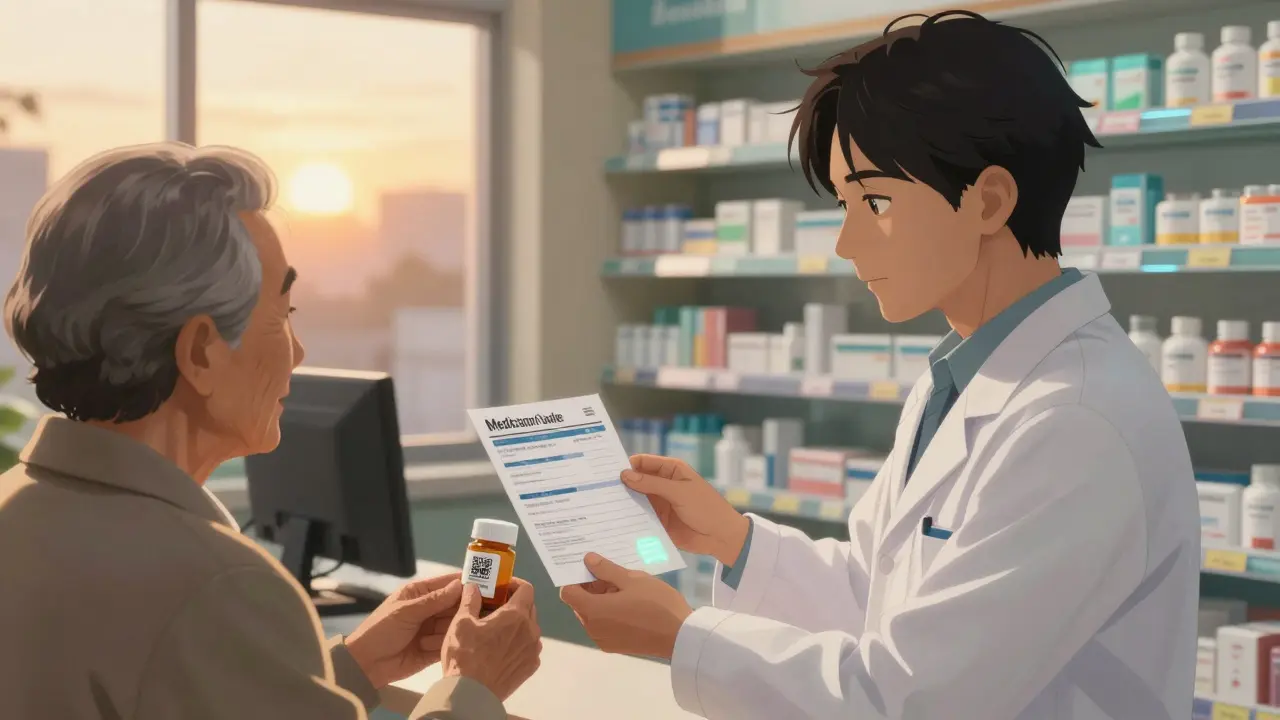
Medication Guide Distribution Checker
Check Your Distribution Requirements
This tool helps determine whether you must provide a Medication Guide based on FDA requirements for your specific scenario.
Results will appear here after checking.
Every time a patient walks out of a pharmacy with a prescription for a high-risk medication, there’s a legal document they should get - a Medication Guide. It’s not just a handout. It’s a federally mandated safety tool designed to prevent serious harm. But here’s the problem: most pharmacists and providers don’t know exactly when they’re required to give it out. And that uncertainty puts patients at risk.
What Exactly Is a Medication Guide?
A Medication Guide (MG) is a paper handout approved by the FDA that comes with certain prescription drugs. Unlike general patient info sheets you might find online or get from a drug company, these are legally required, reviewed by the FDA, and written in plain language. They’re not optional. They’re not suggestions. If your drug is on the list, you must hand it to the patient - or their caregiver - every time the rules say you must. The FDA only requires these guides for drugs with serious risks. Think isotretinoin (Accutane), which can cause birth defects; clozapine (Clozaril), which can shut down your bone marrow; or estrogen products that raise stroke risk. These aren’t minor side effects. These are life-changing or life-threatening dangers. The guide explains what to watch for, what to avoid, and when to call a doctor. It’s meant to help patients make smart choices - not just follow a script.When Do You Have to Give Out a Medication Guide?
This is where things get messy. It’s not as simple as “give it every time.” The FDA spells out five specific situations where distribution is required:- The patient or their agent asks for it - no questions asked.
- The drug is being dispensed for self-administration in an outpatient setting - like a patient taking it at home.
- This is the first time a patient receives the drug in an outpatient clinic, infusion center, or dialysis unit.
- The Medication Guide has been updated with new safety info - even a small change triggers a new distribution.
- The drug is part of a REMS program (Risk Evaluation and Mitigation Strategy) that specifically requires it - like iPLEDGE for isotretinoin.
Pharmacy vs. Clinic: The Big Difference
Community pharmacies have it easier in one way: every time you fill a script for a self-administered drug like clozapine or methotrexate, you hand over the guide. No exceptions. But outpatient clinics? That’s where confusion explodes. Say a patient gets epoetin alfa every week for anemia in an oncology clinic. Do you give them the guide each visit? No. Only the first time. Unless the guide was updated. Then you must give it again. Many pharmacists get this wrong. A 2022 survey of over 1,200 hospital pharmacists found 68% were unsure when to distribute in clinic settings. That’s not just a mistake - it’s a compliance gap. Some clinics try to solve this by printing copies and keeping them on file. That’s not enough. The law says the patient must receive it - physically or electronically. If they leave without it, you’re not in compliance.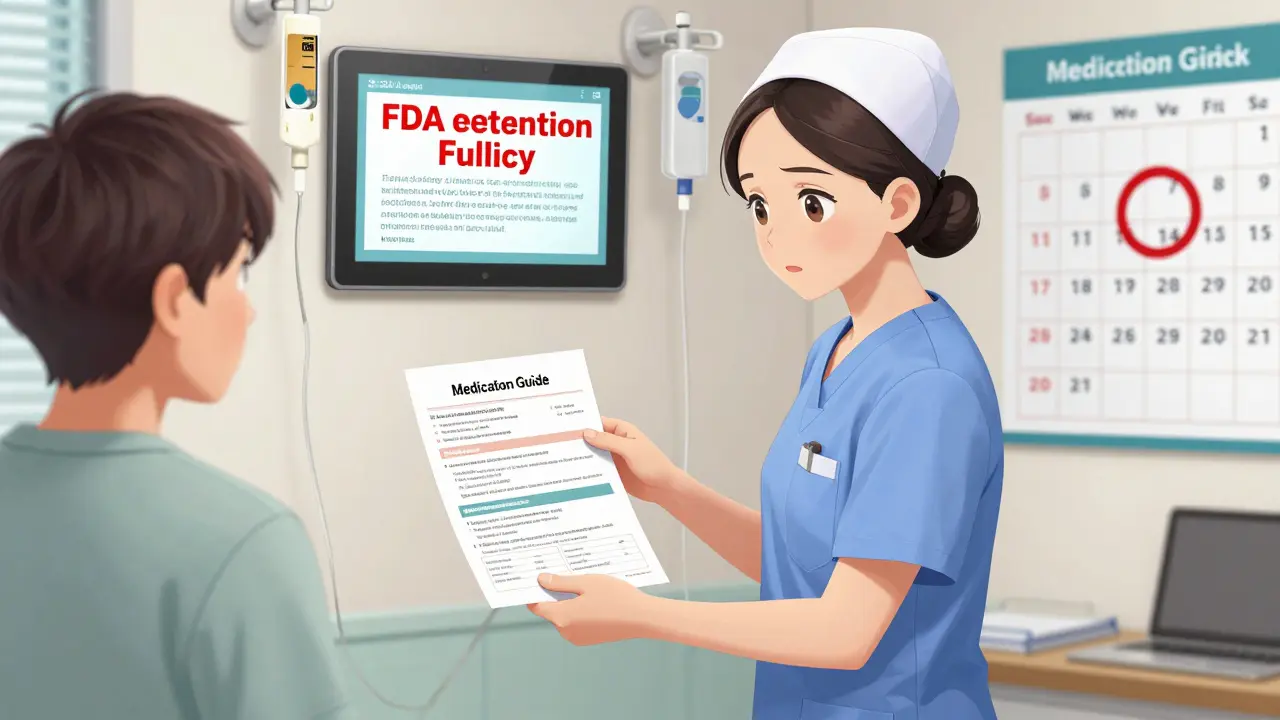
Electronic Delivery Is Now an Option - But Not a Replacement
In 2020, the FDA clarified that patients can request electronic versions instead of paper. That means if a patient says, “Just email me the guide,” you can do it - as long as you confirm they received it and agree to it. But here’s the catch: you still have to offer paper. You can’t force digital. Not everyone has a smartphone. Not everyone trusts email. Not everyone reads well. The FDA requires both options to stay available. Some pharmacies are starting to use QR codes on prescription labels that link to the guide. That’s smart - but only if the patient can access it. And if they can’t? You still need a printed copy ready.How Medication Guides Are Different From Other Patient Info
Don’t confuse these with Consumer Medication Information (CMI) or Patient Medication Information (PMI). Those are generic, voluntary handouts. Often printed by pharmacies or drug manufacturers. They’re helpful, but they’re not FDA-approved. They don’t carry the same legal weight. Medication Guides are different. They’re written by drugmakers but reviewed and approved by the FDA. They follow strict formatting rules. They’re updated only after FDA review. And they’re tied to real safety data - not marketing. Also, don’t mix them up with REMS documents. Some REMS programs use Medication Guides as part of their safety plan - like iPLEDGE. But REMS can include other things: mandatory training, registries, or even special prescriptions. The guide is just one piece.Why This Matters - And Why It’s Controversial
The goal is simple: reduce preventable harm. The FDA says over 200 drugs need these guides. That’s about 15% of all prescription medications in the U.S. Most are in high-risk categories: dermatology, psychiatry, oncology, endocrinology. But here’s the hard truth: studies show only 37% of patients remember key safety points a week after reading the guide. That’s not because the guides are bad - they’re clear and well-written. It’s because patients are overwhelmed. They’re stressed. They’re scared. And they’re not reading them like manuals. Some experts, like former ASHP Executive Vice President Dr. Lucinda L. Maine, argue the system is a paperwork nightmare with little proof it saves lives. She’s not alone. Pharmacists report spending hours tracking guide updates, printing copies, and arguing with patients who say, “I don’t need this.” But others - including former FDA Director Dr. Janet Woodcock - say the guides are essential. “They help patients understand the serious risks,” she said in a 2020 FDA webinar. “And sometimes, that’s the only thing that stops a tragedy.”
How to Get It Right
If you’re a pharmacist or provider, here’s how to avoid mistakes:- Know your drug list. Check the FDA’s website monthly - new guides are added regularly.
- Train your staff. Everyone - from the front desk to the techs - needs to know when a guide is required.
- Use your pharmacy system. Many systems now flag drugs that need guides. Make sure alerts are turned on.
- Track updates. If the guide changes, you must re-distribute. Set a calendar reminder to check for updates every quarter.
- Ask patients. “Would you like a printed copy or an email link?” That’s compliant and respectful.
- Document it. Note in the chart that the guide was provided - even if it’s electronic.
What’s Coming Next?
The FDA is reviewing the entire Medication Guide program. A congressionally mandated study is due in late 2024. Early signs suggest they may expand the list - especially for new cancer drugs and rare disease treatments. Evaluate Pharma predicts a 22% increase in required guides over the next five years. There’s also a push to make guides easier to read. A January 2023 draft guidance from the FDA suggests standardizing layout, font size, and language. That’s good news. If patients can’t understand it, the guide fails. The future might include digital integration - like alerts in patient portals or reminders in apps. But paper will stay. Because for some people, the only thing that works is a piece of paper they can hold.Bottom Line
Medication Guides aren’t bureaucracy. They’re a last line of defense. For some patients, that paper is the only thing standing between them and a deadly mistake. Getting it right isn’t about following rules. It’s about saving lives.If you’re unsure whether a guide is needed - give it. If you’re unsure whether it was updated - check. If you’re unsure whether the patient understood - ask. Because in the end, compliance isn’t about avoiding fines. It’s about making sure no one walks out of your care without knowing the real risks.
Do I have to give a Medication Guide every time a patient refills a prescription?
No - only in specific situations. If the drug is for self-administration and dispensed in an outpatient setting, you must give the guide each time. But if it’s administered in a clinic (like an infusion), you only need to give it the first time - unless the guide was updated. Always check the FDA’s current requirements for the specific drug.
Can I email the Medication Guide instead of printing it?
Yes - but only if the patient requests it. You must still offer a printed copy. Email delivery is an alternative, not a replacement. You must confirm the patient received and agreed to the electronic version. Never assume they have access to email or a smartphone.
Are Medication Guides required in hospitals?
No. The FDA does not require Medication Guides to be distributed in inpatient hospital or nursing home settings. However, healthcare providers must still counsel patients on the drug’s risks and proper use. The legal requirement for paper guides only applies to outpatient and self-administered settings.
What happens if I forget to give a Medication Guide?
There’s no automatic fine, but you’re out of compliance. The FDA can inspect pharmacies and clinics, and repeated failures can lead to warnings, audits, or enforcement actions - especially if a patient is harmed. More importantly, you’ve failed to give the patient critical safety information. Always document whether you provided it and why, if not.
How do I know if a Medication Guide has been updated?
Check the FDA’s website regularly - they list updated guides. You can also sign up for FDA Drug Safety Communications. Many pharmacy systems now auto-flag when a guide has changed. If you’re unsure, contact the drug manufacturer or your pharmacy distributor. Never assume the guide is the same as last time.
Are Medication Guides the same as REMS?
No. A Medication Guide is one part of a REMS (Risk Evaluation and Mitigation Strategy). REMS can include training, registries, or special prescriptions. Some drugs, like isotretinoin, require both a REMS program and a Medication Guide. But not all REMS drugs need a guide - and not all guide drugs are in a REMS. Always check the specific requirements for each drug.
Why do some drugs have Medication Guides and others don’t?
The FDA only requires them for drugs with serious risks that could be prevented with proper patient education. That includes drugs with high potential for fatal side effects, those where adherence is critical to safety, or where patients need to avoid certain activities (like pregnancy). Only about 15% of prescription drugs meet this threshold. It’s not about popularity - it’s about risk.

15 Comments
kate jonesJanuary 30, 2026 AT 13:58
Just had a patient ask why we didn’t give them the guide for methotrexate again. I checked the FDA database-updated last month. We missed it. Now we’ve got a system alert tied to our EHR. No more slip-ups. This isn’t paperwork-it’s a lifeline.
And yes, we offer email now. But if they’re 78 and on Social Security? We print it. Always.
One woman cried because she’d lost her sister to a preventable reaction. That’s why we do this.
Yanaton WhittakerJanuary 31, 2026 AT 23:22
OMG THIS IS WHY AMERICA IS BROKE 😭
Pharmacies printing 500 copies of guides for drugs 90% of people don’t even read??
My uncle takes lisinopril and he thinks the guide is a coupon for free candy. We need to stop this bureaucratic circus.
Beth BeltwayFebruary 1, 2026 AT 01:11
Let’s be real-this entire system is performative compliance. You hand someone a 3-page guide while they’re on a 10-minute clock, stressed, in pain, and already overwhelmed. Then you log it like you’ve done your duty.
The FDA doesn’t care if they read it. They care that you checked the box.
And yet, when someone dies? Suddenly it’s ‘the pharmacist didn’t provide the guide.’
It’s not about safety. It’s about liability.
And don’t even get me started on the 2022 survey showing 68% of clinic pharmacists don’t know when to distribute. That’s not ignorance. That’s systemic failure.
Natasha PlebaniFebruary 2, 2026 AT 08:14
The Medication Guide is a symbolic artifact in a system that has lost its way. It’s not about information transfer-it’s about ritual. The paper becomes a sacrament: proof that we, as healers, have done our part.
But ritual without resonance is theater.
Patients don’t need more text. They need trust. They need someone to sit with them and say, ‘This is why you can’t drink grapefruit juice with this pill. This is why your husband can’t touch your skin for two weeks.’
The guide is a placeholder for that conversation. And we’ve stopped having the conversation.
So we print. We scan. We email. We log. And we pretend we’ve done enough.
Until someone dies.
Then we cry. And then we print more guides.
Sarah BlevinsFebruary 2, 2026 AT 21:56
Per FDA 21 CFR 310.50, distribution requirements are strictly codified. Non-compliance exposes entities to potential regulatory action under 21 U.S.C. § 331. Documentation of delivery-whether electronic or physical-is mandatory for audit purposes. Failure to maintain records may constitute a Class II violation.
Pharmacies should implement automated triggers within their dispensing software to ensure alignment with current FDA guidance. Quarterly audits are recommended.
Blair KellyFebruary 4, 2026 AT 14:10
YOU THINK THIS IS BAD? TRY BEING A PHARMACIST IN A RURAL TOWN WITH NO INTERNET AND A STAFF OF THREE.
My printer broke last week. I had to hand-write the guide for isotretinoin on notebook paper because the patient was leaving in 10 minutes. The FDA didn’t send me a memo. They didn’t send a new template. They just expect me to be a miracle worker.
And now I’m supposed to ‘track updates’? I’m lucky if I get to pee between patients.
This isn’t patient safety. This is punishment disguised as policy.
Gaurav MeenaFebruary 5, 2026 AT 11:22
Love how this post breaks it down so clearly 😊
Here in India, we don’t have Medication Guides like this-but we do have something better: community pharmacists who sit with patients, explain in local language, draw pictures on napkins, and call them back next week to check in.
Maybe the answer isn’t more paper. Maybe it’s more humanity.
Just saying. 🙏
Diksha SrivastavaFebruary 6, 2026 AT 01:07
Thank you for writing this. I’m a nurse in a small oncology clinic, and I’ve seen too many patients miss out on these guides because everyone’s too busy.
We started printing them in color with big fonts and putting them in a folder with the patient’s name on it. Now, they actually read them. One lady told me, ‘I kept this next to my coffee mug so I wouldn’t forget.’
Small changes matter. Keep fighting for this.
💙
Sidhanth SYFebruary 7, 2026 AT 02:05
Interesting take. I work in a pharmacy chain and we use QR codes now. Most patients scan them. But the ones who don’t? Usually older folks. We keep a stack of printed ones by the counter now. No big deal.
Also, the FDA update notifications? We get them via email. It’s not that hard. Just needs a little system.
Not perfect, but better than before.
Adarsh UttralFebruary 7, 2026 AT 18:32
lol i thought the med guide was just the little paper that comes with the bottle
turns out its a whole thing
so we gotta print it every time? even if the patient says no?
damn. this is a lot of work.
April AllenFebruary 8, 2026 AT 14:03
There’s a deeper issue here: we treat patient education as a compliance task, not a therapeutic one.
Medication Guides are written by lawyers and pharma reps, not clinicians or patients. They’re dense, they’re long, they’re not tested for readability.
What if we co-designed them with patients? What if we used video, audio, or pictograms for low-literacy populations?
Instead of asking, ‘Did we hand it out?’ we should be asking, ‘Did they understand?’
That’s the real metric of safety.
And if we’re not measuring that-we’re not healing. We’re just documenting.
Sheila GarfieldFebruary 9, 2026 AT 01:50
I’ve worked in both the UK and US systems. Here, we have leaflets-but they’re not legally mandated. We rely on conversation.
Maybe the real problem isn’t the guide. It’s that we’ve outsourced communication to paper.
Pharmacists used to be the ones who sat down and talked. Now we’re just document distributors.
And patients feel it.
Shawn PeckFebruary 10, 2026 AT 04:23
STOP GIVING PEOPLE PAPER. THEY DON’T READ IT.
Just make them watch a 90-second video before they leave. Boom. Problem solved.
Why are we still using 1990s tech? This is 2025. Use your phone. Use your app. Use your damn portal.
And if they say no? Fine. But then they sign a waiver. No more excuses.
Marc BainsFebruary 10, 2026 AT 09:50
As a Black man who’s been turned away from pharmacies because they ‘don’t have the guide,’ I know this isn’t just about policy.
It’s about bias.
Patients of color, elderly patients, non-English speakers-they’re the ones who get skipped.
That’s not an accident.
We need training, not just reminders.
And we need accountability.
Because if you don’t give the guide to someone because you think they ‘won’t understand’-you’ve already failed them.
Lisa McCluskeyFebruary 11, 2026 AT 12:17
Give the guide. Always. Even if they say no. Document it. Even if they roll their eyes. It’s not about them. It’s about the next person who might need it.