L-Tryptophan & Antidepressant Interaction Checker
Check Your Interaction Risk
This tool helps you understand the potential risks of combining L-tryptophan with your antidepressant. Results are based on scientific evidence and clinical guidelines.
Interaction Assessment
Important Information
This assessment is for informational purposes only. Always consult your healthcare provider before making any changes to your medication or supplement regimen.
When you take an antidepressant like Prozac or Zoloft, you’re not just changing your mood-you’re tweaking a complex biochemical system built around serotonin. Now, what happens when you add L-tryptophan, a supplement sold in nearly every health store, into the mix? It sounds simple: more precursor = more serotonin = better mood. But the reality is far more dangerous and nuanced than most supplement labels let on.
How L-Tryptophan Actually Works in Your Brain
L-tryptophan isn’t just another amino acid. It’s the only building block your body uses to make serotonin-the neurotransmitter linked to mood, sleep, and emotional balance. Without it, your brain can’t produce serotonin at all. That’s why it’s been studied since the 1970s as a potential treatment for depression.
Here’s how it works: after you swallow a tryptophan pill, it travels through your bloodstream and crosses the blood-brain barrier. Once inside, enzymes convert it first into 5-HTP, then into serotonin. The amount of serotonin your brain makes depends directly on how much tryptophan is floating in your blood. Studies show that if you drop plasma tryptophan by 80%, serotonin production crashes by 95% within hours.
This isn’t theory-it’s measurable. In controlled trials, researchers use a technique called rapid tryptophan depletion (RTD), where people drink a special amino acid mix that blocks tryptophan from entering the brain. Within five hours, mood plummets in people who’ve been on SSRIs. That’s how we know serotonin isn’t just a side effect-it’s central to how these drugs work.
Why Combining L-Tryptophan with SSRIs Is Risky
If you’re taking an SSRI-like fluoxetine, sertraline, or escitalopram-you’re already blocking the reuptake of serotonin so it stays active longer in your brain. Add L-tryptophan, and you’re flooding the system with more raw material to make even more serotonin. That might sound good, but it’s like turning up the gas on a stove that’s already on high.
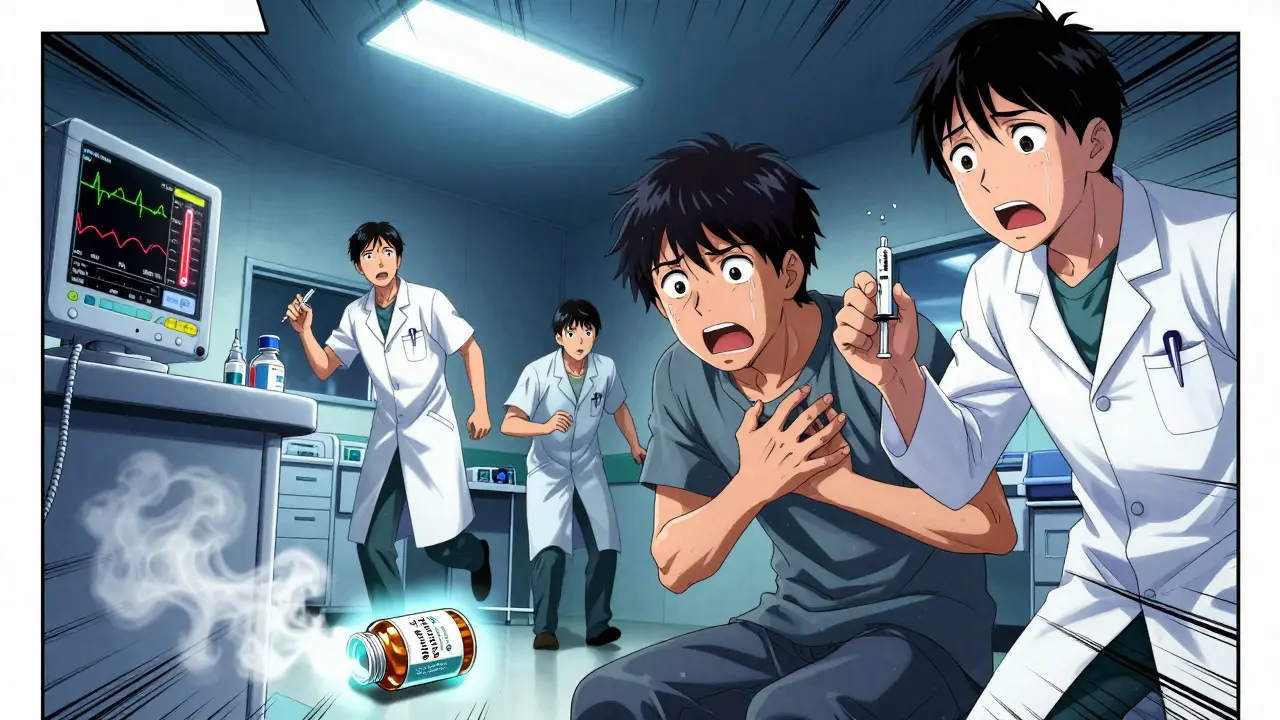
The result? Serotonin syndrome. It’s rare, but deadly. Symptoms include confusion, rapid heart rate, high blood pressure, muscle rigidity, fever, and seizures. In severe cases, it can kill. Emergency rooms see cases every year from people who took tryptophan supplements with their antidepressants, often because they thought it was "natural" and therefore safe.
Research from 2022 shows that 47% of people on SSRIs who undergo tryptophan depletion relapse into depression within 24 hours. That tells us their brain is hooked on that extra serotonin boost. Add more tryptophan, and you’re not helping-you’re pushing the system past its limit.
And here’s the kicker: most supplement labels don’t warn you. A 2021 FDA inspection found 41% of tryptophan products on the market didn’t even mention serotonin syndrome risk. You’re buying this stuff on Amazon, reading reviews about better sleep, and never seeing a red flag.
Not All Antidepressants Are the Same
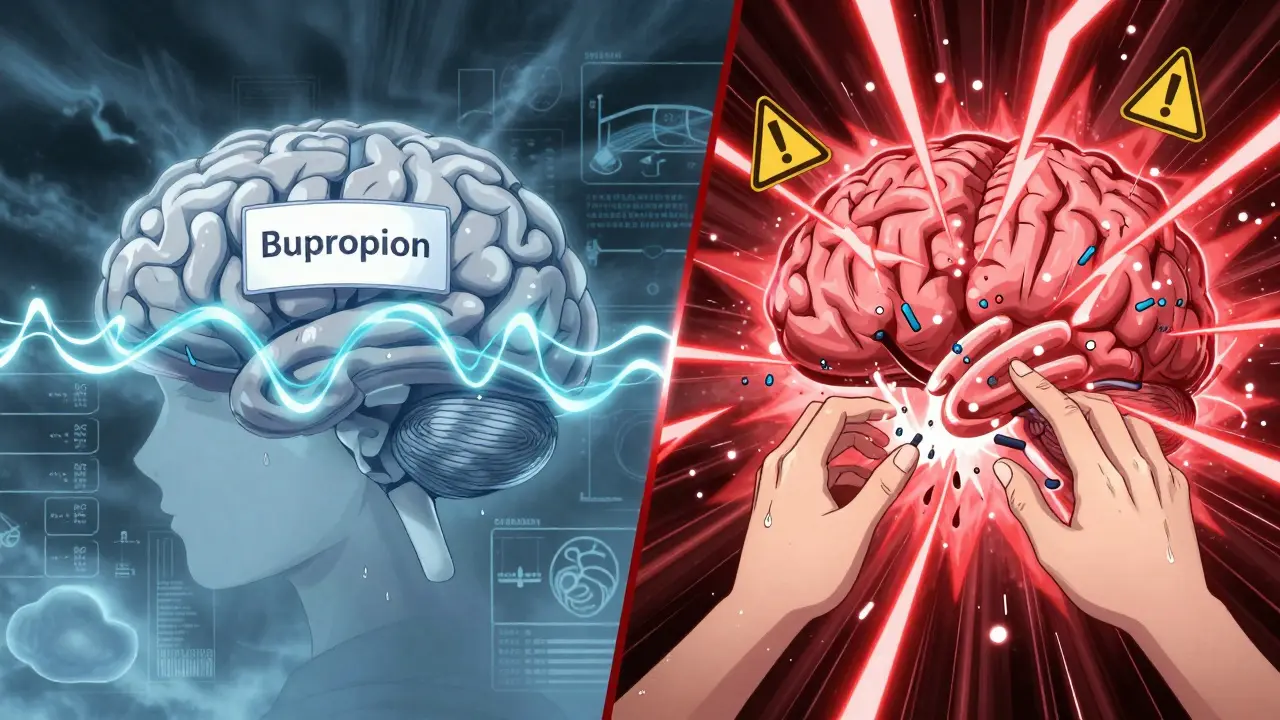
Here’s where things get clearer: not every antidepressant interacts with tryptophan the same way. SSRIs and MAOIs (like phenelzine) are the big red flags. But bupropion (Wellbutrin)? No problem. Why? Because it doesn’t touch serotonin at all-it works on dopamine and norepinephrine.
Studies show that when researchers tried tryptophan depletion in people on bupropion, none relapsed. Zero. That’s because their brain wasn’t relying on serotonin to stay stable. The same goes for older tricyclics like amitriptyline-some enhanced tryptophan’s effects, others didn’t. It’s messy, unpredictable, and depends on the drug, the dose, and your individual biology.
If you’re on an SSRI or MAOI, adding tryptophan is like playing Russian roulette with your nervous system. If you’re on bupropion or an SNRI like venlafaxine? Still risky, but less likely to trigger serotonin syndrome. But even then, doctors don’t recommend it. Why? Because there’s no safe way to test how your body will react.
The Dark History of L-Tryptophan
This isn’t just theoretical risk. In 1989, over 1,500 people in the U.S. got sick from contaminated L-tryptophan supplements. Many developed eosinophilia-myalgia syndrome (EMS)-a rare, painful disorder that caused muscle pain, nerve damage, and organ failure. Thirty-seven people died. The CDC traced it back to a single manufacturer’s impure batch, but the damage was done.
The FDA banned L-tryptophan supplements for 16 years. Even after lifting the ban in 2005, clinical research stalled. Why? Because no one wanted to risk another public health disaster. Today, you can buy it again, but the shadow of that outbreak still hangs over the industry. Most doctors still treat it like a controlled substance.
And here’s the irony: the supplement industry markets tryptophan as a natural sleep aid. At 500-1,000 mg, it might help you fall asleep faster. But that’s not the same as treating depression. And at higher doses-2,000 mg or more-safety data vanishes. The European Food Safety Authority says 5 grams per day is the max safe dose. But who’s checking what’s in your bottle?
What the Science Really Says About Depression and Serotonin
Here’s the biggest twist: the serotonin theory of depression might be wrong.
In 2022, a massive review of 17 studies involving over 116,000 people found no consistent evidence that low serotonin causes depression. Brain scans showed no clear drop in serotonin transporter binding in depressed patients. That doesn’t mean serotonin doesn’t matter-it just means it’s not the root cause.
Now, researchers are looking at the kynurenine pathway. That’s another way your body breaks down tryptophan-and it produces compounds that can actually cause inflammation in the brain. Some studies now show that the ratio of kynurenine to tryptophan is a stronger predictor of depression than serotonin levels themselves.
So if you’re taking tryptophan hoping to fix a "chemical imbalance," you might be missing the point entirely. You could be feeding a pathway that makes things worse.
What Clinicians Actually Do
Most psychiatrists won’t touch tryptophan with a ten-foot pole if you’re on an SSRI. A 2022 survey of 487 psychiatrists found 73% actively avoid recommending it during antidepressant treatment.
But there’s a small group-mostly in Europe-who use it as an augmentation tool. In Germany, L-tryptophan is actually approved as a prescription drug called Trankimazin for depression. In the U.S., a few specialists will try it in patients who haven’t responded to SSRIs, but only after a 7-10 day washout period and with strict blood monitoring.
They check plasma tryptophan levels to keep them between 80-120 μmol/L. Too low? No effect. Too high? Risk of toxicity. And even then, it takes 4-6 weeks to see if it helps. Most people give up before then.
Success rates? Around 63% for partial responders. But that’s in controlled, monitored settings-with doctors watching every step. Not in someone’s kitchen, swallowing a capsule with coffee.
Real People, Real Stories
On Reddit’s r/antidepressants, over 300 people have posted about trying tryptophan. Most say it helped their sleep. A few say it lifted their mood. But nearly a quarter reported stomach upset, headaches, or anxiety spikes. And 15% of Amazon reviews mention serotonin syndrome fears-often from people who doubled their dose because "it wasn’t working."
One user wrote: "Took 1,500 mg with my SSRI. Felt like my heart was going to explode. ER visit. They said I was lucky I didn’t have a seizure."
Another: "I stopped my antidepressant cold turkey and started tryptophan. Two weeks later, I was suicidal. No one warned me about withdrawal."
These aren’t outliers. They’re predictable outcomes of unmonitored experimentation.
What You Should Do
If you’re on an SSRI, MAOI, or any serotonin-boosting antidepressant: don’t take L-tryptophan. Period. Even if you think it’s "natural." Even if your friend says it helped. The risk isn’t worth it.
If you’re not on medication and considering tryptophan for sleep or low mood: start low-500 mg at night. Watch for dizziness, nausea, or agitation. Stop if you feel worse. Talk to your doctor before going over 1,000 mg daily.
If you’re thinking about switching from an SSRI to tryptophan: don’t. Quitting SSRIs cold turkey can trigger severe withdrawal. Tryptophan isn’t a replacement. It’s a supplement with narrow, poorly understood effects.
The safest path? Focus on proven methods: therapy, exercise, sleep hygiene, and medication under medical supervision. If you’re still struggling, ask your doctor about alternatives-like cognitive behavioral therapy, transcranial magnetic stimulation, or switching to a non-serotonergic antidepressant like bupropion.
There’s no magic supplement that fixes depression. Not tryptophan. Not 5-HTP. Not St. John’s wort. And mixing them with prescription drugs? That’s not wellness. It’s self-experimentation with real stakes.
Can I take L-tryptophan with my SSRI if I only take a small dose?
No. Even low doses of L-tryptophan can increase serotonin levels enough to trigger serotonin syndrome when combined with SSRIs. There’s no safe threshold established for this combination. The risk isn’t linear-it’s unpredictable. One person might tolerate 500 mg without issue, while another develops symptoms at 250 mg. Doctors don’t recommend it at any dose.
Is L-tryptophan better than 5-HTP for depression?
Neither is proven to treat depression on its own. L-tryptophan is the natural precursor to serotonin, while 5-HTP is one step closer in the pathway. Both carry the same risks when combined with antidepressants. Neither has FDA approval for depression treatment. If you’re considering either, you’re better off working with a clinician to explore evidence-based options like therapy or medication adjustments.
How long does it take for L-tryptophan to work for sleep?
Most people report feeling calmer or sleepier within 30-60 minutes after taking 500-1,000 mg. It works by boosting serotonin, which the brain converts into melatonin. But effects vary widely. Some notice improved sleep after one night. Others need 2-3 weeks of consistent use. Don’t expect it to fix insomnia caused by anxiety or poor sleep habits.
What are the signs of serotonin syndrome from L-tryptophan?
Symptoms include confusion, rapid heartbeat, high blood pressure, muscle twitching, shivering, sweating, fever, and diarrhea. In severe cases, seizures, unconsciousness, or death can occur. If you’re taking an antidepressant and start feeling these symptoms after taking tryptophan, stop immediately and seek emergency care. There’s no home remedy-this is a medical emergency.
Can I take L-tryptophan after stopping my antidepressant?
Not right away. You need a washout period of 7-10 days (sometimes longer, depending on the drug) to clear the antidepressant from your system. SSRIs like fluoxetine can linger for weeks. Jumping into tryptophan too soon still carries risk. Always consult your doctor before making any changes to your medication or supplement routine.
Why is L-tryptophan legal if it’s so dangerous?
It’s classified as a dietary supplement, not a drug. That means the FDA can’t require proof of safety or efficacy before it’s sold. Manufacturers aren’t required to warn about drug interactions unless they’re proven and documented. The 1989 contamination incident led to a ban, but after reformulation, it was reapproved as a supplement. The burden of safety now falls on the consumer-not the company.
If you’re struggling with depression, know this: you don’t need to fix your brain chemistry with a pill you bought online. Real relief comes from support, structure, and science-not unregulated supplements. Talk to your doctor. Don’t gamble with your nervous system.

13 Comments
Dee HumpreyJanuary 4, 2026 AT 13:51
I've seen too many people think 'natural' means 'safe'. L-tryptophan isn't herbal tea. It's a biochemical lever. Mix it with SSRIs and you're playing with fire. Stop glorifying supplements like they're vitamins.Jacob MilanoJanuary 6, 2026 AT 02:25
I get why people do it. I did it too. Took 1000mg with my Zoloft because I was tired of feeling numb. Felt like my chest was being squeezed by a vise. ER said serotonin syndrome. Lucky I didn't seize. Now I just walk 4 miles a day. Better than any pill.Jason StaffordJanuary 6, 2026 AT 11:59
The FDA banned it in '89 because the pharmaceutical industry was scared of competition. They let it back in under 'supplement' loopholes so you'd keep buying pills. They don't want you healing naturally. They want you dependent. Look at the stats: 73% of psychiatrists won't touch it. Why? Because they're paid to push drugs, not truth.Cassie TynanJanuary 6, 2026 AT 18:51
So let me get this straight. We have a multi-billion dollar supplement industry selling 'natural serotonin boosters' while the science says serotonin might not even be the problem? And we're shocked when people end up in the ER? This isn't ignorance. It's capitalism with a yoga mat.Akshaya Gandra _ Student - EastCaryMSJanuary 7, 2026 AT 02:24
i read this and im like wow but i dont know if i belive it bc my friend took tryptophan and she says she sleeps like a baby now and shes not on any med so maybe its just for some people idken MaxJanuary 8, 2026 AT 04:11
The pharmacokinetic interaction between SSRIs and L-tryptophan is mediated by competitive inhibition at the large neutral amino acid transporter (LAT-1) at the blood-brain barrier. Concurrent administration increases the risk of serotonin toxicity via excessive synaptic serotonin accumulation, particularly in individuals with polymorphisms in the SLC6A4 gene. Clinical guidelines from APA and NICE explicitly contraindicate this combination.Enrique GonzálezJanuary 9, 2026 AT 13:00
I used to think supplements were my secret weapon. Then I realized I was just trying to fix my life with a pill. Therapy changed me more than any amino acid ever could. You don't need more serotonin. You need more sleep. More connection. More stillness.Aaron MercadoJanuary 11, 2026 AT 09:08
THIS IS WHY PEOPLE DIE. YOU THINK YOU'RE SMART? YOU'RE NOT. YOU'RE JUST STUPID AND LAZY. YOU WANT A QUICK FIX? TOO BAD. YOUR BRAIN ISN'T A VIDEO GAME. YOU CAN'T JUST PICK UP A POWER-UP AND WIN. STOP BEING A COWARD AND GET REAL HELP. YOUR LIFE ISN'T A TIKTOK VIDEO.saurabh singhJanuary 12, 2026 AT 09:03
in india we have this thing called ashwagandha, it helps with stress and sleep, no serotonin mess. maybe we dont need to fix chemistry, maybe we need to fix lifestyle? your body knows what to do, you just gotta stop forcing it with pillsJohn WilmerdingJanuary 12, 2026 AT 12:43
The clinical evidence regarding tryptophan augmentation is highly context-dependent. In treatment-resistant depression, under strict metabolic monitoring, some studies suggest modest efficacy. However, the therapeutic window is narrow, and plasma concentration must be maintained between 80–120 μmol/L. Self-administration without biomarker tracking is not advised.Peyton FeuerJanuary 13, 2026 AT 00:08
i just want to say thanks for writing this. i almost bought some tryptophan last week because i was feeling down. your post made me pause. i talked to my doc instead. she said the same thing. i feel smarter now.Siobhan GogginJanuary 14, 2026 AT 14:06
I’ve been on sertraline for six years. I tried tryptophan once. Felt like my brain was vibrating. Never again. This post saved me from a hospital trip. Thank you.Vikram SujayJanuary 16, 2026 AT 00:47
The reductionist model of depression as a 'chemical imbalance' has dominated clinical practice for decades. Yet emerging research into the kynurenine pathway, neuroinflammation, and gut-brain axis suggests serotonin is merely one node in a far more complex network. To treat depression by manipulating a single neurotransmitter is akin to tuning a single string on a symphony orchestra and expecting harmony. We require systemic, not synaptic, solutions.