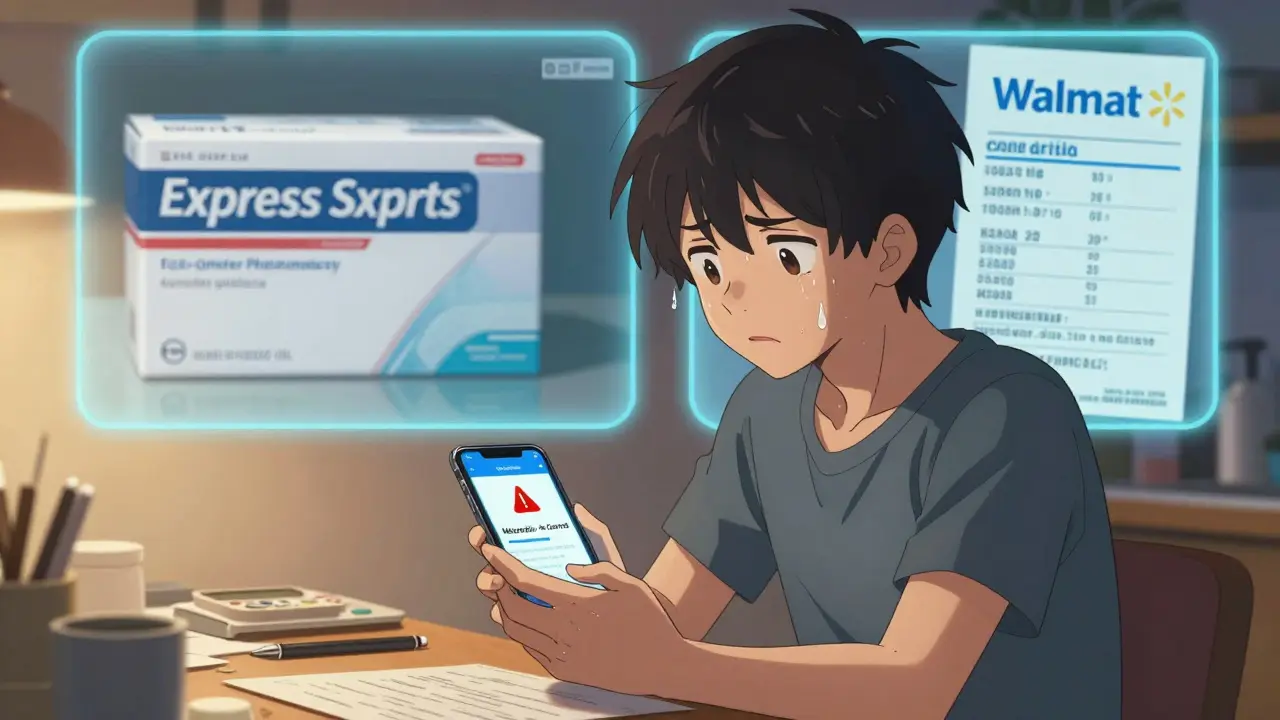
When you need a generic medication like metformin, lisinopril, or levothyroxine, you might think ordering it online is just like buying anything else on the internet. But if you’re relying on insurance, it’s not that simple. Insurance coverage of online pharmacy generics isn’t about which site looks cheapest-it’s about whether the pharmacy is in your plan’s network, what tier your drug is on, and whether you’re using mail-order or a third-party retailer. Many people pay more than they need to because they don’t understand how this system actually works.
How Insurance Actually Covers Generic Drugs
Your health plan doesn’t just pay for any generic drug you find online. It uses a list called a formulary-a ranked catalog of medications that determines what you pay. Generics are almost always in Tier 1, the cheapest level. That means instead of paying full price, you pay a fixed copay: usually $5 for a 30-day supply at a retail pharmacy, or $10 for a 90-day supply through mail-order. These aren’t discounts-they’re structured cost-sharing rules built into your plan. The pharmacy benefit manager (PBM)-the middleman between your insurer and the pharmacy-handles all this in seconds. When your doctor sends an electronic prescription, the PBM checks your plan’s formulary, confirms the drug is covered, calculates your copay, and tells the pharmacy how much to charge you. If you try to use an online pharmacy that’s not in your network, your insurance won’t pay anything. You’ll have to pay full price and then file a reimbursement claim, which often takes weeks and rarely pays out fully.Mail-Order vs. Independent Online Pharmacies
Not all "online pharmacies" are the same. There’s a big difference between mail-order services run by your insurer’s PBM-like Express Scripts, CVS Caremark, or Optum Rx-and independent sites like Amazon Pharmacy or PharmacyChecker.com. Mail-order pharmacies are part of your insurance plan. You get your meds delivered to your door, usually in 90-day supplies. The upside? Lower copays. The downside? Delivery takes about a week, so it’s useless for urgent needs like antibiotics or pain meds after surgery. You also need a new prescription from your doctor specifically for 90-day refills, which can delay things if your doctor doesn’t routinely write them. Independent online pharmacies? They’re more like Amazon or Walmart.com. Some accept insurance, many don’t. Some have their own pricing models-like Amazon’s RxPass, which charges $5 a month for a list of 100+ common generics, no insurance needed. But RxPass doesn’t cover every drug. If your thyroid med isn’t on their list, you’re back to square one. And if you use one of these sites without checking insurance compatibility, you could end up paying $100 for a drug that costs $10 with your insurance.Why Your Insurance Might Switch Your Medication Without Telling You
You might wake up one day to find your brand-name drug replaced by a generic-without your doctor’s input. This is called non-medical switching, and it’s becoming standard practice. Insurers do it to save money. If your plan’s formulary drops a brand-name drug or raises its copay to $200, you’ll automatically get switched to the generic unless you or your doctor fight it. A 2023 report from MHBP Federal Health Plans showed that 27% of member calls were about confusion over these switches. One patient with multiple sclerosis was switched from Copaxone to a generic without warning. The side effects were severe enough to land her in the ER. That’s not rare. Doctors often don’t know their patients’ formularies are changing. Your doctor picked a drug for a reason. But insurers don’t care-they care about cost. If you’re switched and it causes problems, you can request a formulary exception. Your doctor submits paperwork showing why the brand is medically necessary. It’s not easy, but it’s possible. Many people give up after the first rejection.
When It’s Cheaper to Pay Cash
Here’s a truth many people don’t realize: sometimes, paying cash for your generic drug is cheaper than using insurance. Walmart, Target, and Costco offer 90-day supplies of dozens of common generics for $10 or less. If you’re on a high-deductible plan, your $10 mail-order copay might be the same as what you’d pay out of pocket. But if your deductible is $5,000 and you haven’t met it yet, paying $10 cash means you’re not adding to your deductible. You’re just paying for the drug. Insurance doesn’t help you until you’ve spent thousands. GoodRx and SingleCare can show you cash prices at local pharmacies. Plug in your drug and zip code. If the cash price is lower than your copay, pay cash. Use your insurance only when it actually saves you money.How to Check Your Coverage Before You Order
Don’t guess. Don’t assume. Always verify before you click "buy."- Log into your insurer’s member portal and use their drug lookup tool. Enter the first three letters of your drug name. It’ll show you the tier, copay, and whether it’s covered.
- Check if your plan includes mail-order. If so, find out how to order and if you need a special prescription.
- If you’re using an independent online pharmacy, call them. Ask: "Do you accept my insurance? What’s my copay?" Don’t trust their website. Policies change daily.
- Use your insurer’s 24/7 nurse line. MHBP’s number is 1-800-556-1555. They’ll explain your formulary, help you find cheaper alternatives, and even help you file for exceptions.
What’s Changing in 2025
By 2025, 45% of generic maintenance medications will be delivered by mail or home delivery, up from 32% in 2022. Insurers are pushing harder for this because it’s cheaper and more predictable for them. New state laws are also changing the game. As of 2023, 28 states have passed laws limiting copays for generics to $10 or less per month. More are coming. Meanwhile, Amazon RxPass and similar subscription models are growing-but they still cover less than 2% of the market. They’re convenient for a few common drugs, but not a replacement for comprehensive insurance. The biggest shift? Medicare’s new drug price negotiation program is starting to influence commercial plans. If Medicare caps the price of a drug, insurers often follow suit. That means even more generics could drop in cost-but only if they’re on the negotiated list.What You Should Do Right Now
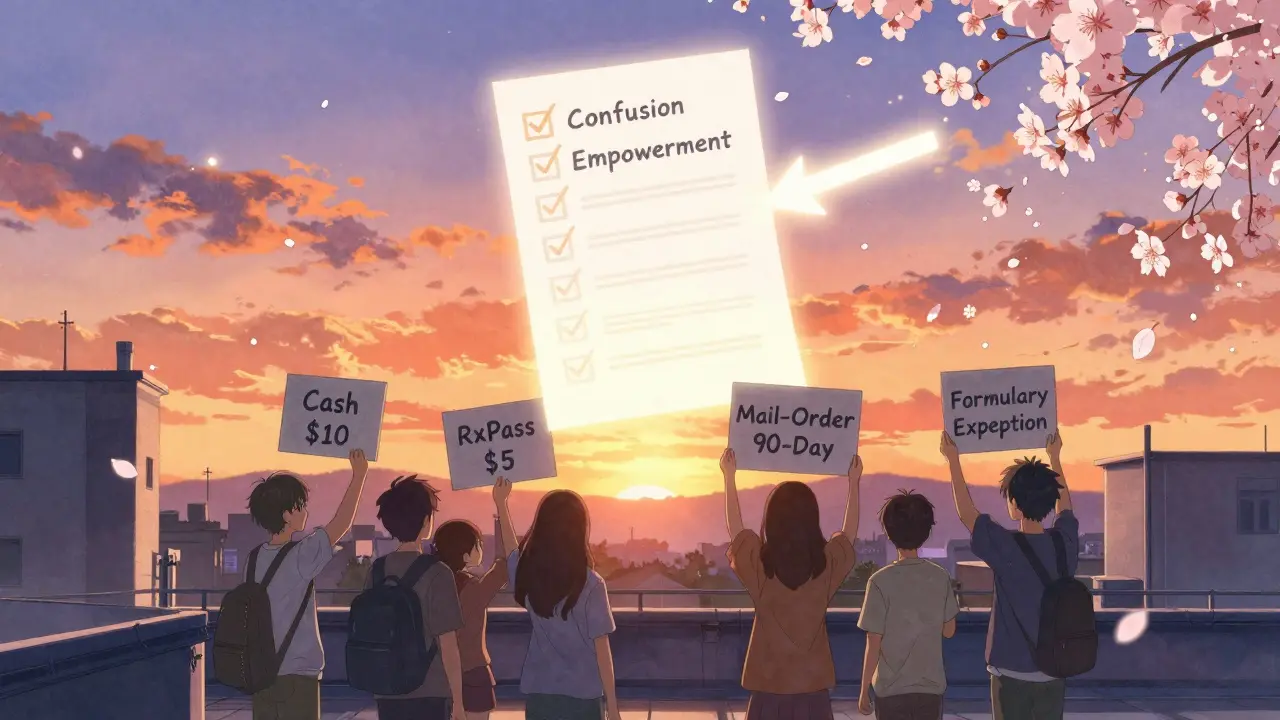
1. Find out your plan’s formulary. Go to your insurer’s website and search for your medications. 2. Compare prices. Check your copay vs. cash price at Walmart or using GoodRx. 3. Know your pharmacy options. Is mail-order worth it for your meds? Or is local pickup better? 4. Ask questions. If your drug was switched without warning, call your insurer. Ask why. Ask for the formulary change notice. 5. Keep records. Save every explanation of benefits (EOB) and prescription receipt. If you get billed wrong, you’ll need proof. This isn’t about being a medical expert. It’s about being a smart consumer. Insurance doesn’t work like Amazon. It’s a complex system built to save money-for them. But you can use it to save money-for you.Do all online pharmacies accept insurance?
No. Only pharmacies that are part of your insurance plan’s network accept direct insurance billing. Most independent online pharmacies don’t. Some let you submit claims for reimbursement, but that’s not the same as paying your copay at checkout. Always call the pharmacy first to confirm.
Can I use my insurance at Amazon Pharmacy?
Amazon Pharmacy does accept some insurance plans, but only if they’re linked to your account and your drug is covered. Many people use Amazon RxPass instead-a $5 monthly subscription for common generics that doesn’t require insurance. If your drug isn’t on the RxPass list, you’ll need to use your insurance or pay cash.
Why is my generic drug more expensive with insurance than without?
If you’re on a high-deductible plan and haven’t met your deductible yet, your insurance might not cover the drug at all-you’re paying full price. Meanwhile, pharmacies like Walmart offer flat $10 prices for 90-day generic supplies. Paying cash can be cheaper than using insurance until you’ve spent thousands out of pocket.
What is non-medical switching?
Non-medical switching happens when your insurance changes your prescription from a brand-name drug to a generic-without your doctor’s approval-just to save money. This is legal and common. If the switch causes side effects, you can request a formulary exception through your doctor, but you need to act fast.
Are mail-order pharmacies safe?
Yes, if they’re part of your insurer’s network-like Express Scripts or CVS Caremark. These are regulated, licensed pharmacies. But many independent online pharmacies aren’t legitimate. Stick to pharmacies that require a valid prescription and are verified by the National Association of Boards of Pharmacy (NABP).
How do I know if my drug is on my plan’s formulary?
Log into your insurance member portal and use their drug lookup tool. Enter the exact name of your medication. It will show you the tier, your copay, and whether it’s covered. If you can’t find it, call your insurer’s customer service line.
Can I get my 90-day prescription filled at a local pharmacy instead of mail-order?
Yes, if your plan allows it. Some insurers require mail-order for 90-day supplies, but many let you choose. Check your plan’s pharmacy benefits or call customer service. If your local pharmacy offers the same copay as mail-order, there’s no reason to wait a week for delivery.

8 Comments
Meina TaiwoDecember 20, 2025 AT 10:12
Just checked my formulary-metformin is $3 at my local Walmart. Insurance copay was $12. Paid cash. Done.
Stop overcomplicating it.
Adrian ThompsonDecember 22, 2025 AT 09:08
They don't want you to know this, but PBMs are just middlemen sucking blood from your prescription like vampires in a boardroom.
Amazon RxPass? More like Amazon RansomPass. They're setting up a two-tier system where you pay $5 a month just to get basic meds while they jack up prices on the back end.
And don't get me started on 'non-medical switching'-that's just corporate warfare disguised as healthcare.
They're not trying to save you money-they're trying to make you dependent on their algorithm.
They know if you switch from your brand to a generic, your body reacts. Then they sell you more drugs to fix the side effects.
It's not healthcare. It's a Ponzi scheme with stethoscopes.
And the government? They're in on it. That 'Medicare negotiation'? Just window dressing so you think they're helping.
Meanwhile, your insulin costs $300 and your thyroid med is $10-but only if you're dumb enough to pay cash.
Wake up. They're not your allies. They're the enemy wearing white coats.
Southern NH Pagan PrideDecember 22, 2025 AT 16:58
ok so i was just reading this and i think the whole system is rigged by the deep state and the pmb's are actually run by shadowy globalist cabal that also controls the fed and the cdc
did you know that the formulary changes happen at exactly 3:17am on the third tuesday of every month? that's not a coincidence
and mail order? they put tracking chips in the pills so they can monitor your biometrics
they're trying to make us docile with cheap generics while they harvest our dna through the packaging
and amazon rxpass? that's just the first step before they start charging you per breath
also my neighbor's cat got switched to a generic and now it's psychic
ask yourself-why do they need to know what drugs you're taking?
it's not about cost. it's about control.
they're building the biometric surveillance state one pill at a time
and they'll make you pay $5 a month for it too
don't trust the portal. don't trust the nurse line. don't trust the nabc
trust your gut.
and burn your eob's. they're listening.
Orlando Marquez JrDecember 24, 2025 AT 14:25
It is imperative to underscore the structural inequities embedded within the current pharmaceutical benefit management framework. The conflation of cost-efficiency with clinical efficacy represents a profound ethical dilemma in contemporary healthcare delivery.
One must recognize that the formulary, while ostensibly a clinical tool, functions primarily as a fiscal instrument, prioritizing corporate profitability over patient autonomy.
The phenomenon of non-medical switching, though legally permissible, constitutes a de facto violation of the physician-patient relationship, wherein therapeutic continuity is subordinated to actuarial calculus.
Furthermore, the proliferation of cash-price alternatives such as Walmart’s $10 program reveals a systemic failure of insurance-based reimbursement models to serve low-income populations effectively.
It is not merely a matter of consumer awareness; it is a call for regulatory reform that prioritizes transparency, equity, and patient-centered care.
The role of the PBM must be re-examined-not as a neutral intermediary, but as a profit-maximizing entity operating within a market structure that incentivizes exploitation.
Until the industry is held accountable to ethical benchmarks beyond shareholder returns, patients will continue to navigate a labyrinth of obfuscation.
One must not mistake convenience for justice.
Jackie BeDecember 26, 2025 AT 13:35
OMG I JUST REALIZED I WAS PAYING $15 FOR LISINOPRIL WHEN WALMART DOES IT FOR $5 I FEEL SO STUPID
LIKE WHY DID I EVEN USE INSURANCE I THOUGHT IT WAS SUPPOSED TO HELP
AND NOW I KNOW WHY MY DOCTOR LOOKED SO SAD WHEN I ASKED ABOUT MAIL ORDER
THANK YOU FOR THIS POST I'M GOING TO CALL MY INSURANCE RIGHT NOW AND ASK WHY THEY NEVER TOLD ME
AND ALSO I JUST SAW A VIDEO ON TIKTOK ABOUT HOW PBMS ARE LITERALLY STEALING YOUR MONEY
LIKE I'M NOT EVEN KIDDING
EVERYONE CHECK YOUR FORMULARY NOW I MEAN RIGHT NOW
PLEASE
SAVE YOURSELF
SAVE YOUR WALLET
SAVE YOUR LIFE
John HayDecember 27, 2025 AT 15:43
Good breakdown. I’ve been using GoodRx for years. If your copay is higher than the cash price, just pay cash. No drama.
But I do want to add-don’t assume your doctor knows your plan’s formulary. They rarely do. You have to be your own advocate.
And if you get switched without warning, call your insurer immediately. Ask for the formulary change notice. They’re required to send it. Most people never ask.
Also, mail-order isn’t bad-it’s just slow. If you’re on stable meds, it’s fine. If you’re new to a drug or have side effects, go local.
Just verify. Always verify. It takes two minutes. It saves you hundreds.
Jon ParamoreDecember 27, 2025 AT 23:52
Let me clarify a common misconception: the tier system isn’t arbitrary. Tier 1 generics are placed there because they’ve passed bioequivalence testing-same active ingredient, same absorption profile as brand.
That’s not corporate spin. That’s FDA data.
But here’s the real issue: PBMs negotiate rebates with manufacturers, not with patients. So the lowest list price isn’t necessarily the lowest net cost.
That’s why cash prices sometimes beat insurance-it’s because the pharmacy is selling at wholesale, not at the inflated list price the PBM uses to calculate your copay.
Also, 90-day mail-order isn’t just cheaper-it reduces pill fragmentation, improves adherence, and cuts down on pharmacy visits.
It’s not perfect, but it’s not a scam. It’s a system optimized for efficiency, not malice.
Still-you’re right to check your options. Always. Knowledge is your only leverage here.
Swapneel MehtaDecember 28, 2025 AT 11:48
This is super helpful. I’m from India and we don’t have insurance like this-most people pay cash for generics, and prices are crazy low.
But I’ve seen friends in the US struggle with this mess. Your post explains it better than any doctor I’ve talked to.
One thing I’d add: if you’re on a high-deductible plan, treat your insurance like a backup, not your main tool.
Pay cash when it’s cheaper. Use insurance only when it actually lowers your out-of-pocket.
And keep receipts. Always.
Thanks for sharing this. It’s the kind of info that saves lives, not just money.