When you see a TV ad for a new cholesterol drug, it’s not just selling a pill-it’s reshaping how you think about every similar pill on the shelf. That’s the hidden power of direct-to-consumer (DTC) drug advertising in the U.S., and it’s changing the way people see generic medications. While generics are chemically identical to brand-name drugs, cost up to 80% less, and are just as safe, advertising makes them feel like second choices. The message isn’t always said outright, but it’s there: the drug you see on screen is the right one. The one in your pharmacy’s discount bin? Maybe not.
The $6.58 Billion Effect
In 2020, U.S. drug companies spent $6.58 billion on TV, print, and online ads targeting patients. That’s more than ten times what they spent in 1996. The U.S. and New Zealand are the only two countries that allow this kind of advertising. Everywhere else, doctors and pharmacists are the gatekeepers. Here, the public is the target. And the ads don’t just promote one drug-they push entire categories. When a commercial for a branded statin like Lipitor airs, prescriptions for all cholesterol-lowering drugs in that class go up, including generics. But here’s the twist: the rise in prescriptions isn’t evenly distributed. Patients who see the ad are far more likely to ask for the exact brand they saw, even if their doctor recommends a cheaper alternative.
Spillover Isn’t Enough
Research from Wharton shows that a 10% increase in advertising leads to a 5% jump in prescriptions. That sounds like a win for public health-more people getting treated. But 70% of that increase comes from new patients starting meds, not existing ones sticking with them. And among those new users, adherence is actually lower. They’re more likely to stop taking the drug because they didn’t fully understand why they needed it in the first place. The ad made them curious, not committed. Meanwhile, the spillover effect-where ads for branded drugs boost generic use-doesn’t fix the deeper problem. Even when generics get a boost from advertising, they’re still seen as the fallback option. The ad didn’t say, “Here’s a cheaper, just-as-good choice.” It said, “This is the solution.” And that sticks.
Why Generics Lose the Mental Race
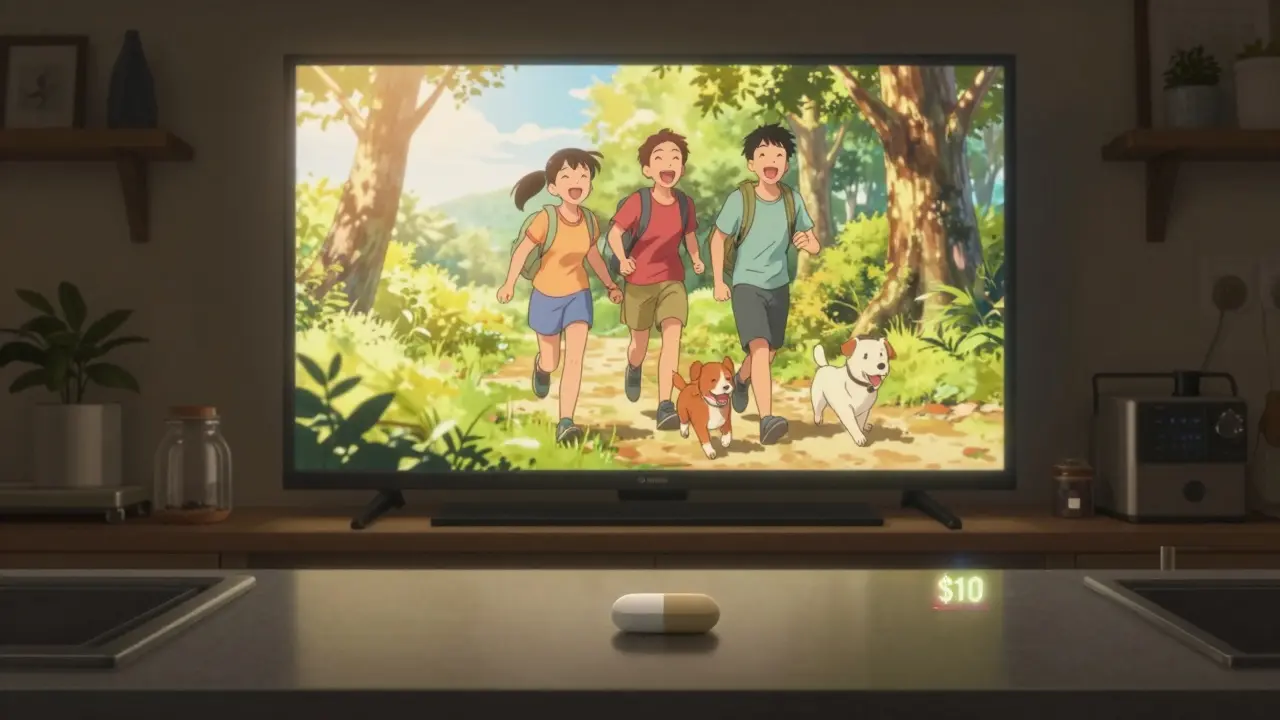
Look at how these ads are made. They show happy people hiking, laughing with grandkids, playing with dogs. The scenery is bright. The music is uplifting. The voiceover says, “You deserve to feel your best.” There’s no mention of the $10 generic version that does the same thing. No side-by-side comparison. No mention of cost. The emotional hook is clear: this drug is about a better life. Generics don’t get this treatment. They’re rarely advertised. When they are, it’s in dull, text-heavy inserts in pharmacy pamphlets. So when a patient hears “Lipitor” for the hundredth time, they don’t just remember the name-they associate it with wellness, freedom, control. The generic version? It’s just a pill. No story. No emotion. No identity.
Doctors Are Caught in the Middle
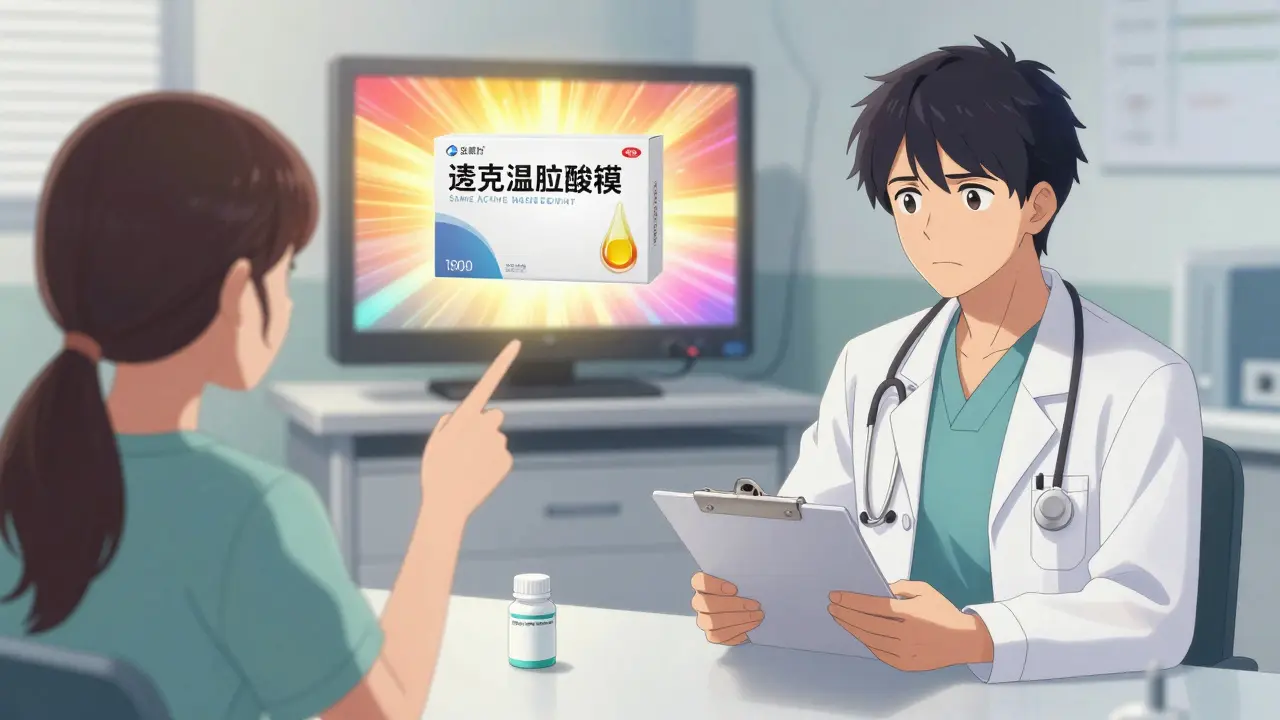
Physicians aren’t blind to this. A University of Montana study found that doctors filled 69% of patient requests for treatments they thought were inappropriate. That includes requests for brand-name drugs when a generic would do just fine. Patients come in armed with a script from the TV ad. They say, “I want this one.” The doctor knows the generic works. But if they say no, the patient walks out, finds another doctor, or just doesn’t fill the prescription at all. The power dynamic has flipped. The patient isn’t asking for advice-they’re demanding a product they’ve been sold.
The FDA’s Blind Spot
The FDA requires ads to include risk information, but here’s the problem: people forget it. A 2018 FDA study found that even after seeing an ad four times, most people still couldn’t accurately recall the side effects. Risk details were buried under visuals of people skiing and smiling. Benefit information stuck better-but still poorly. Meanwhile, the name of the drug? That stuck perfectly. So patients remember the brand. They remember the feeling. But they don’t remember the warnings. Or the fact that the same drug costs $20 instead of $200. That’s not ignorance. That’s design. The ad wasn’t built to inform. It was built to create desire.
Generics Don’t Fight Back
Generic manufacturers don’t run ads like the big brands. Why? Because they don’t need to. They make their money on volume, not perception. But that’s exactly the problem. Without advertising, generics don’t get to tell their story. They don’t get to say, “We’re the same. We’re safe. We’re just cheaper.” Patients don’t know that. They assume the expensive one is better. And that assumption isn’t based on science-it’s based on exposure. The more you see something, the more you trust it. Even if it’s just a 30-second spot with a dog and a sunset.
The Real Cost of Perception
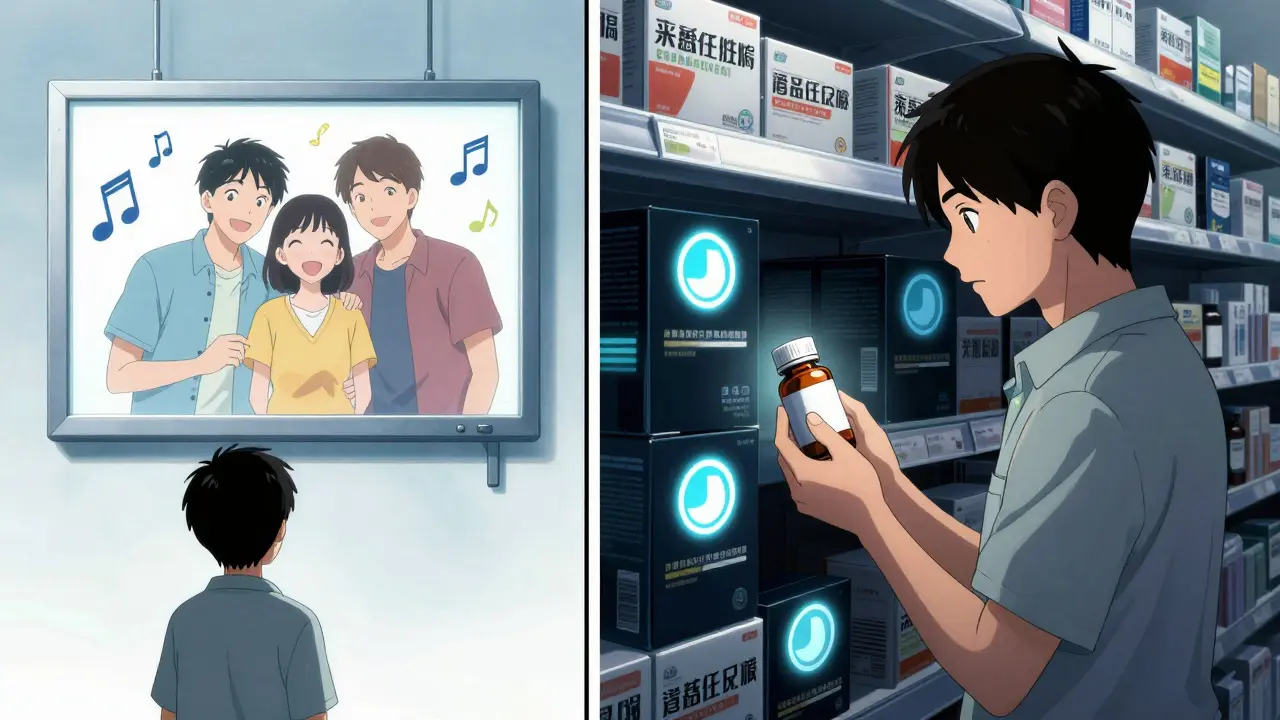
This isn’t just about money. It’s about trust. When patients believe a branded drug is superior, they’re less likely to switch to a generic-even when their insurance forces them to. They feel like they’re settling. They worry their health is being compromised. That anxiety leads to non-adherence. And when patients stop taking their meds, their condition worsens. That leads to hospital visits, higher costs, and worse outcomes. The ad didn’t just sell a drug. It sold a fear: that the cheaper option isn’t good enough. And that fear is expensive-for patients, for insurers, for the whole system.
What Could Change?
Some experts suggest requiring ads to show generic alternatives side by side. Others want stricter rules on emotional imagery that distracts from medical facts. A few propose banning DTC ads entirely. But the truth is, the system isn’t broken because of bad actors. It’s broken because the rules never accounted for how psychology works. People don’t choose drugs based on clinical data. They choose based on emotion, memory, and repetition. And right now, the system rewards brands that spend the most on feelings-not facts.
What You Can Do
If you’re prescribed a new drug, ask: “Is there a generic?” Don’t assume the one you saw on TV is the best. Check your pharmacy’s price list. Ask your pharmacist if the generic is the same. Most are. And if your doctor says the brand is necessary, ask why. Is it because of clinical need? Or because you asked for it? The power to choose isn’t just in the prescription pad. It’s in your questions.
Are generic drugs really as effective as brand-name drugs?
Yes. By law, generic drugs must contain the same active ingredients, dosage, strength, and route of administration as their brand-name counterparts. The FDA requires them to meet the same strict standards for safety and effectiveness. The only differences are inactive ingredients-like fillers or dyes-which don’t affect how the drug works. Studies consistently show generics perform identically in clinical use.
Why do doctors prescribe brand-name drugs even when generics are available?
Sometimes it’s because the patient asked for it. Research shows that when patients request a specific brand they saw in an ad, doctors are far more likely to write that prescription-even if they believe a generic would work just as well. Other times, it’s because the brand has special formulations (like extended-release versions) that don’t yet have generic equivalents. But in most cases, it’s not a medical necessity-it’s a response to advertising influence.
Does advertising increase adherence to medication?
For existing patients, advertising increases adherence by only 1% to 2% per 10% increase in exposure. But for new patients who start treatment because of an ad, adherence is actually lower on average. They’re more likely to be prescribed a drug they don’t fully understand, and they’re more likely to stop taking it. Advertising creates awareness, but not understanding-and that can hurt long-term outcomes.
Why don’t generic drug companies advertise like brand-name companies?
Generic manufacturers typically don’t advertise directly to consumers because their business model relies on volume and low margins. They make money by selling large quantities at low prices, not by building brand loyalty. Plus, advertising is expensive. Since they compete with dozens of other generic makers, spending millions on a TV ad doesn’t make financial sense. As a result, generics rarely appear in consumer ads, making them invisible to the public-even though they’re often the best choice.
Can DTC advertising lead to unnecessary prescriptions?
Yes. Studies show that patients who request drugs after seeing an ad are more likely to receive them-even when the doctor believes the treatment isn’t needed. One study found that 69% of patient requests for DTC-advertised treatments were for interventions the physician considered inappropriate. This means advertising doesn’t just influence drug choice-it can lead to overprescribing, unnecessary costs, and even health risks from drugs taken without clear medical benefit.

14 Comments
John HaberstrohFebruary 17, 2026 AT 11:42
So let me get this straight - we’re paying $200 for a pill because a TV ad made it look like a sunset on a beach? Meanwhile, the $10 version does the exact same thing but gets buried under a pile of pharmacy pamphlets? This isn’t capitalism. This is performance art where the audience pays for tickets and the actors never even leave the stage.
James LloydFebruary 17, 2026 AT 13:02
As a pharmacist for 18 years, I’ve seen this firsthand. Patients walk in demanding Lipitor because they saw it during the Super Bowl. I show them the generic, explain it’s identical, and they still look at me like I’m trying to sell them a used car. The real tragedy? They’re not stupid - they’ve just been trained to equate price with quality. And that’s a marketing triumph, not a medical one.
Linda FranchockFebruary 19, 2026 AT 02:14
Oh honey. You think the ad is the problem? Nah. The problem is we let corporations turn healthcare into a reality TV show where the only prize is your co-pay.
Jonathan RuthFebruary 19, 2026 AT 14:55
DTC ads are a joke but the FDA lets em run because pharma pays for their budget. Same people who say vaping is dangerous but let cigarette ads run in the 90s. Its all about the $$ not the healthLiam EarneyFebruary 20, 2026 AT 06:34
It’s not just the ads - it’s the silence around generics. The system doesn’t just favor branded drugs; it actively erases the alternatives. When was the last time you saw a commercial for a generic statin? Or a billboard? Or even a sponsored Instagram post? No. Instead, we get 17 versions of the same 30-second clip with a golden retriever and a man laughing on a porch swing. The emotional weight of that imagery? It doesn’t just linger - it haunts. And when you’re anxious about your cholesterol, you don’t reach for a pill. You reach for the feeling. And the feeling? It costs $198.
Carrie SchluckbierFebruary 21, 2026 AT 19:09
Think about this: the same companies that spend billions telling you your body is broken unless you take their drug are the same ones lobbying against price transparency laws. They’re not selling medicine - they’re selling dependency. And if you think this is an accident? Wake up. This is a calculated, data-driven machine designed to make you feel weak so you’ll pay more. The FDA? They’re asleep at the wheel. Or maybe they’re on the payroll. Either way - your blood pressure isn’t the only thing rising.
Digital Raju YadavFebruary 23, 2026 AT 16:58
Let’s be real - this is what happens when you let Western capitalism run healthcare like a TikTok trend. In India, we don’t have this madness. Generics are everywhere. Cheap. Effective. No dog. No sunset. No orchestral swell. Just science. And guess what? People live longer. The U.S. spends more per capita than any country on earth - and still has the worst outcomes. Maybe it’s not about more ads. Maybe it’s about less greed.
Geoff ForbesFebruary 23, 2026 AT 19:55
Wow. Just wow. You people are so naive. Of course the ads work - they’re not meant to inform. They’re meant to manufacture identity. ‘Lipitor’ isn’t a drug - it’s a lifestyle brand. It’s the difference between ‘I take a pill’ and ‘I am someone who takes Lipitor.’ The generic doesn’t have a personality. It’s a commodity. And in America? Commodities don’t get loyalty. Only myths do.
Philip BlankenshipFebruary 25, 2026 AT 00:04
I’ve been on a generic blood pressure med for five years. Same active ingredient, same results, same side effects (none, actually). My co-pay? $4. The brand version? $140. My doctor asked if I wanted to switch back. I said no. He looked at me like I’d just won the lottery. Meanwhile, my mom? She still takes the brand because she saw it on TV. She says, ‘It just feels better.’ I told her it’s placebo. She cried. I didn’t know what to say. So I hugged her. And bought her groceries. That’s the real cost of this system - not the money. The emotional weight. The shame. The guilt of ‘settling.’ And nobody talks about that part.
PRITAM BIJAPURFebruary 26, 2026 AT 20:42
There’s a beautiful irony here - the very people who preach ‘rational choice’ and ‘market efficiency’ are the ones who’ve built a system that exploits cognitive bias like a casino. We’re not consumers. We’re lab rats pressing levers for dopamine hits disguised as health. And the generics? They’re the quiet ones in the corner who never got a microphone. But here’s the thing - if you’ve ever taken a generic and felt fine? You’re proof. You’re the living rebuttal. You don’t need an ad. You need to speak up. Tell your story. Because science doesn’t need marketing. It just needs witnesses.
Prateek NalwayaFebruary 28, 2026 AT 05:42
Imagine if we treated food like we treat medicine. ‘You need this organic kale smoothie with Himalayan salt and dragon fruit extract - it’s the only one that’ll make you glow!’ Meanwhile, the plain spinach costs 10% and has the same nutrients. We’d call that scam. But with pills? We call it innovation. 🤔
Tony ShumanFebruary 28, 2026 AT 20:26
Someone needs to start a movement: ‘I Took the Generic and Lived.’ T-shirts. Podcasts. TikTok dances. Let’s make taking the cheap pill a badge of honor. Not because it’s ‘better’ - but because it’s smarter. And in America? Being smart is the new rebellion.
Agnes MillerMarch 1, 2026 AT 13:49
i took the generic and i aint dead yet lolguy greenfeldMarch 3, 2026 AT 00:11
What’s really being sold here isn’t a drug - it’s the illusion of control. The branded ad whispers: ‘You are not powerless. You have agency. You can choose this.’ But the truth? You were never given a choice. You were given a narrative. And narratives, unlike molecules, don’t expire. They evolve. They multiply. They become truth. And now? We live in a world where ‘Lipitor’ is synonymous with ‘health,’ and ‘generic’ with ‘failure.’ The science hasn’t changed. But the story? Oh, the story changed everything.