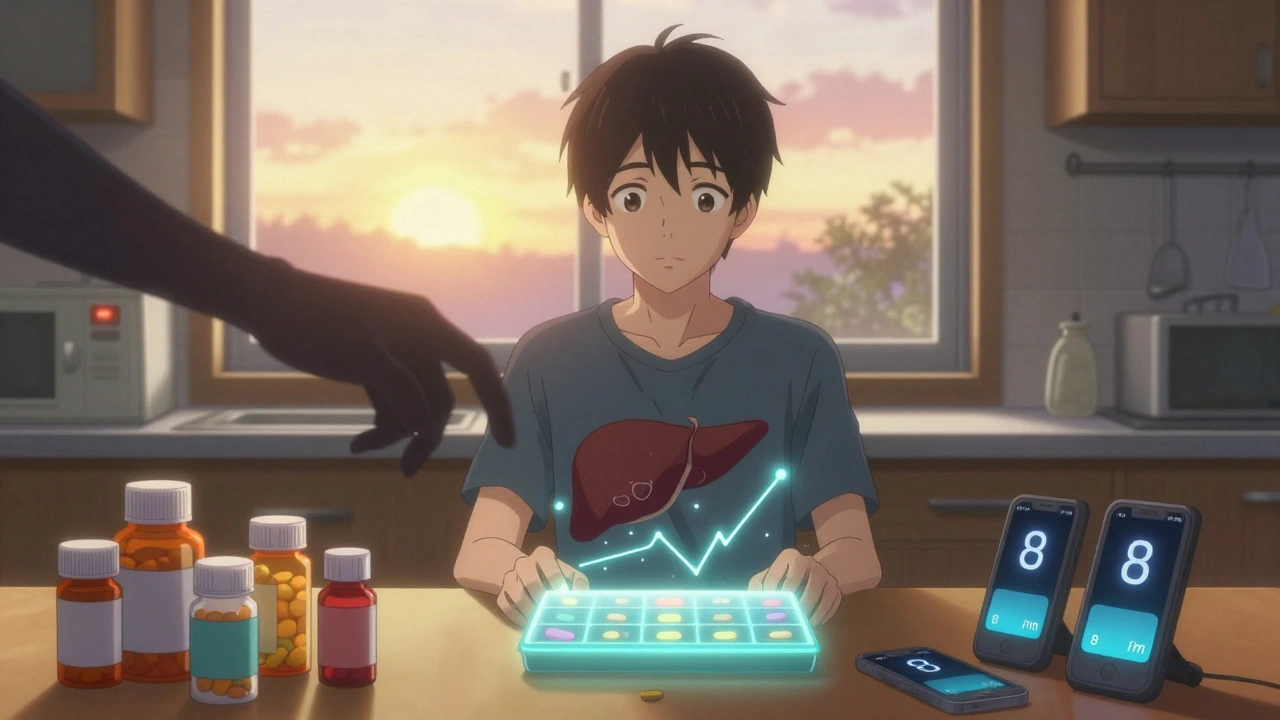
Living with a transplanted liver isn’t the end of the journey-it’s the start of a new one. The surgery was a miracle, but the real test comes after you leave the hospital. Your body doesn’t know your new liver belongs to you. It sees it as an invader. And if you don’t fight back with the right meds, at the right time, your body might start tearing it down. That’s rejection. And it doesn’t always come with a siren. Sometimes, it’s just a quiet decline-fatigue you can’t shake, a slow rise in blood pressure, or a weird feeling you can’t explain. The difference between living well for 10 years and losing your graft in 18 months? It’s not the surgery. It’s whether you take your pills.
What Rejection Looks Like-And What It Doesn’t
Rejection doesn’t always mean your liver is failing. Most of the time, it’s mild. You might not feel anything at all. That’s why blood tests are non-negotiable. Your doctor checks your liver enzymes and bilirubin levels every week at first, then monthly. A sudden jump in those numbers? That’s your liver screaming before you even notice.
When rejection does cause symptoms, they’re easy to miss. You might think you’re just coming down with the flu: chills, muscle aches, headache. But if you’ve had a transplant, those aren’t just bugs-they’re red flags. Fever above 100°F? That’s not normal. Pain or tenderness right where your liver sits? That’s not just soreness. Unexplained weight gain-like 10 pounds in two days? That’s fluid building up because your liver isn’t filtering properly. And if your urine output drops, your body is holding onto everything because your liver can’t keep up.
Chronic rejection is sneakier. It doesn’t hit hard. It drags. Your energy fades over months. Your blood pressure creeps up. You’re tired all the time. You don’t feel sick-you just don’t feel like yourself. By the time you notice, the damage might already be advanced. That’s why monthly labs aren’t optional. They’re your early warning system.
Your Medication Routine: It’s Not a Suggestion
You’ll be on at least three types of drugs every single day: a calcineurin inhibitor (like tacrolimus or cyclosporine), an antimetabolite (like mycophenolate), and a steroid (like prednisone). That’s often 8 to 12 pills a day, at different times. Some you take with food. Some you take on an empty stomach. Some you take at 8 a.m., others at 8 p.m. One missed dose can spike your rejection risk.
Studies show that missing just 20% of your doses-meaning you skip a pill every 5 days-triples your chance of rejection. And it’s not just about forgetting. Side effects make people quit. Tacrolimus causes tremors, headaches, and high blood pressure. Mycophenolate can wreck your stomach. Prednisone makes you gain weight, feel anxious, or get moon face. It’s tempting to stop. But stopping doesn’t make you feel better-it kills your liver.
The cost is brutal, too. Without insurance, these drugs run $28,000 a year. Many patients skip doses because they can’t afford them. But there are options: patient assistance programs, generic alternatives, pharmacy discounts. Talk to your transplant pharmacist. They’ve helped hundreds of people get their meds for less. Don’t suffer in silence.
How to Never Miss a Dose-Even on the Worst Days
People think adherence is about willpower. It’s not. It’s about systems.
Start with a pill organizer. Not the cheap kind. Get one with alarms that beep and lights that flash. Use it every day, even when you’re traveling. Set two phone alarms: one for morning, one for night. Put them on repeat. Don’t rely on memory. Your brain is tired. Your body is healing. Don’t ask it to remember.
Let someone else help. A spouse, a sibling, a friend. Ask them to text you: “Pills?” at your usual time. Studies show people with support systems have 28% fewer rejection episodes. You’re not being a burden-you’re protecting your life.
Some transplant centers now use smart pill bottles. They track when you open them. If you haven’t opened the bottle in 24 hours, your care team gets an alert. They’ll call you. No judgment. Just help. If your center doesn’t offer this, ask. It’s becoming standard.
And if you miss a dose? Don’t panic. Don’t double up. Call your transplant team immediately. They’ll tell you what to do. Never guess. A wrong dose can be dangerous.
Why Your Blood Tests Are Your Lifeline
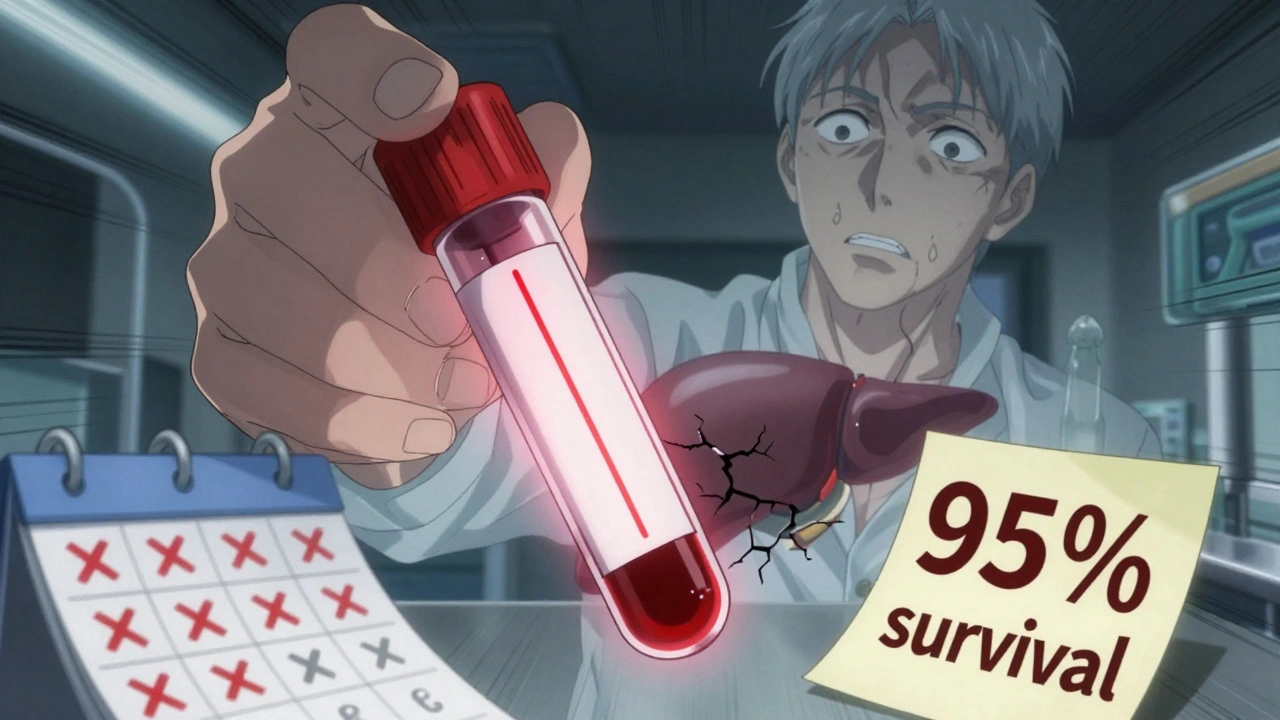
Your creatinine level is your most important number. It tells you how well your liver is filtering waste. A rise of 0.3 mg/dL or more in a week? That’s a red flag. Your doctor will order a biopsy to confirm rejection. If caught early, rejection can be reversed with a short course of stronger meds.
But if you skip your blood work? You’re flying blind. You might feel fine. But your liver is failing. The 2022 data from the Scientific Registry of Transplant Recipients shows that patients who stick to their labs have a 95% one-year survival rate. Those who skip? It drops to 78%. That’s not a small gap. That’s life or death.
Don’t skip just because you’re “feeling fine.” Rejection doesn’t wait for symptoms. It works in silence. Your lab results are the only thing that tells the truth.
What Happens If You Don’t Adhere?
Rejection isn’t just a setback. It’s a cascade.
One episode of acute rejection? You might recover. Two? Your liver starts scarring. Three? You’re looking at chronic rejection. And once that sets in, there’s no undo button. The damage is permanent. Your liver slowly dies. You’ll need dialysis, then a second transplant. But second transplants are harder. You’ve used up your immune system’s patience. You’re more likely to reject again. And the drugs? They’re stronger, costlier, and have worse side effects.
And here’s the hard truth: non-adherence causes up to 22% of late graft losses. That’s more than infection. More than cancer. More than high blood pressure. It’s the second leading cause of transplant failure after death with a working organ. And it’s 100% preventable.
You didn’t go through surgery, months of waiting, and years of recovery just to quit now. You’ve already beaten the odds. Don’t let a missed pill undo it all.

The Future: Better Tools, Fewer Pills
There’s hope on the horizon. In January 2023, the FDA approved the first genetic test-XyGlo-that tells doctors how your body processes tacrolimus. No more guessing doses. Just science. That means fewer side effects and better control.
Some centers are testing belatacept, a drug that works differently from traditional immunosuppressants. Early results show 18% less chronic rejection over five years. And the Immune Tolerance Network is running trials where patients receive a stem cell infusion along with their transplant. In 40% of cases, their immune systems learned to accept the new liver-no lifelong drugs needed.
These aren’t sci-fi. They’re real. And they’re coming fast. But they only work if you’re still here. If you’re taking your meds. If you’re showing up for your labs. If you’re fighting for your life.
What You Can Do Today
- Set two phone alarms for your meds-morning and night. Don’t turn them off.
- Get a pill organizer with lights and sounds. Use it every day.
- Call your transplant center and ask about smart pill bottles or adherence programs.
- Find one person you trust to check in on your meds weekly.
- Write down your next blood test date and put it on your calendar. Set a reminder.
- If you’re struggling with cost, side effects, or motivation-talk to your pharmacist. They’re your ally, not your judge.
You survived the surgery. Now survive the routine. Your liver doesn’t need perfection. It just needs you. Every day. No exceptions.
Can you feel liver rejection before blood tests show it?
Sometimes, but not always. Many people feel fine even when rejection is happening. That’s why blood tests are critical. Symptoms like fever, pain near the transplant site, sudden weight gain, or reduced urine output can signal rejection-but they’re not always present. Waiting for symptoms means waiting too long. Regular labs catch rejection early, when it’s still treatable.
What happens if I miss one pill?
One missed dose won’t cause immediate rejection, but it increases your risk. Immunosuppressants need steady levels in your blood. Skipping even one dose can cause a spike in your immune activity. If you miss a pill, don’t double up. Call your transplant team right away. They’ll tell you whether to take it late, skip it, or adjust your next dose. Never guess.
Why do I need so many different medications?
Each drug targets your immune system in a different way. Combining them-like calcineurin inhibitors, antimetabolites, and steroids-works better than any single drug alone. It lowers the chance of rejection while reducing the dose of each individual drug, which helps cut side effects. Stopping one can throw off the whole balance and trigger rejection.
Are there cheaper alternatives if I can’t afford my meds?
Yes. Many drug manufacturers offer patient assistance programs that provide free or low-cost meds to those who qualify. Your transplant center’s social worker or pharmacist can help you apply. Generic versions of some drugs, like mycophenolate, are available and much cheaper. Never stop taking your meds because of cost-ask for help instead.
How do I know if my adherence is good enough?
Aim for at least 90% adherence-meaning you miss no more than one dose every 10 days. Studies show that every 10% drop in adherence increases your risk of graft failure by 23%. If you’re using a pill organizer or smart bottle, track your openings. If you’re unsure, ask your pharmacist to review your refill history. They can tell you if you’re falling behind.

11 Comments
Paul DixonDecember 12, 2025 AT 01:41
Man, I wish I had this post when I first got my transplant. I thought I could wing it with my meds after a few months. Turned out my liver didn’t care how ‘fine’ I felt. Lost three months of my life in the hospital because I skipped a few pills. Don’t be me.
Jimmy KärnfeldtDecember 12, 2025 AT 22:24
It’s wild how something so simple-taking pills-can be the difference between life and a second surgery. I used to think discipline was about willpower. Now I know it’s about building systems. Alarms, pill boxes, buddies checking in… that’s the real magic. Not strength. Just structure.
Ariel NicholeDecember 13, 2025 AT 09:26
This is so well written. I’m a nurse and I see so many patients struggle with this. The meds are expensive, the side effects are brutal, but the truth is-your body remembers what you do every day. Even the small stuff matters.
matthew dendleDecember 14, 2025 AT 01:58
so u say take pills or u die cool so like every other medical thing ever right like wow so groundbreaking
Jim IrishDecember 15, 2025 AT 21:46
Consistency over perfection. That’s the mantra. One missed dose isn’t the end. But a pattern of skipping? That’s how you turn a miracle into a memory.
Mia KingsleyDecember 16, 2025 AT 03:05
Ugh I hate these posts that make you feel guilty for being human. Like I’m supposed to be some saint taking 12 pills a day while my stomach screams and my face looks like a moon? No thanks. I’d rather die with dignity than live like a lab rat.
Kristi PopeDecember 17, 2025 AT 14:46
My cousin got her liver transplant in 2019. She used to forget all the time. Then she started using a smart bottle that texts her care team if she skips. Now she’s been rejection-free for 5 years. It’s not about being perfect. It’s about having backup plans. You’re not alone in this.
Jean Claude de La RondeDecember 19, 2025 AT 02:45
you know what’s funny? the drugs cost more than my rent. but if i skip one i die? so i guess i’ll just keep working two jobs and crying in the bathroom after i swallow my 8 pills. thanks for the inspiration bro
Aman deepDecember 20, 2025 AT 00:31
I’m from India and my sister got a transplant here in the US. The cost scared us until we found a patient assistance program through the hospital. They got her meds for $15 a month. Don’t give up. There’s help. Just ask. No shame in needing it.
Eddie BennettDecember 20, 2025 AT 12:58
I’m on day 1,207. No rejection. No drama. Just pills. Every day. Sometimes I hate it. Sometimes I forget. But I always call my team. They don’t judge. They just help. That’s the secret. Not willpower. Just showing up.
Sylvia FrenzelDecember 21, 2025 AT 22:37
Why do we even bother? The system is rigged. You survive the transplant, then you’re just a customer for Big Pharma. This post is just a sales pitch dressed up as advice.